Built-In Bookcase and Home Library Design Ideas
A built-in home library can live on a single wall, in the alcoves beside a fireplace, up a staircase or in a quiet corner. The trick is shelving built to the room and sized to your books, with adjustable shelves, a mix of open and closed storage, proper lighting and a place to sit. Built in this way, a bookcase looks part of the house and uses space a freestanding unit would waste.
There is something about a wall of books that changes a room. It warms the space, softens the sound, and quietly says a lot about the people who live there. The difference between a few shelves and a proper home library comes down to design, with shelving built to the room, scaled to the books, and finished to sit with everything around it.
The good news is that you do not need a grand study to have one. A home library can be a single wall, a pair of alcoves, the space beneath a staircase or a corner of the
living room. What counts is planning the shelving around your collection and your space, rather than buying a unit off the shelf and hoping it fits
Finding a Home for Your Books
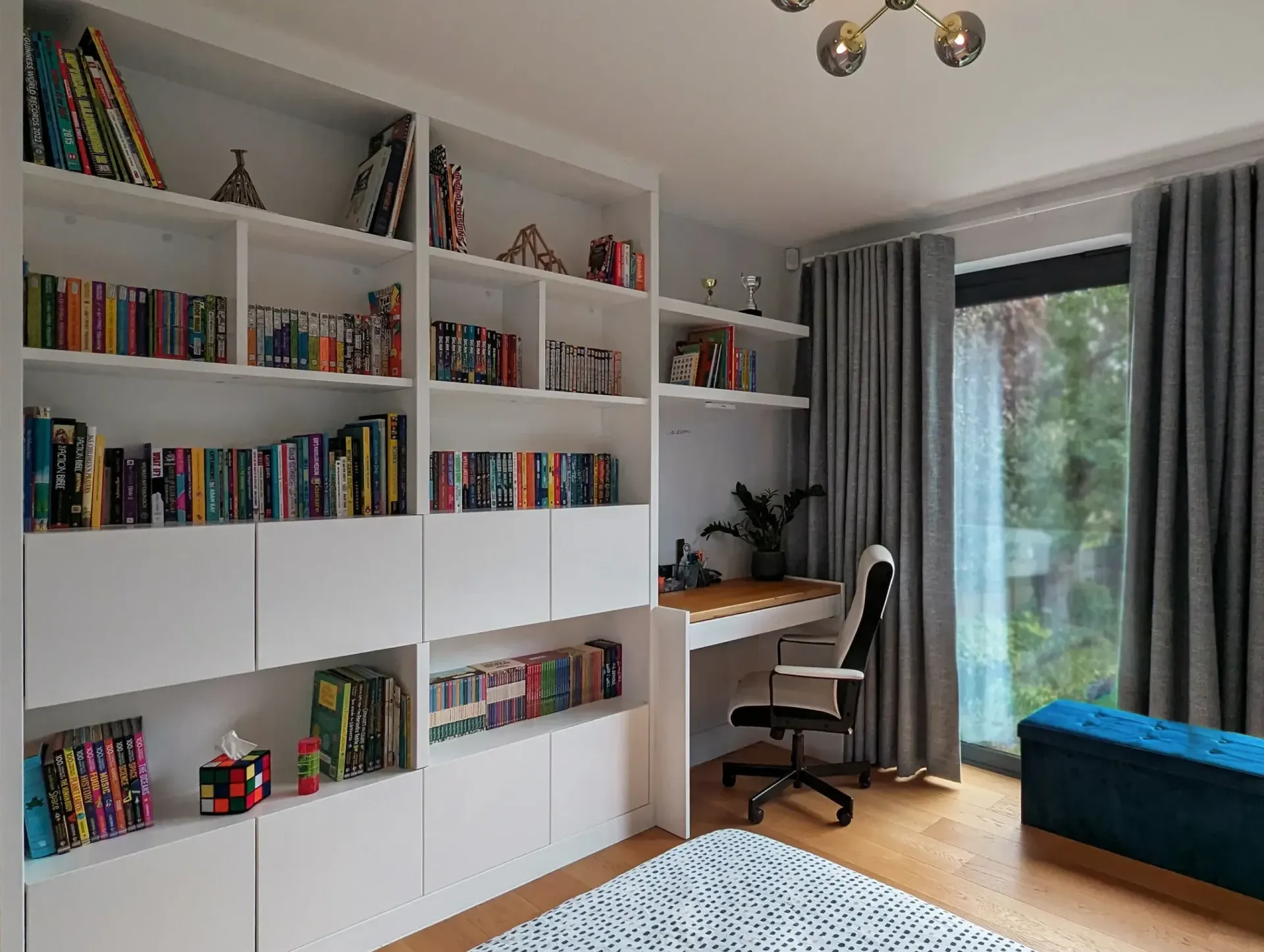
A dedicated room is the dream, but most libraries are made in the spaces a home already has. A full wall of shelving, running from floor to ceiling, turns a living room or a wide landing into a library without losing any floor space, because it builds upward rather than outward.
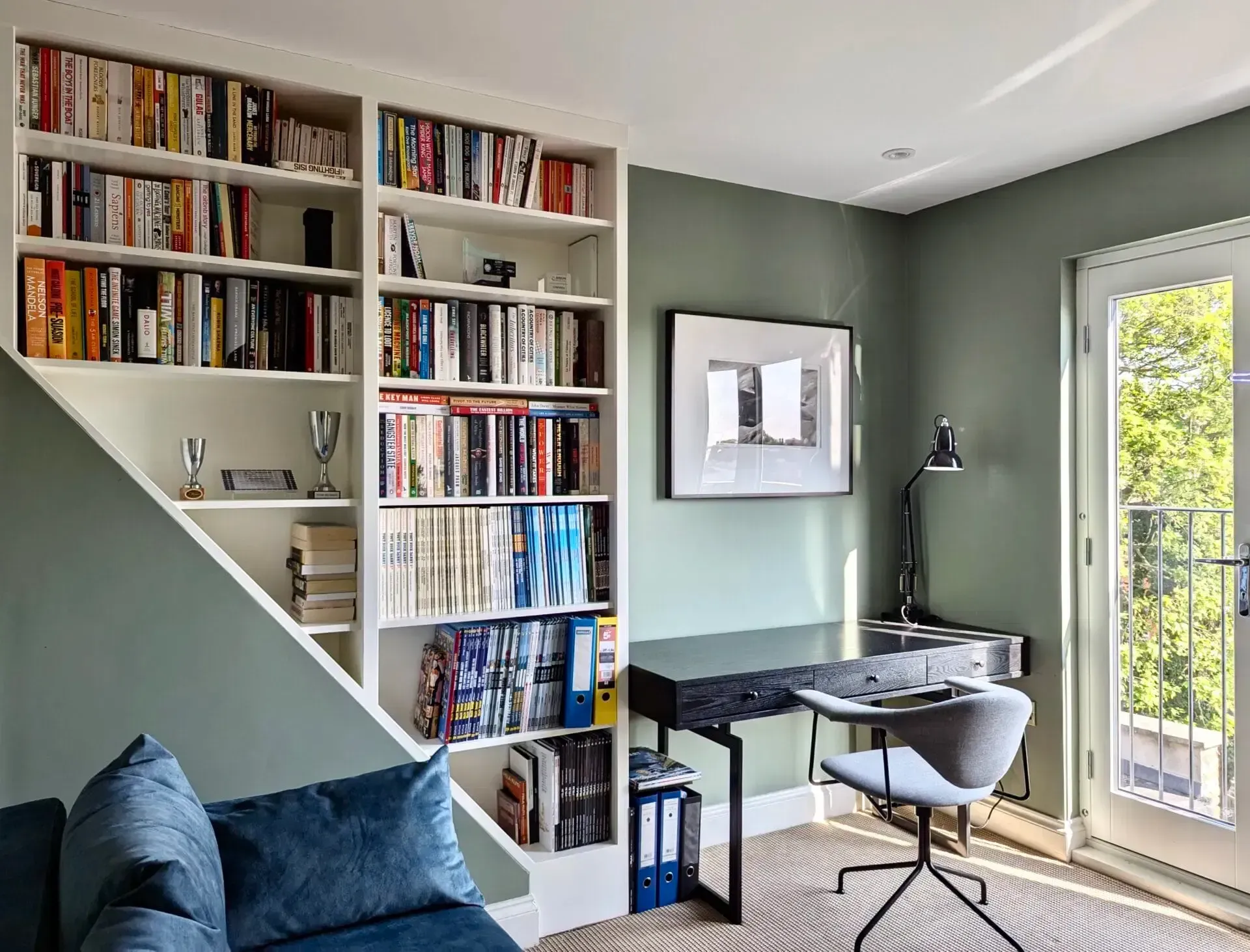
The alcoves on either side of a fireplace are the obvious candidates. A staircase wall, the area beneath the stairs, a generous hallway or the wall around a doorway can all carry shelving too. Even a quiet corner with a
single tall bookcase counts. The real first step is to look at the walls you already have and picture shelving where there is currently bare plaster.
Built-In or Freestanding?
A freestanding bookcase has one advantage, which is that you can take it with you. Beyond that, a built-in design wins on almost every count. It uses the full height and width of the wall, fills the awkward inches a freestanding unit leaves at the sides and on top, and looks like part of the room rather than a piece parked against it.
Built-in shelving is also far steadier under a heavy load, since it is fixed to the wall rather than balanced on the floor. For a library that holds real weight and stays put, building it in is almost always the better route.
Designing Around a Fireplace
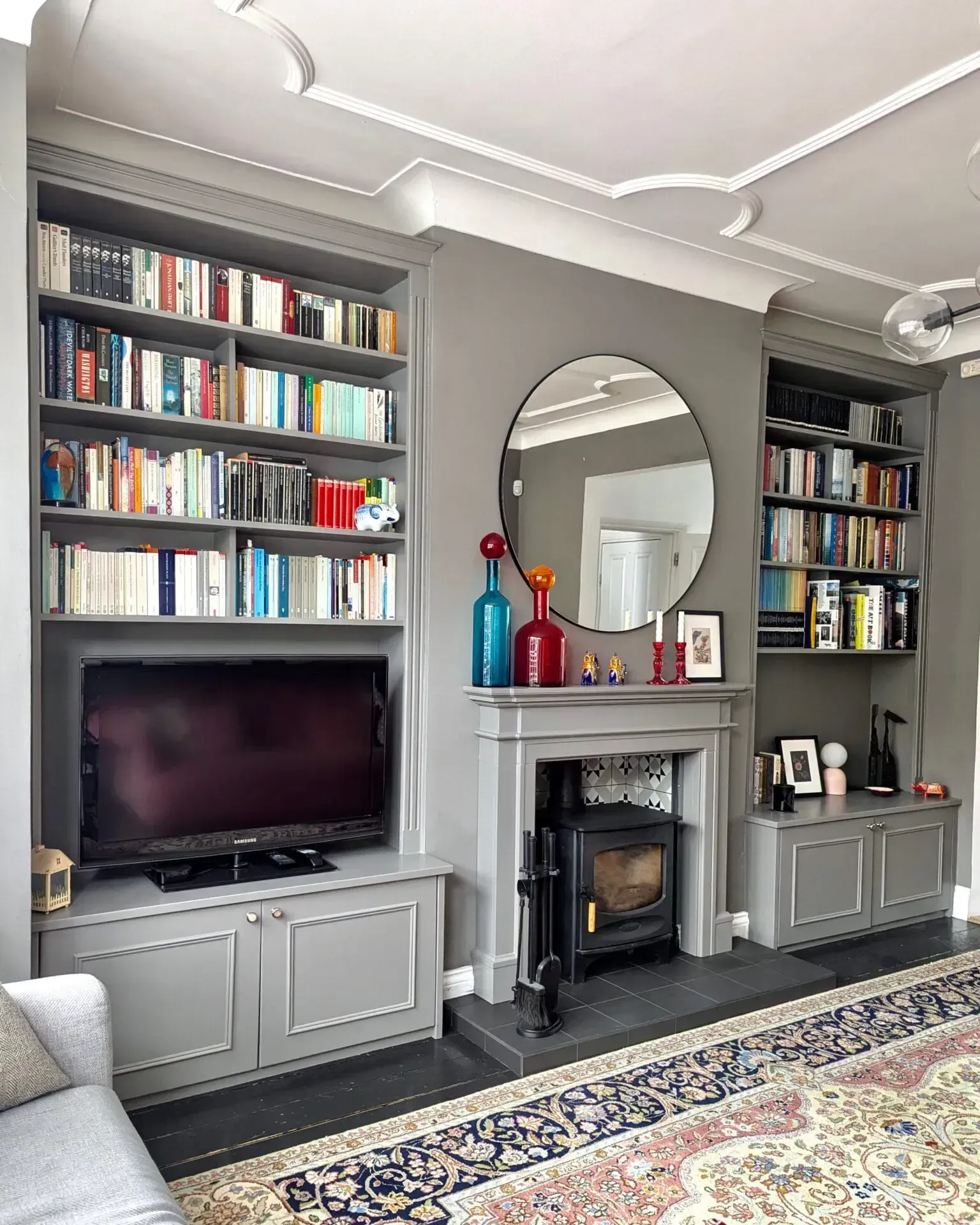
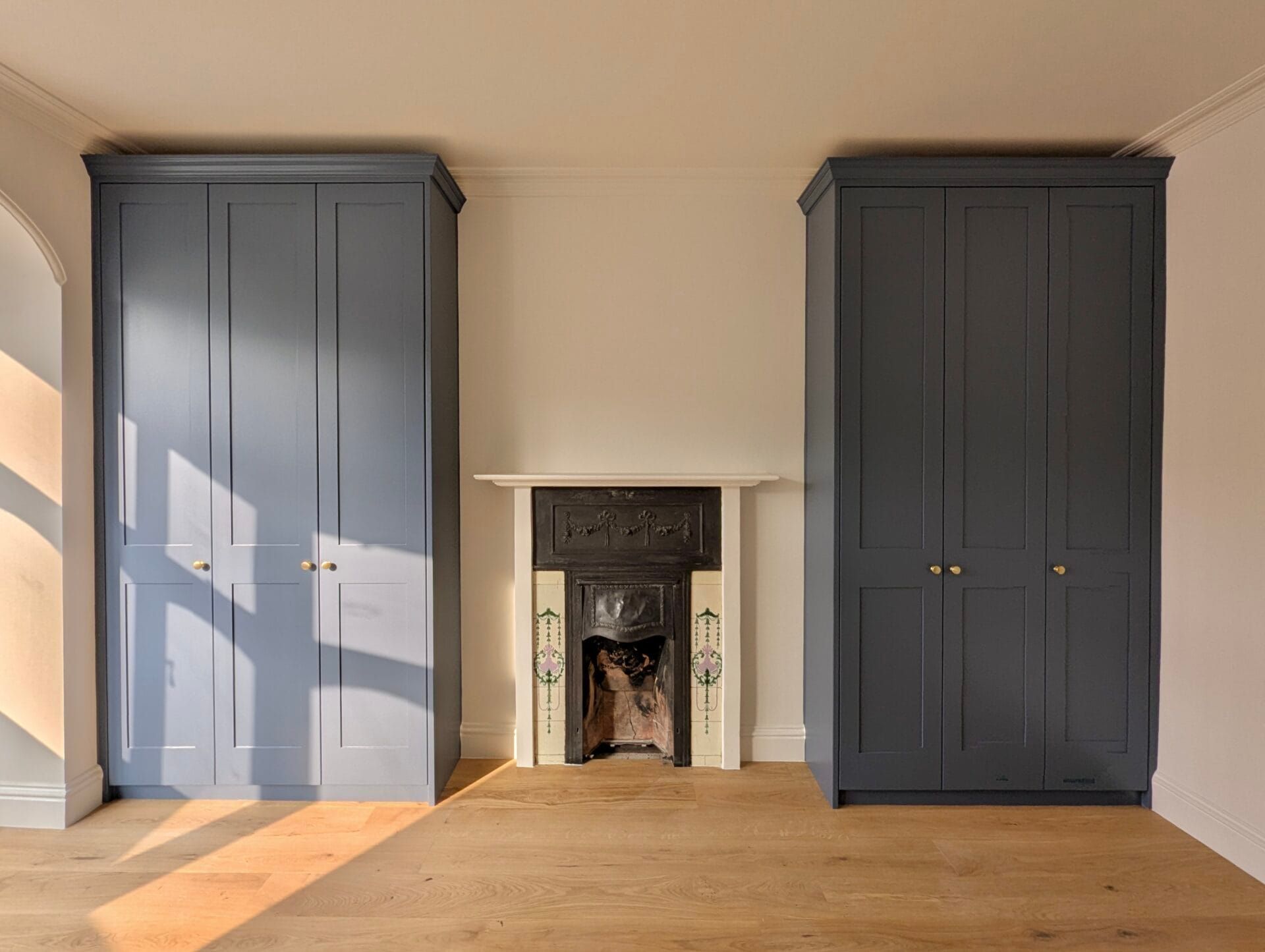
A fireplace with an alcove on each side is the most natural home for a library there is. Fitting shelving into those recesses uses space that would otherwise sit empty, and a matching pair of units framing the chimney breast gives a room balance and a deliberate, finished look.
A common and practical arrangement is closed cupboards low down, which give a solid base and hide clutter, with open shelving rising above for books and display. Built to the exact size of each alcove and finished to match the room, the result reads as though it were always part of the house.
Shelves That Fit Your Books
The key to a library that stays useful is shelving sized to what you actually read. Paperbacks, large hardbacks, art books and records all sit at different heights, so adjustable shelves are worth their weight, letting you reset the spacing as your collection grows and shifts over the years.
It helps to mix open shelving with a few closed cupboards, giving you somewhere to show the books you love and somewhere to tuck away the things you would rather hide. Weight deserves a thought, too. A packed bookcase is far heavier than people expect, so the shelves need to be built and supported well enough that they never bow under a tight row of hardbacks.
Ladders, Lighting and the Finishing Touches
Taking shelving right up to the ceiling adds storage and a real sense of occasion, but the top shelves still have to be reachable. A library ladder, fixed on a rail or simply leaning, turns that height into a feature rather than a problem.
Lighting brings the whole wall to life. LED strips run along the shelves, or spots set above them, wash light down over the spines so titles are easy to read and the room feels warm and inviting. For deeper shelves, lights that come on as you open a cupboard stop books from vanishing into shadow at the back.
Styling a Library That Looks Lived In
A library is for using, not just admiring, so the way you fill it matters. Mixing upright and stacked books, leaving the odd gap, and slipping a few objects in among the spines stops a bookcase from looking like a shop display and makes it feel personal.
It is also worth designing somewhere to pause. A window seat set into the run, a reading chair in a corner, or a simple recess left for a favourite armchair turns a wall of books into a room you actually want to spend time in. A
home library should feel lived in, never staged.
Frequently Asked Questions
Is a built-in bookcase worth it over a shop-bought one?
For a home library, almost always. A built-in bookcase uses the full wall, fills the gaps a freestanding unit leaves empty, sits steadier under heavy books and looks part of the house. A shop-bought case is easier to move, but fits less neatly.
How do you fit bookcases around a fireplace?
By building matching units into the alcoves on each side. Closed cupboards low down give a solid base and hide clutter, with open shelving above for books. Built to the exact size of each recess and finished to match, the pair frames the chimney breast.
Do home library shelves need to be adjustable?
Adjustable shelves are worth having. Books range hugely in height, from paperbacks to large art books and records, so being able to move shelves lets you fit your collection and reset it as it grows. Fixed shelves look tidy, but waste space above shorter rows.
Can you create a home library in a small London flat?
Yes. A library does not need its own room, only a wall. A single floor-to-ceiling run, a pair of alcove bookcases, or shelving built around a doorway can hold a serious collection while taking nothing from the floor space a small flat cannot spare.
What is the best lighting for a home library?
LED strips along the shelves, or spotlights set above them, wash light evenly over the spines so titles are easy to read and the wall feels warm. For deeper shelves, lights that switch on as you open a cupboard keep books from disappearing into shadow.
Home Libraries Designed Around You And Your Collection
At Fulham Bespoke Fitted Wardrobes, we have spent more than 15 years building bookcases, shelving and cupboards for homes across London. Because cabinetry is all we do, we design shelving around your actual collection, from paperbacks to oversized art books, and fit it neatly into alcoves, around fireplaces and into awkward corners, finished by hand to match the room and backed by our 15-year guarantee on the carpentry. Every project begins with a free design visit, so you can see your home library clearly before a single shelf is made.