Loft Eave Units: Using the Lowest, Most Awkward Part of a Loft
Loft eaves are the low triangle of space where a sloping ceiling meets the floor, behind the knee wall. Fitted eave units turn that dead space into real storage using pull-out drawers and trolleys that roll out from under the slope, or hinged doors set into the knee wall. They suit seasonal items, luggage and low-use belongings, and doors finished to match the wall keep the room looking clean.
Every loft conversion has them. Run your eye along the edge of the room, where the sloping ceiling drops down to meet the floor, and you reach a point where the space is too low to stand, too low to walk, and seemingly too low to use. This is the eaves, and in most loft rooms it sits completely empty behind a plain knee wall.
It is also some of the most valuable hidden storage in the house, if you know how to get at it. This guide is about the eaves alone, the lowest, most awkward strip of a
loft, and how fitted eave units turn it into space you actually use.
What Eaves and Knee Wall Space Actually Is
In a loft room, the ceiling slopes down on one or both sides until it meets the floor. Builders usually close off the lowest part with a short vertical wall, the knee wall, to give the room a tidy edge and a usable height. Behind that wall sits a long triangular void, the eaves, running the length of the room.
Left as it is, that void does nothing but hide the floor joists and the back of the roof slope. Opened up properly, it becomes a generous run of low-level storage that takes nothing from the floor area of the room itself. The whole point of an eave unit is to reach into that triangle and make it work.
The Problem With Reaching Into the Eaves
The eaves are awkward for one simple reason. The space gets lower the further back it goes, so a standard cupboard with a door on the front only lets you reach the first foot or so. Anything pushed to the back disappears into a dark, low gap that you end up crawling into on your hands and knees.
That is why a plain hole cut in the knee wall rarely works well. The storage is technically there, but most of it is unreachable in practice. Designing eave units well is really about solving access, bringing the contents of that deep triangle out to you rather than making you climb in after them.
Pull-Out Units Versus Hinged Doors
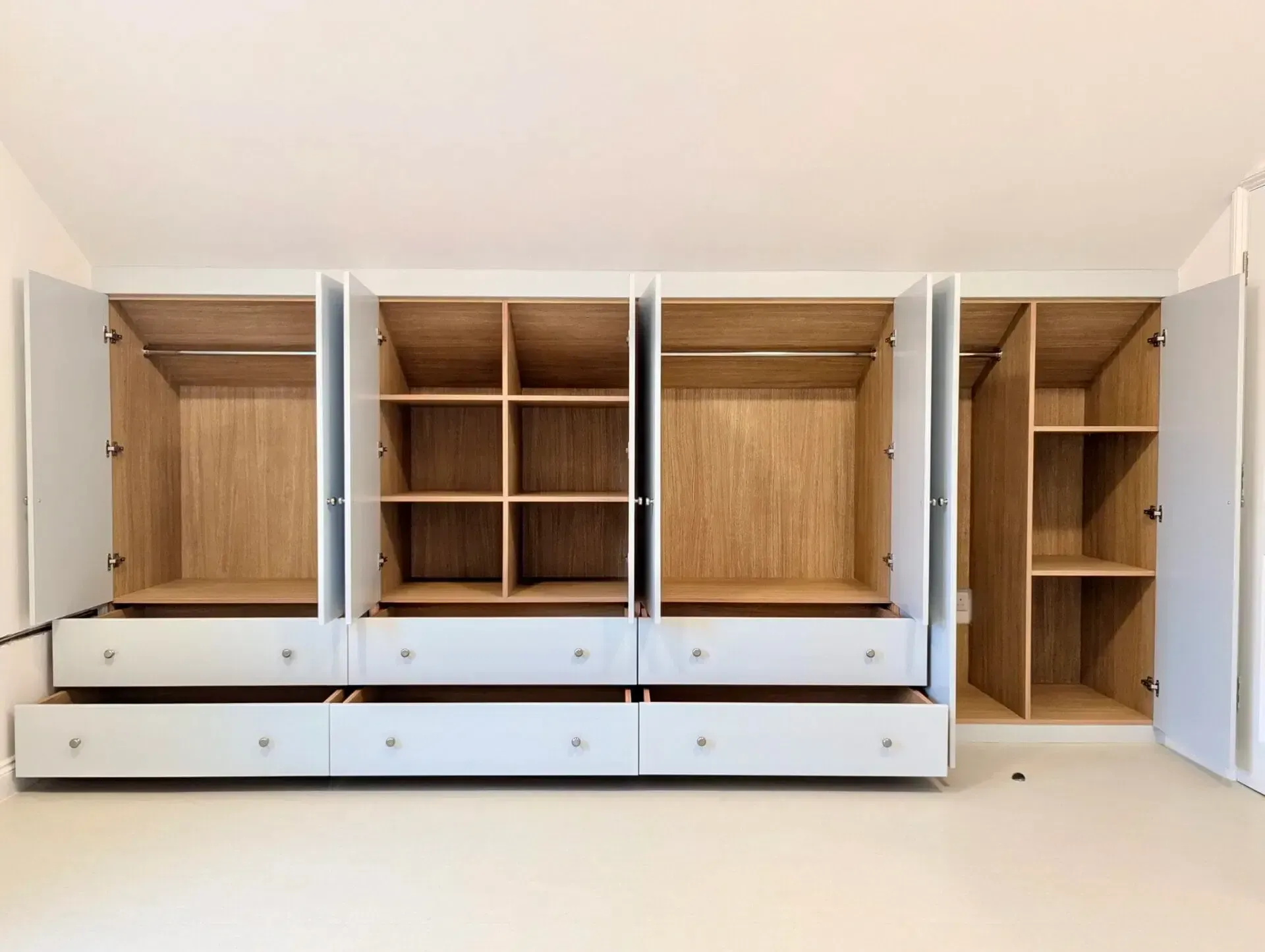
There are two main ways to open up the eaves, and the best schemes often use both. Pull-out drawers and trolleys are the clever option for deep eaves. Built on runners, they roll the full contents of the void out into the room, so the items stored right at the back come to you. Nothing is lost to the dark recesses, because the whole drawer slides clear of the slope.
Hinged doors set into the knee wall suit shallower eaves or spots where a simple cupboard is enough. They give you a neat opening into the space and work well for things you reach for less often. A good design mixes the two, using pull-out units where the eaves run deep and hinged doors where access is easier, so every part of the run earns its place.
What to Store in the Eaves
Because the eaves are low and a little harder to reach than a wardrobe at standing height, they suit the things you do not need every day. Suitcases and travel bags live there happily, as do seasonal items like winter duvets, Christmas decorations and the fan that only comes out in July.
They are ideal for archive boxes, spare bedding, sports kit and out-of-season clothes too. The trick is to match the storage to the access. Frequently used items belong in pull-out drawers near the front of the run, while genuine long-term storage can sit deeper in the void, where it is still reachable but kept out of the way.
Ventilation, Finish and a Clean Look
One practical point matters before you fill the eaves. A roof needs to breathe, and the void behind the knee wall is often part of how air moves through the roof space. Eave units should be designed so they do not block that airflow or trap damp against the roof, which keeps both your belongings and the roof structure in good order.
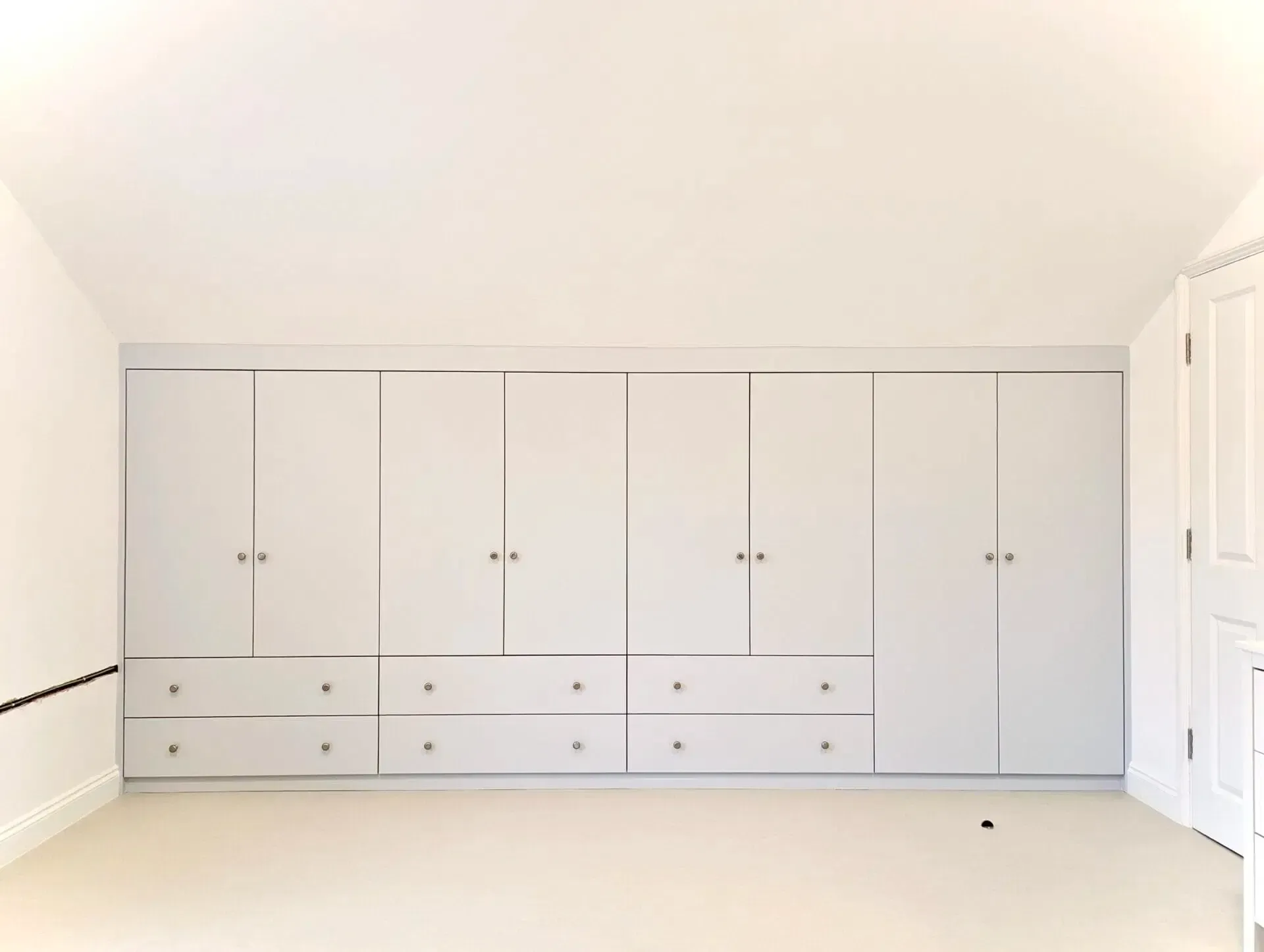
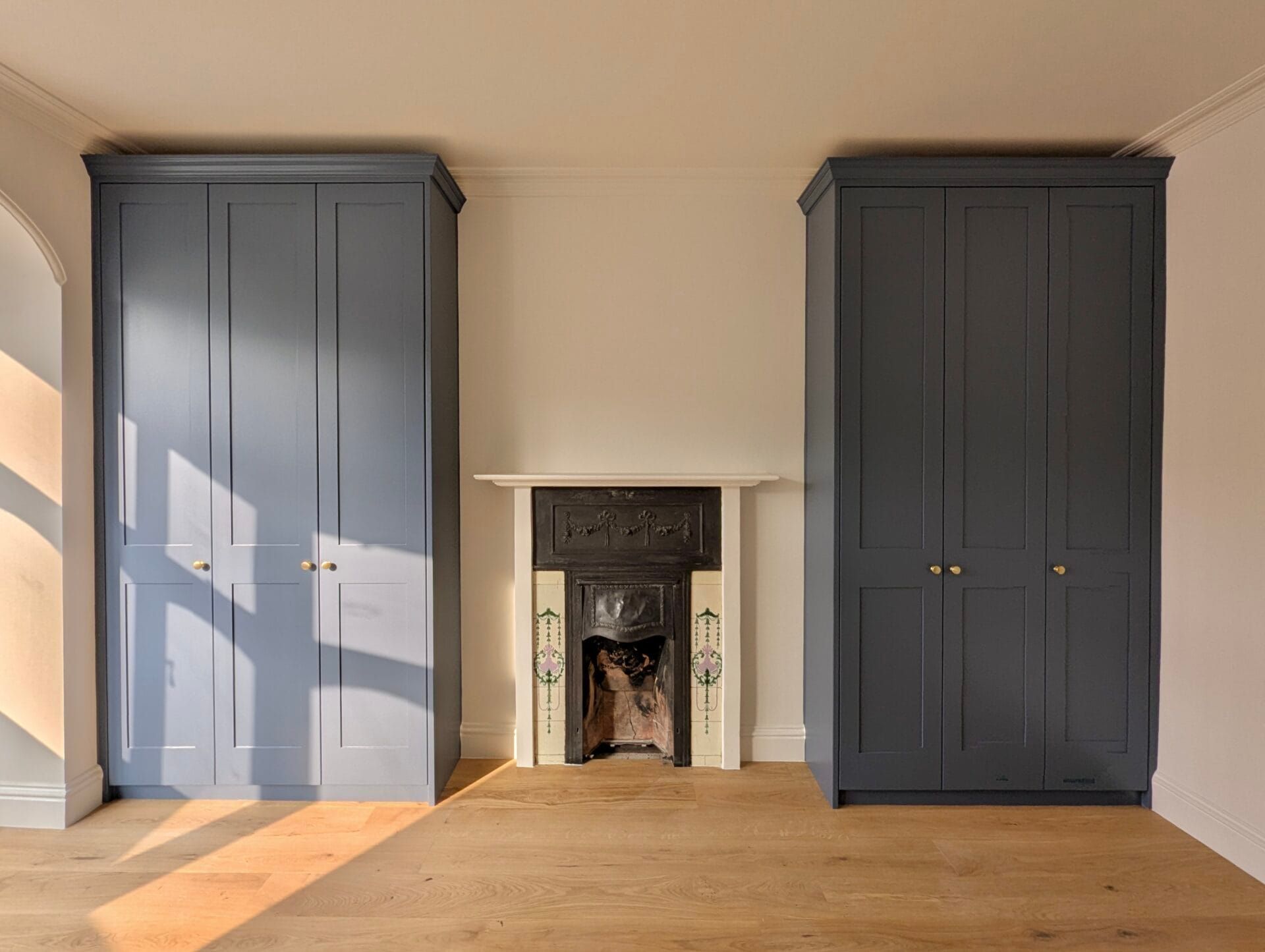
With that handled, the finish does the rest. Eave doors and drawer fronts can be finished to match the knee wall and the rest of the room, so the storage reads as a clean line rather than a row of obvious hatches. Built to the exact pitch of the slope and the length of the wall, a run of eave units looks like part of the room, not a compromise tacked onto it.
Frequently Asked Questions
What can you store in loft eaves?
The eaves suit things you do not need daily, since they sit low and out of reach. Suitcases, seasonal items, winter bedding, decorations, archive boxes and out-of-season clothes all live there well, with everyday items kept in pull-out drawers near the front.
Are pull-out drawers or doors better for eaves storage?
It depends on depth. Pull-out drawers and trolleys are best for deep eaves, rolling the whole contents out so nothing is lost at the back. Hinged doors suit shallower spaces and things you reach for less often. Many designs use both along one run.
How do you access the deep eaves space?
With pull-out units built on runners. Rather than reaching into a low, dark void, you pull the drawer or trolley out into the room, and the contents come to you. This solves the problem with eaves, which is that fixed cupboards leave it unreachable.
Do eave units affect roof ventilation?
They can if designed badly, which is why ventilation matters. A roof needs airflow, and the void behind the knee wall is often part of that path. Eave units should be built so they do not block airflow or trap damp against the roof structure.
Can loft eave units be made to match the room?
Yes. Doors and drawer fronts are finished to match the knee wall, so the run reads as a clean line rather than obvious hatches. Built to the exact pitch of the slope and the length of the wall, they look part of the whole room.
Loft Eave Storage That Earns Its Keep
At Fulham Bespoke Fitted Wardrobes, we have spent more than 15 years building fitted storage for homes across London, and loft eaves are one of the spaces we are asked about most. The lowest part of a loft only works as storage when access is solved properly, so we design eave units around how you will actually reach them, using pull-out drawers for the deep runs and doors where they suit, all made to measure to the pitch of your roof and finished to match the room. The carpentry is backed by our 15-year guarantee, and every project begins with a free design visit, so we can plan the run before anything is built.