Fitted Wardrobes with Integrated Full Length Mirrors: Design Options
Quick Answer
Integrated full length mirrors in fitted wardrobes come as pull out mirrors on sliding rails, swing out mirrors on hinged arms, concealed mirrors inside wardrobe doors, or fixed mirror panels on the wardrobe end. Each option suits different room layouts and daily use patterns. The pull out and swing out options work best when the mirror is used daily but should not dominate the room's visual presence.
Full length mirrors are essential for most getting dressed routines. Checking the full outfit, assessing fit, and seeing how garments drape all require a mirror that shows the complete figure. Yet most bedrooms struggle to accommodate a full length mirror as a permanent feature. Freestanding mirrors take up floor space. Wall mounted mirrors require a dedicated wall section. Door mounted mirrors on wardrobes dominate the visual presence of the storage.
Integrated full length mirrors in fitted wardrobes solve this problem by hiding the mirror within the wardrobe structure, available when needed and concealed when not. The approach combines the practical utility of a full length mirror with the clean visual presence of fitted wardrobes without compromising either function.
Several integration approaches exist, each suited to different room layouts, use patterns, and design preferences. Understanding the options helps you choose the right configuration for your specific bedroom and household.
This guide covers the main approaches to integrating full length mirrors into fitted wardrobes, the practical considerations for each, and how to choose the right option for your London home.
What Are the Main Integration Options?
Four main approaches work for integrating full length mirrors into fitted wardrobes:
• Pull out mirrors on horizontal sliding rails that extend from the wardrobe
• Swing out mirrors on hinged arms that fold against the wardrobe when stowed
• Concealed mirrors mounted on the inside of wardrobe doors
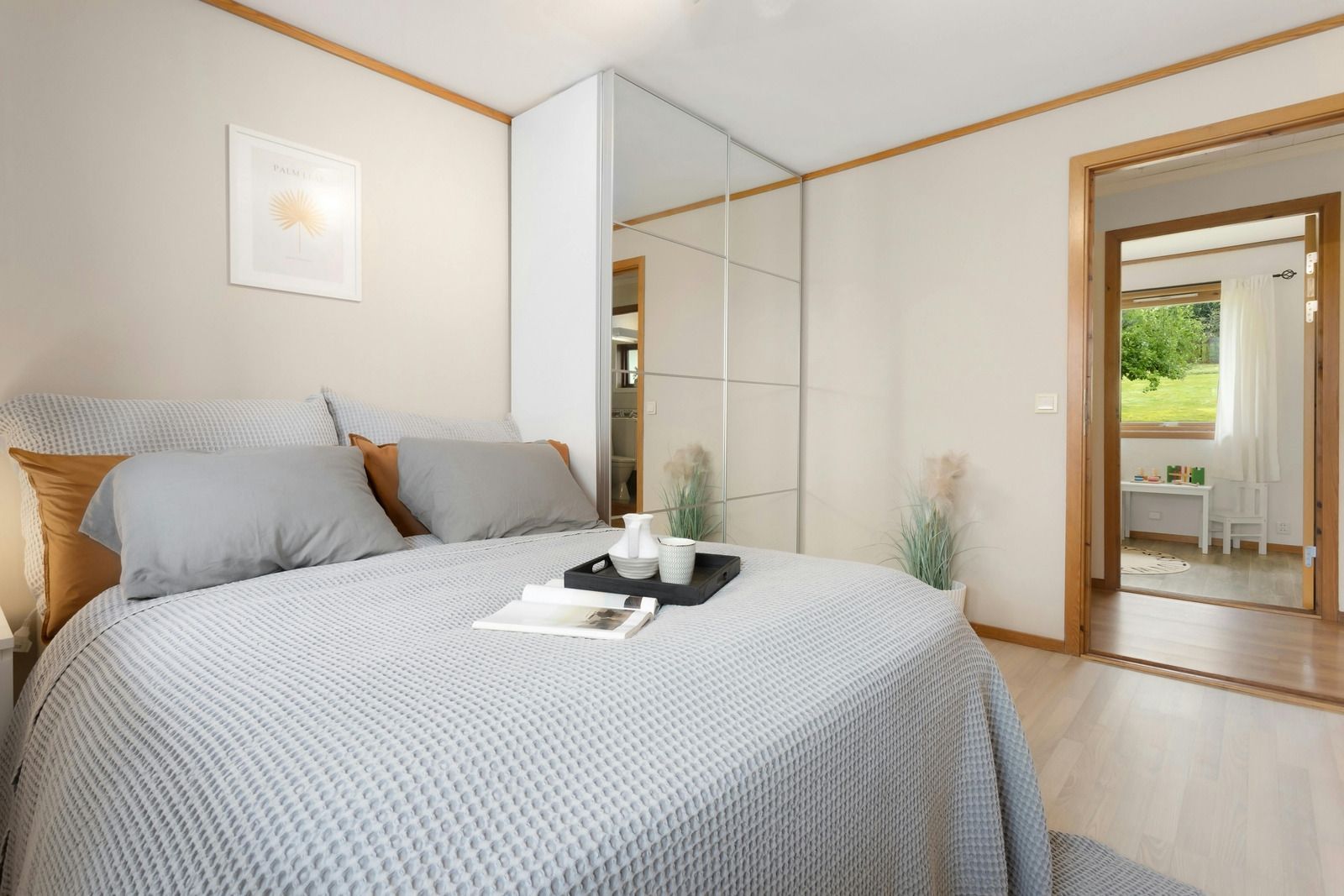
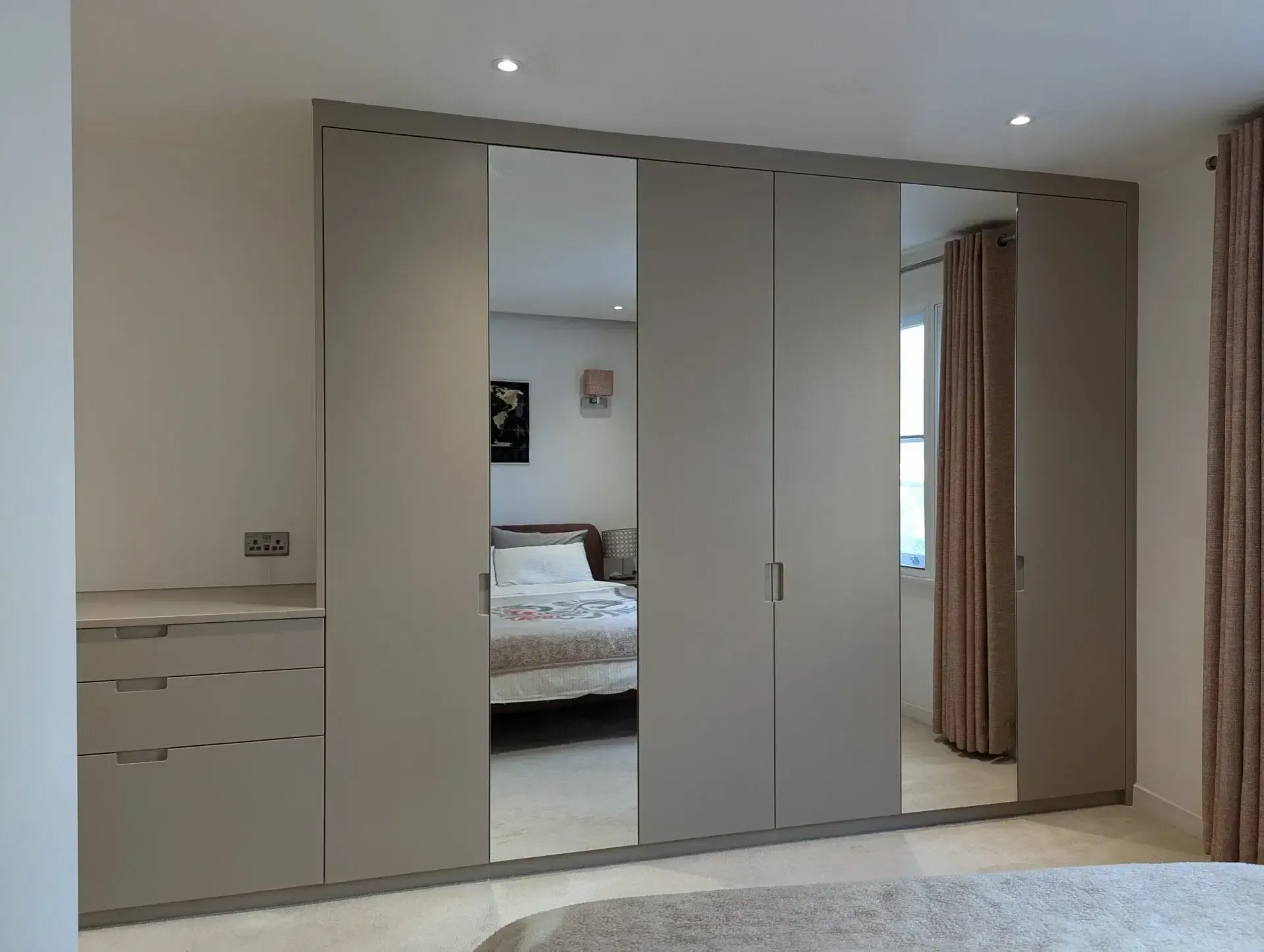
• Fixed mirror panels on the end of the wardrobe installation
Each approach has different implications for cost, access, visual integration, and room layout considerations.
When Do Pull Out Mirrors Work Best?
Pull out mirrors mount on horizontal rails that allow the mirror to slide out from within the wardrobe structure.
They work best when:
• Daily use of a full length mirror matters
• The mirror should be invisible when not in use
• There is adequate space in front of the wardrobe for the mirror to slide out
• Multiple viewing positions are useful during dressing
• The wardrobe design can accommodate the mounting mechanism
The mirror typically pulls out from a slim slot in the wardrobe. When extended, it stands roughly parallel to the wardrobe front, allowing head to toe viewing. When retracted, only the slim edge is visible.
Advantages:
• Mirror is completely concealed when not in use
• No door opening required for access
• Smooth operation on quality rail systems
• Can be positioned at optimal viewing distance
Limitations:
• Requires floor space in front of the wardrobe for extension
• The sliding mechanism adds complexity and potential maintenance over time
• Quality mechanisms cost significantly more than basic alternatives
• Mirror size is limited by the wardrobe depth
When Do Swing Out Mirrors Work Best?
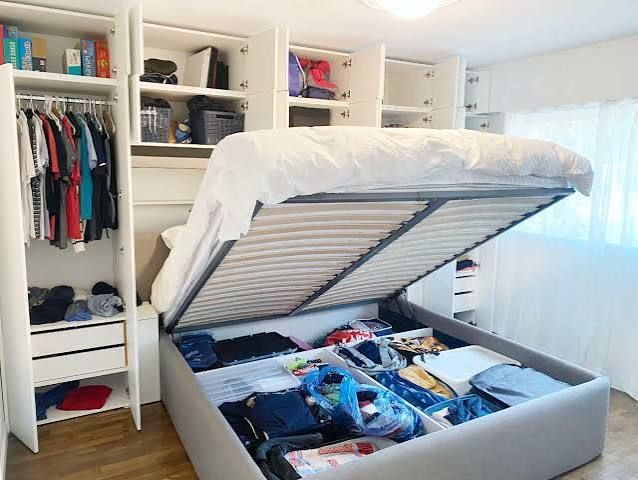
The bed is usually the largest furniture piece in a bedroom and often sets the design tone the wardrobe needs to work with.
They work best when:
• The mirror should be hidden within a specific wardrobe section
• Rotational positioning is useful for different viewing angles
• The wardrobe includes a specific dressing area or section
• Floor space in front of the wardrobe is limited
The mirror typically mounts on a swing arm with multiple pivot points. When stowed, it folds flat against the wardrobe interior. When needed, the user opens the wardrobe door and swings the mirror out to a comfortable viewing position.
Advantages:
• Mirror can be positioned at various angles for different needs
• Flexibility in placement within the wardrobe
• Can be combined with lighting mounted on the swing arm
• Mechanism is mechanically simpler than sliding systems
Limitations:
• Requires opening the wardrobe door to access
• Swing arm mechanics can loosen over time
• Mirror position depends on arm length rather than user preference
• Can look cluttered when extended
When Do Door Mounted Mirrors Work Best?
Door mounted mirrors fix to the inside face of a wardrobe door, revealing the mirror when the door is opened.
They work best when:
• The wardrobe doors are opened for dressing anyway
• Multiple full length mirrors are useful at different angles
• Simplicity and reliability matter more than invisibility
• The mirror does not need to be seen without opening the wardrobe
The mirror is simply mounted on the inside of the door, hidden when the door is closed. When the door opens for wardrobe access, the mirror becomes visible.
Advantages:
• Simplest and most reliable approach
• No mechanical complexity to maintain
• Natural coordination with wardrobe use
• Allows multiple mirrors on different doors for different angles
Limitations:
• Requires opening the wardrobe door
• Fixed position based on door swing angle
• Door needs to be at a specific angle for proper viewing
• Can be awkward in rooms where the door swing is constrained
When Do Fixed Mirror Panels Work Best?
Fixed mirror panels mount on the visible end of the wardrobe installation, providing a permanent mirror as part of the wardrobe design.
They work best when:
• The wardrobe end faces the main dressing area
• A permanent full length mirror in the room is desired
• The mirror can double as a decorative feature
• The wardrobe layout places an end panel in a useful position
The mirror becomes a feature of the wardrobe design rather than a hidden utility. The end of the wardrobe becomes the mirror.
Advantages:
• Always available without any operation required
• Can be a design feature in its own right
• No mechanical parts to maintain
• Reflects light to brighten the room
Limitations:
• Dominates the visual presence of the wardrobe end
• Cannot be hidden when a mirror is not wanted
• Shows reflections of the room that may not be desired
• Fixed position cannot adapt to different viewing needs
How Do You Position the Mirror for Best Use?
Mirror positioning affects daily use significantly.
Height considerations:
• The mirror should extend from approximately 30cm from the floor to at least 180cm high
• Taller users may need mirrors extending to 200cm or higher
• Mirrors starting too high miss shoes and lower body details
• Mirrors ending too low require stepping back to see the full figure
Width considerations:
• Minimum useful width is approximately 40cm
• Wider mirrors show more of the body at once
• Very wide mirrors become expensive and heavy
• 50 to 70cm is typical for integrated mirrors
Distance from user:
• Full length viewing requires standing approximately 1.5 to 2 metres from the mirror
• Shorter distances show only part of the body
• Longer distances show the full figure but less detail
• Pull out and swing out mirrors should position for the right distance
Lighting:
• Natural light from windows helps mirror viewing significantly
• Overhead room lighting creates shadows under the eyes and chin
• Integrated lighting around the mirror provides even illumination
• Side lighting from both sides eliminates shadows for the best viewing
What About Lighting Integration?
Lighting integrated with the mirror improves daily use substantially.
Common lighting integrations:
• LED strips mounted around the mirror perimeter
• Separate downlights positioned to light the user from above
• Side lights on either side of the mirror for even illumination
• Backlit mirrors with LED strips behind the mirror edges
Lighting considerations:
• Colour temperature affects colour perception of garments
• Warm white at 2700 to 3000 kelvin flatters skin tones but can distort fabric colours
• Neutral white at 3500 to 4000 kelvin provides accurate colour rendering
• Avoid cool white above 4000 kelvin which can look clinical
The lighting should be designed and installed with the mirror rather than retrofitted later. Integrated lighting in fitted wardrobes costs more at installation but produces much better results than separate lighting added afterwards.
Frequently Asked Questions
Can I add a full length mirror to my existing fitted wardrobe?
Yes, in most cases. Door mounted mirrors can be added to existing wardrobes without major modification. Pull out and swing out mirrors require specific mounting that may need design work. End panel mirrors require replacing the existing end panel with a mirror panel. The installer should assess the specific wardrobe before quoting modifications.
How much does an integrated full length mirror add to a fitted wardrobe cost?
Door mounted mirrors typically add £150 to £400 depending on size and quality. Pull out and swing out mirror mechanisms add £300 to £800 per mirror. Fixed end panel mirrors add £200 to £600. Illuminated mirrors with integrated lighting add further cost but produce significantly better results.
Are mirror wardrobes the same as integrated full length mirrors?
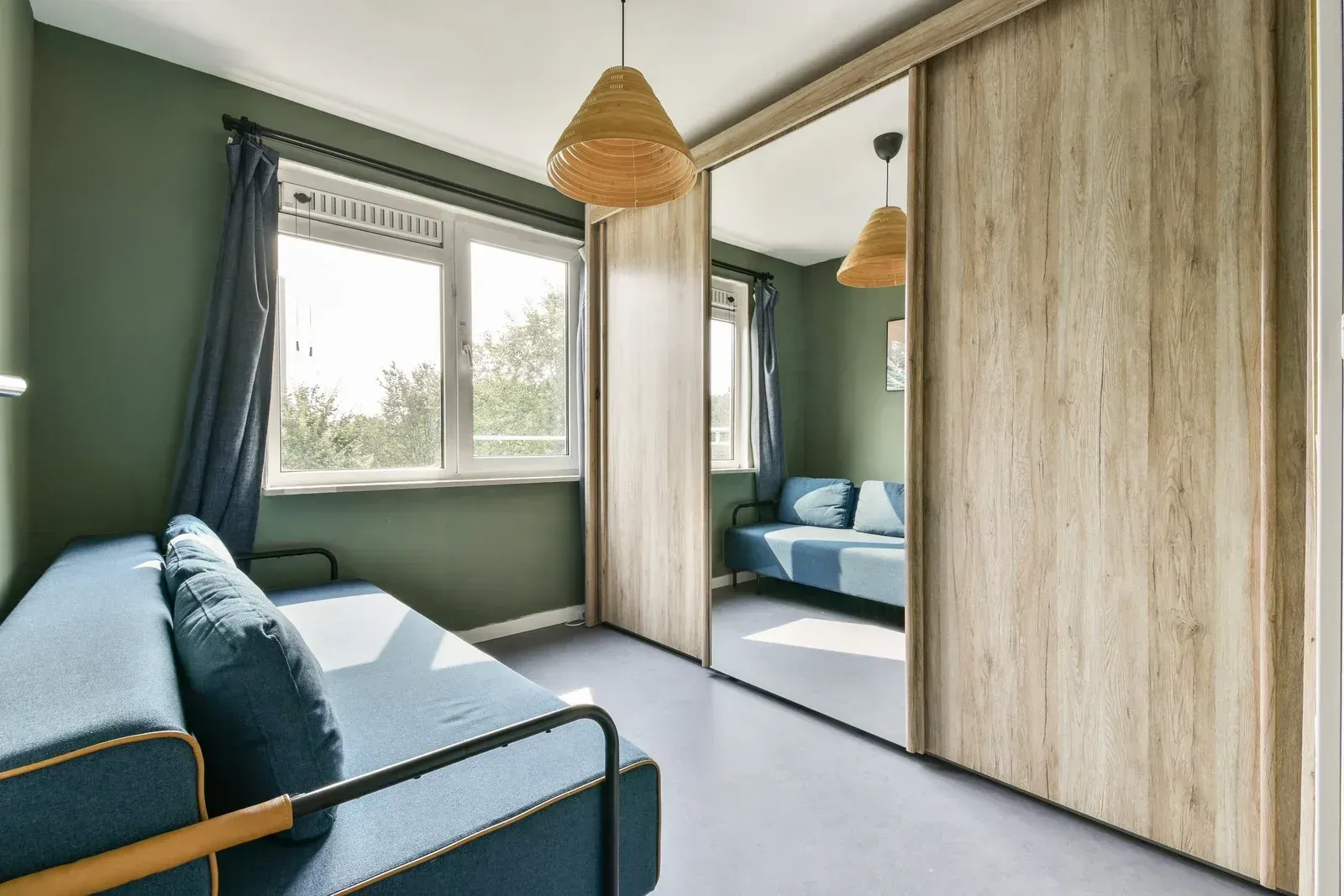
No. Mirror wardrobes have the entire wardrobe door covered with mirror, making the mirror a dominant visual feature. Integrated full length mirrors hide the mirror within the wardrobe structure or inside doors, keeping the mirror available for use but not visually dominant when not in use.
Can integrated mirrors work in small bedrooms?
Yes, often better than freestanding mirrors in small bedrooms. The integration eliminates the floor space that a freestanding mirror would occupy. Pull out mirrors need adequate extension space but return to the wardrobe when not in use. Door mounted mirrors work in small rooms if the wardrobe door can open fully.
What Humphries Cabinets Offers
We design and install fitted wardrobes and coordinated storage across London that work together to maximise bedroom capacity. Our services include:
• Fitted Wardrobes designed around overall bedroom storage requirements
• Wardrobe Interiors with mixed configurations suited to specific storage patterns
• Floor to Ceiling Wardrobes maximising vertical storage in the bedroom
• Cupboards with coordinated finishes for additional bedroom storage
• Modern Fitted Wardrobes with contemporary design
• Shaker Style Wardrobes in traditional designs for period properties
Every project starts with a free design visit where we discuss how you use mirrors during dressing and which integration approach suits your room and routine.
Why Choose Humphries Cabinets
At Humphries Cabinets, we have been designing fitted wardrobes with integrated features across London for over 15 years. We help you choose mirror integration that supports your actual dressing routine rather than adding features that look impressive in a brochure but see little use.
If you are planning fitted wardrobes for your London home and considering integrated full length mirrors,
contact us today to arrange your free consultation.