
Moth, Mildew and Mustiness: Protecting Clothes in Fitted Wardrobes

October 30, 2026

Share this article

Quick Answer

Protecting clothes in fitted wardrobes requires addressing three distinct threats: moths that damage natural fibres, mildew that grows in humid conditions, and mustiness from inadequate air circulation. The solutions include cedar or lavender for moth deterrence, moisture control through ventilation and desiccants, and routine inspection to catch problems early.

Fitted wardrobes protect clothes from dust and general wear, but they do not automatically protect against the three problems that cause most clothing damage in storage: moths, mildew, and mustiness. Each of these problems develops gradually and silently inside wardrobes until the damage is visible, at which point the garments affected often cannot be fully restored.


The good news is that all three problems are preventable with routine attention and the right storage approach. Fitted wardrobes actually make prevention easier than freestanding furniture because the sealed environment can be managed more deliberately. The challenge is knowing what to do and establishing the habits that keep problems from developing in the first place.


This guide covers the practical steps for protecting clothes in fitted wardrobes against each of the three main threats, with specific guidance for London homes where damp and climate conditions affect what works best.

What Attracts Clothes Moths to Fitted Wardrobes?

Clothes moths are small flying insects that lay eggs on natural fibre garments. The larvae feed on the fibres, creating holes and bare patches that cannot be repaired. Understanding what attracts them is the first step in prevention.

Clothes moths are attracted to:

•         Natural fibres including wool, cashmere, silk, fur, and feathers

•         Garments with sweat, food residue, or body oils still on them

•         Dark undisturbed spaces where larvae can feed without interruption

•         Warm humid conditions that speed up the life cycle

•         Dense storage where clothes are packed tightly together

Clothes moths are generally not attracted to synthetic fibres, properly washed garments, cotton or linen in good condition, or well ventilated storage. Reducing the attractive factors eliminates most moth problems before they start.

How Do You Prevent Moths in Fitted Wardrobes?

Prevention is significantly easier than treating an established infestation. The core preventive steps include:

•     Wash or dry clean all natural fibre garments before storing them for extended periods

•     Vacuum the wardrobe interior monthly to remove any eggs or larvae

•     Use cedar blocks, cedar hangers, or lavender sachets in natural fibre storage areas

•     Replace cedar oil content every six months as it fades

•     Store occasional wear natural fibres in sealed garment bags

•     Avoid overcrowding so air can circulate between garments

•     Inspect vulnerable garments every few months for early signs

Cedar is effective against moths because the natural oils in cedar wood are offensive to moths. Fresh cedar works well. Cedar that has lost its scent through age does nothing. Sanding cedar lightly with fine sandpaper refreshes the surface and restores effectiveness.

Lavender works similarly but is less potent than cedar. Lavender sachets need replacing every three to four months to remain effective.


Chemical moth repellents like naphthalene balls work but leave a strong odour on garments and can be hazardous around children and pets. Most modern wardrobe protection favours cedar and lavender over chemical alternatives.

What Do You Do If You Find Moths?

Catching moth problems early limits damage and makes treatment easier.

Signs of a moth problem include:

•     Small irregular holes in natural fibre garments

•     Bare patches on knitwear where the fibres have been eaten away

•     Small whitish or cream coloured larvae on clothing or in wardrobe corners

•     Small adult moths flying out when wardrobes are opened

•     Silky webbing in corners or on garments

If moths are found:

•     Remove all clothing from the wardrobe immediately

•     Wash all natural fibre garments at 50 degrees Celsius or dry clean them

•     Freeze items that cannot be washed or dry cleaned for at least 72 hours

•     Vacuum the empty wardrobe thoroughly, including corners and crevices

•     Dispose of the vacuum contents immediately in sealed bags

•     Wipe all surfaces with warm water and mild detergent

•     Allow the wardrobe to dry completely before replacing items

•     Install fresh cedar and lavender for ongoing protection

Severe infestations may need professional pest treatment. Consult a specialist if moths persist after thorough cleaning and preventive measures.

Why Does Mildew Grow in Wardrobes?

Mildew is a type of mould that grows in humid conditions with inadequate ventilation. It feeds on dust, dead skin cells, and the organic residue on clothing and surfaces. Mildew damages clothing through staining and the characteristic smell that can transfer to adjacent garments.

Mildew grows when:

•     Humidity in the wardrobe exceeds about 65 percent

•     Air circulation is poor

•     Damp garments or shoes are stored inside

•     The wardrobe is against a cold external wall where condensation forms

•     The wardrobe is in a bathroom or near a bathroom with poor extraction

London homes are particularly prone to wardrobe mildew because of the general damp climate, the prevalence of older properties with limited insulation, and the common configuration where bedroom wardrobes sit against external walls.

How Do You Prevent Mildew in Fitted Wardrobes?

Mildew prevention focuses on controlling humidity and improving air circulation:

•     Never store damp clothing or shoes in the wardrobe

•     Open wardrobe doors fully for 30 minutes weekly to allow air exchange

•     Address room level damp issues before they affect the wardrobe

•     Use desiccant packs in wardrobes prone to humidity problems

•     Maintain room temperature above about 16 degrees Celsius in winter

•     Ensure external walls behind wardrobes are properly insulated

Desiccant options include:

•     Silica gel packs that absorb moisture and can be renewed by heating

•     Calcium chloride dehumidifier containers for larger wardrobes

•     Natural rice sachets as a lower cost option

•     Electric mini dehumidifiers for persistent problems

Replace or renew desiccants according to the manufacturer's instructions. Spent desiccants provide no protection and may actually hold moisture against clothes.

How Do You Treat Existing Mildew?

Mildew problems that have already developed need prompt attention.

For affected garments:

•     Remove them from the wardrobe immediately

•     Hang them in sunlight if possible, as UV light kills mildew

•     Wash natural fibre garments with white vinegar in the rinse cycle

•     Dry clean delicate items with the dry cleaner informed of the mildew

•     Severely affected items may need to be discarded

For the wardrobe itself:

•     Remove all contents

•     Wipe affected surfaces with white vinegar diluted in warm water

•     Allow the wardrobe to dry completely with doors open

•     Address the underlying humidity problem before replacing contents

•     Consider improving ventilation through small holes or ventilated doors

For persistent mildew problems:

•     Consult a damp specialist about underlying wall problems

•     Consider room level dehumidification

•     Review wardrobe placement to avoid cold external walls

•     Add continuous ventilation to the wardrobe design

What Causes Mustiness and How Do You Prevent It?

Mustiness is less severe than mildew but affects more wardrobes. The characteristic smell indicates stagnant air, light bacterial activity, and often early stage moisture issues.

Mustiness develops when:

  • Wardrobes remain closed for extended periods
  • Clothing is stored without being worn or rotated
  • Air cannot circulate between tightly packed garments
  • Natural fibres absorb household odours and release them in storage
  • Wardrobe interiors have not been cleaned in extended periods

Prevention includes:

  • Open wardrobes for air exchange at least weekly
  • Rotate garments so stored items get worn periodically
  • Avoid overcrowding wardrobes
  • Clean wardrobe interiors monthly to remove dust and residue
  • Air out clothing by hanging outside the wardrobe periodically
  • Use natural odour absorbers like bicarbonate of soda or activated charcoal

Treatment for musty wardrobes:

  • Empty the wardrobe completely
  • Air all garments outdoors or in a well ventilated room for several hours
  • Clean the wardrobe interior with warm water and mild detergent
  • Place bicarbonate of soda or activated charcoal inside once dry
  • Leave the wardrobe empty with doors open for several days
  • Replace contents only when all mustiness has cleared

Are Some Fitted Wardrobe Designs Better for Clothing Protection?

Design choices affect clothing protection meaningfully.

Designs that help protect clothing:

•     Louvered or ventilated doors that allow air circulation

•     Internal LED lighting that discourages moth activity

•     Dedicated hanging space with adequate spacing between garments

•     Full extension drawers that allow complete access and inspection

•     Insulated backing on wardrobes against external walls

•     Dedicated shoe storage separate from clothing storage

Designs that create protection problems:

•     Fully sealed wardrobes with no air circulation

•     Overcrowded hanging space that compresses garments

•     Wardrobes against uninsulated external walls without protection

•     Fitted wardrobes without easy access to the back for inspection

•     Combined wet and dry storage within the same wardrobe

The design conversation with your installer should include how the wardrobe will support clothing protection, not just storage capacity.

Frequently Asked Questions

  • How do you keep moths out of fitted wardrobes?

    Keep moths out by storing only clean garments, using fresh cedar blocks or lavender sachets, vacuuming the wardrobe interior monthly, storing vulnerable natural fibres in sealed garment bags, and avoiding overcrowded storage. Cedar needs light sanding every six months to maintain its scent and effectiveness.

  • Can fitted wardrobes get damp inside?

    Yes, particularly when the wardrobe is against an external wall with limited insulation, when humidity in the room is high, or when air cannot circulate inside the wardrobe. Address underlying damp issues, improve ventilation, and consider desiccants if the problem persists.

  • Why does my wardrobe smell musty?

    Mustiness typically comes from stagnant air, infrequent use, or early stage moisture. Open the wardrobe for air exchange, clean the interior, rotate stored garments, and use natural odour absorbers like bicarbonate of soda. Persistent mustiness may indicate underlying damp issues that need investigation.

  • Do cedar blocks really work against moths?

    Yes, fresh cedar is effective against clothes moths because the natural oils are offensive to them. However, cedar loses its scent over time and becomes ineffective. Sand cedar blocks lightly with fine sandpaper every six months to refresh the surface and restore effectiveness, or replace them annually.

What Humphries Cabinets Offers

We design and install fitted wardrobes across London with clothing protection built into the design where it matters. Our services include:

•     Fitted Wardrobes with adequate ventilation and quality construction

•     Wardrobe Interiors designed for proper garment spacing and air circulation

•     Floor to Ceiling Wardrobes with options for ventilation panels where helpful

•     Shaker Style Wardrobes with traditional detailing and modern protection features

•     Modern Fitted Wardrobes with contemporary design and functional ventilation

•     Cupboards for specialised storage requirements

Every project considers how the wardrobe will support long term clothing protection, not just immediate storage capacity.

Why Choose Humphries Cabinets

At Humphries Cabinets, we have been building fitted wardrobes across London for over 15 years and understand the specific protection challenges London homes present. We design wardrobes that support clothing protection as part of their function rather than treating protection as the owner's problem after installation.


If you are planning fitted wardrobes for your London home and want furniture that protects your clothing over decades, contact us today to arrange your free consultation.

Recent Posts

Modern bedroom with unmade bed, bedside lamp, and mirrored wardrobe with blue accent lighting
October 30, 2026
Explore fitted wardrobe designs with integrated full-length mirrors. Discover stylish options that maximize bedroom space, improve functionality, and create a bright, elegant, and practical storage solution.
Bright bedroom with blue sofa, mirrored wardrobe, and large window by green walls
October 30, 2026
Learn how to match fitted wardrobes with existing bedroom furniture through complementary colours, materials, finishes, and design choices for a cohesive look.
Bright bedroom with gray bedspread, mirrored closet, and doorway to a sunlit room
October 30, 2026
Plan your bedroom renovation effectively with fitted wardrobe sequencing and coordination tips. Learn when to schedule design, installation, flooring, and finishing work for seamless results.
Modern bedroom with a large sliding wardrobe, open shelving, and a vanity with mirror and chair.
October 30, 2026
Find the right fitted wardrobe company in London with essential questions to ask about design, materials, pricing, installation, and guarantees before hiring.

Bedroom with an open storage bed revealing neatly organized clothes and items inside the base.
October 30, 2026
Discover how to integrate under-bed storage with fitted wardrobes to maximize space. Explore smart storage ideas, practical designs, and solutions for a clutter-free bedroom.
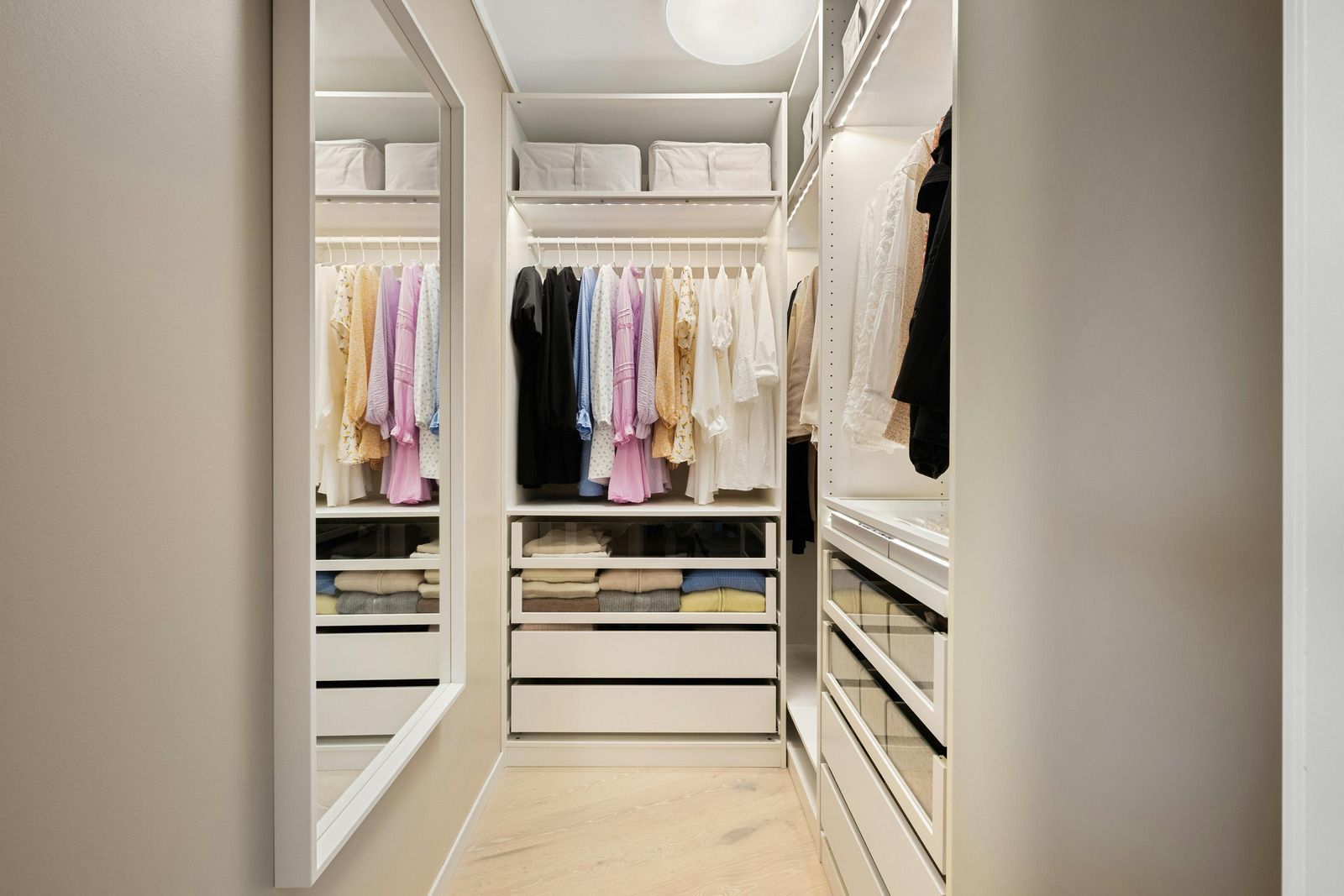
Spacious walk-in closet with white shelving, hanging clothes, drawers, and full-length mirrors.
October 30, 2026
Explore fitted wardrobe design features that simplify seasonal clothing rotation. Discover smart storage solutions, adjustable shelving, and practical layouts for effortless organisation year-round.
Modern walk-in closet with brown sliding doors, open shelving, hanging clothes, and vanity mirror.
By Glen Milton • October 30, 2026
Compare oak, walnut, and ash wood for fitted wardrobes. Explore their durability, appearance, and finishes to find the right style for your home.
October 30, 2026
Learn how to clean and maintain fitted wardrobes with practical tips for protecting surfaces, keeping storage fresh, and ensuring long-lasting functionality.
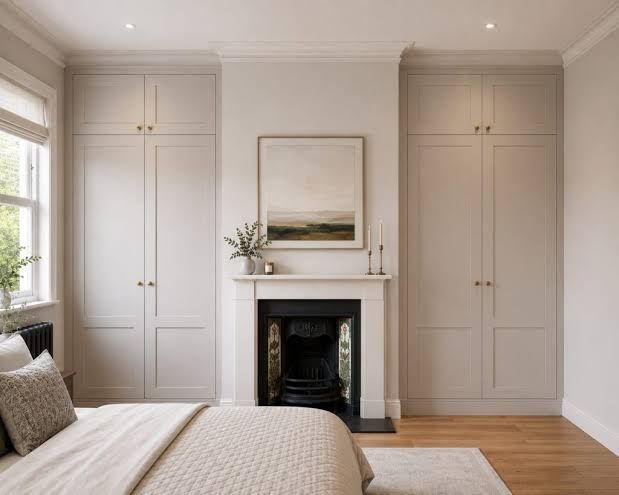
Bright bedroom with built-in closets, a fireplace, and a bed by large windows.
October 30, 2026
Explore fitted wardrobe ideas around chimney breasts in London period homes. Discover stylish, space-saving designs that blend storage with traditional character.
September 30, 2026
Fitted wardrobes for downsizing help London homeowners maximise smaller bedrooms with tailored storage, organised interiors, and space-efficient designs for simpler living.
Show More