Condensation and Damp Behind Fitted Wardrobes on External Walls
Will a fitted wardrobe on an external wall cause damp?
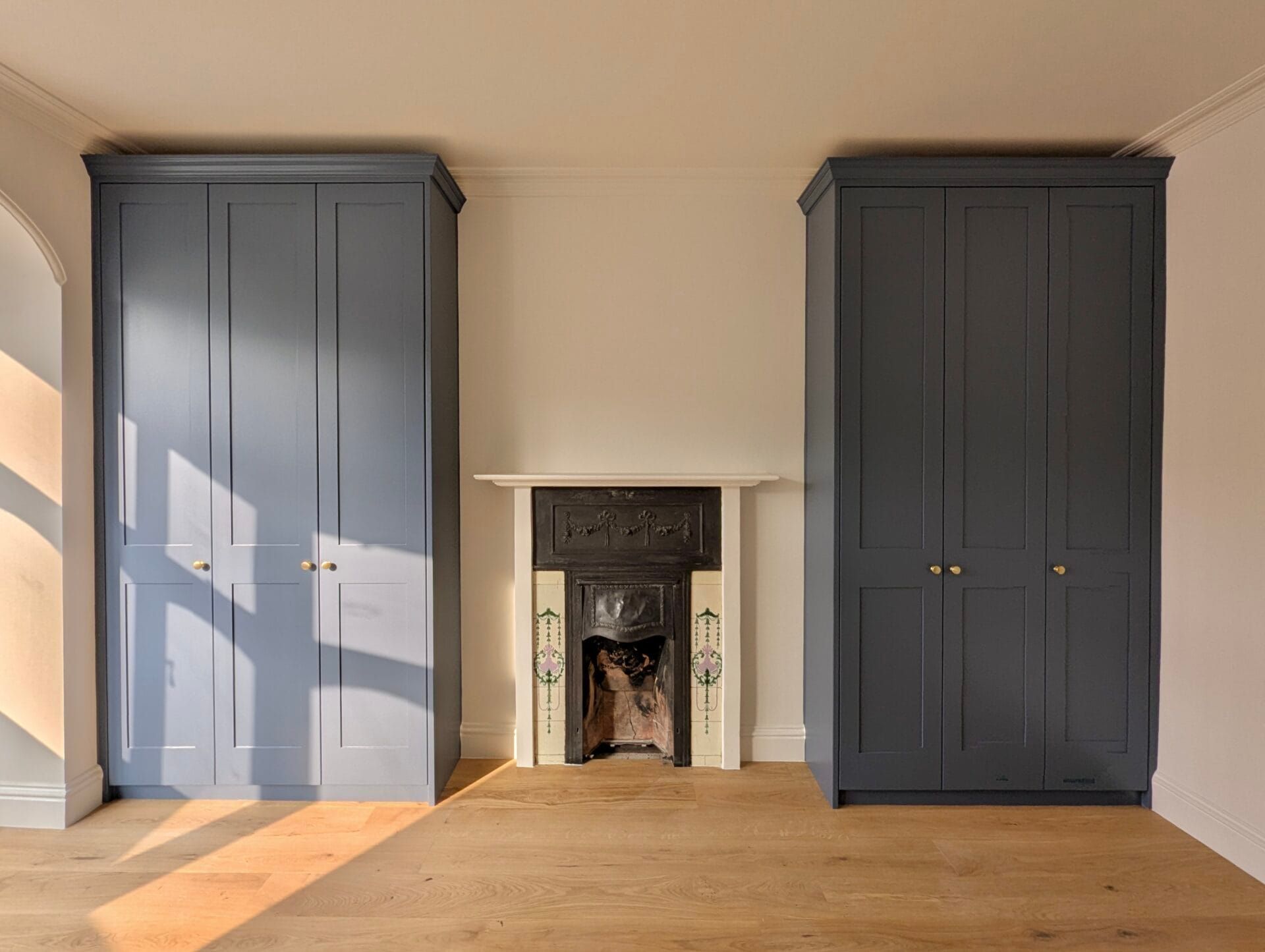
A wardrobe does not create damp. Condensation forms where warm, moist room air meets a cold surface and cannot circulate away — a wardrobe pressed flat against a cold external wall removes air movement from that spot. Because a bespoke wardrobe is designed around the architecture of your actual room, the wall it sits against is a design consideration rather than something discovered years later.
It is one of the most common concerns people raise before committing to built-in storage, and it deserves a proper answer rather than reassurance.
The worry is legitimate. Plenty of homeowners have pulled an old wardrobe away from a bedroom wall years after it went in and found staining on the plaster and a musty smell in the clothes. What matters is understanding what caused it, because it was almost never the wardrobe.
What actually causes it
Condensation is a temperature problem before it is a furniture problem.
Warm bedroom air holds moisture — from breathing overnight, from a bathroom on the same landing, from clothes drying indoors. When that air meets a cold enough surface, the moisture leaves it and settles as water. On a window you see it and wipe it. On the inside face of a cold external wall, behind a solid piece of furniture, you never see it at all.
Three conditions have to coincide:
- A cold surface — an external wall, especially a solid brick one in an older property, runs colder than the internal walls around it.
- Moist air — every occupied bedroom produces it.
- Still air — the only factor furniture affects.
A wardrobe cannot make a wall colder and does not add moisture. What it can do is stop air moving across one patch of wall. That is the whole mechanism.
It is also why the problem is seasonal and why it shows up in the same places every time. Through the winter, the gap between room temperature and wall temperature is at its widest, which is when the moisture in warm air has somewhere cold to go. And it appears first in the coldest, stillest spots — external corners, the wall behind a headboard, the back of a cupboard on an outside wall — rather than evenly across a room.
Why freestanding isn't automatically safer
The usual advice is to avoid built-ins on external walls and leave a gap behind a freestanding unit instead.
In practice, the gap disappears. Freestanding wardrobes get pushed back to reclaim floor space, moved during redecoration and never returned. Nobody measures or maintains that gap. A freestanding wardrobe flush against a cold wall behaves exactly like a poorly considered fitted one — while also wasting the space above and beside it, which in a London bedroom is space you cannot afford to lose.
The meaningful difference is not fitted versus freestanding. It is whether anybody looked at the wall.
Check whether it is actually condensation
Before any of this becomes a furniture decision, it is worth knowing which problem you have, because they are not solved by the same people.
- Condensation appears on the cold face of a wall, usually in winter, usually in corners and behind things. It often shows as fine black spotting rather than a spreading stain, and clothes in the affected cupboard smell musty before anything is visible.
- Penetrating damp comes from outside — a failed gutter, cracked render, a blocked downpipe, defective pointing. It tends to appear as a patch that darkens after heavy rain and dries slowly afterwards, and it often sits high on a wall rather than low.
- Rising damp shows near the bottom of a wall, with a tide line, and is a building issue rather than a ventilation one.
The distinction matters because only the first is affected by where furniture sits. The other two need the appropriate trade, and building a wardrobe against either without resolving it is how a modest repair becomes an expensive one.
If you already have staining, spotting or a musty smell on the wall in question, say so at the design stage rather than after. It changes what should be built there, and possibly whether anything should be built there at all until it is sorted.
Where bespoke design changes the answer
Stock wardrobes come in fixed sizes and go wherever they fit. Whatever is behind them is whatever happens to be behind them.
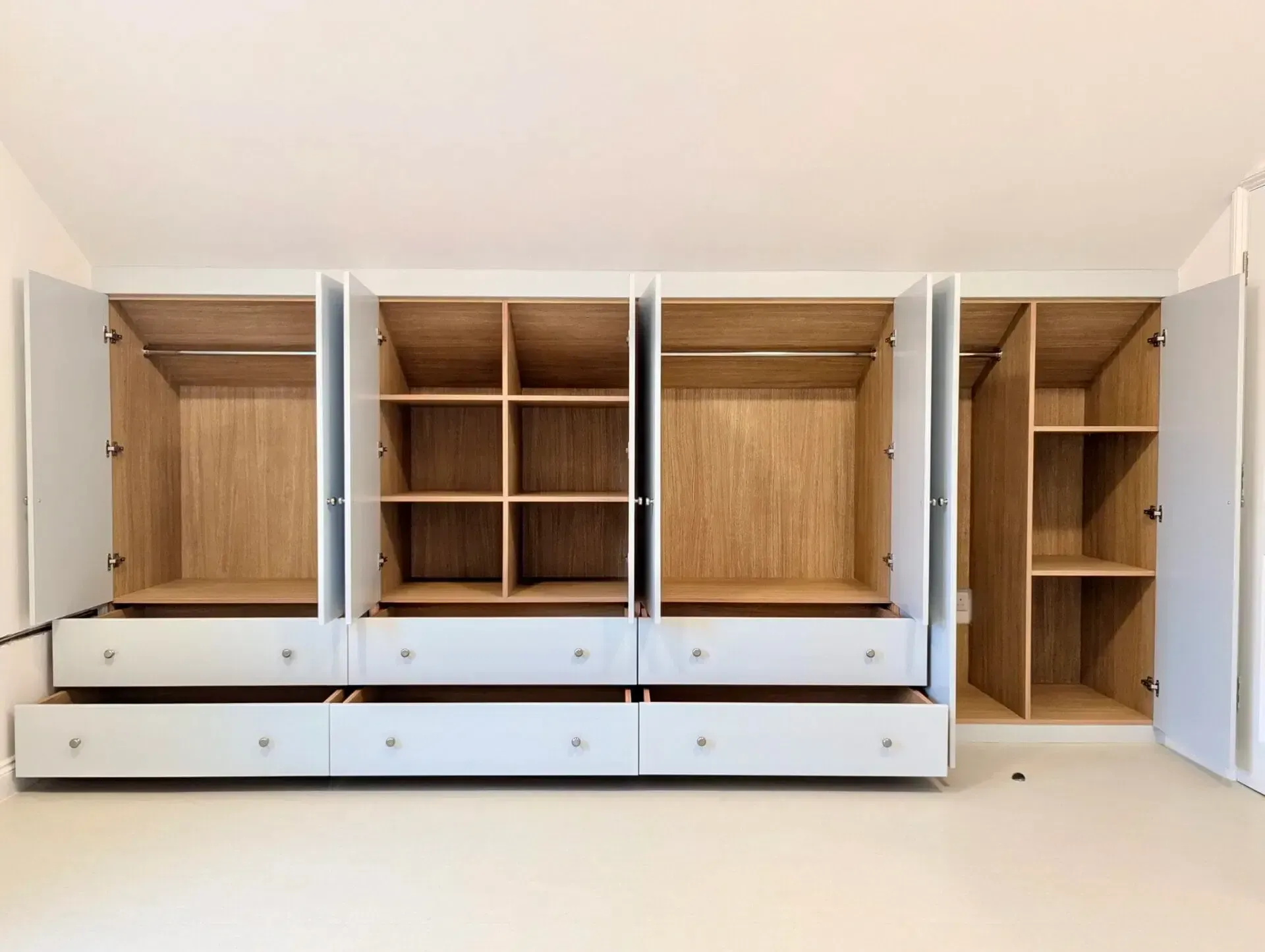
A bespoke project starts the other way round. The consultation looks at your storage needs, your aesthetic preferences and the architectural details of your home together, and produces a full 3D drawings package before anything is made. That is the point at which a cold external wall stops being an assumption and becomes information the design responds to.
In practice, that means the wall gets a say in the layout. Which run goes on which wall becomes a decision rather than an accident — in plenty of rooms the deep hanging can sit on an internal wall while the external wall carries shallower shelving or a dressing area. How the unit meets the wall, what sits directly against it, and whether that particular wall is the right one for a full-depth closed run are all questions with answers at drawings stage and none at all on installation morning.
The rooms where it matters most
Raise it specifically if your project involves:
- A north-facing bedroom, which stays colder and dries more slowly
- A solid-wall period property without cavity insulation
- A room next to or above a bathroom, where moisture arrives from elsewhere
- A spare room that is rarely heated and rarely opened
- A loft room, where storage often sits against the coldest surfaces in the house
None of these rule out
fitted storage. They are simply worth raising before the drawings are signed off.
Ask these at your consultation
- How will the back of this unit sit against this particular wall?
- Is this wall solid or cavity, and does it change anything?
- Is there existing staining or damp on it now?
- Is there anything I should do differently in this room afterwards?
A designer who cannot engage with the first two is fitting a product rather than designing for your house.
What you control afterwards
Ventilate the room properly. Opening a window for a short period each morning removes more moisture than any furniture decision.
Never put damp clothes away. They release moisture into a closed space with no airflow — the most common cause of musty-smelling wardrobes.
Don't dry laundry in the bedroom. It undoes everything else.
Open the doors occasionally, particularly in a guest room nobody uses.
Don't pack it to the doors. A wardrobe crammed solid has no air movement inside it at all. Leaving clothes hanging with a little space between them is worth more than any product you can buy.
Heat the room reasonably evenly. A bedroom that is warm at night and stone cold all day gives moisture the coldest possible surface to settle on. A low, steady background heat through winter does more than an intense burst in the evening.
Resolve existing damp first. A wall with an existing problem needs that problem solved before anything is built against it. Building over it only hides it.
The short version
A fitted wardrobe on an external wall is not a mistake. One designed without any reference to the wall behind it might become one. The difference is whether somebody measured and thought about your specific wall before anything was made.
Frequently Asked Questions
Does a fitted wardrobe cause condensation?
No. Condensation is caused by warm, moist air meeting a cold surface where air cannot circulate. Furniture can contribute by stopping air movement in one place.
Can you fit a wardrobe against an external wall?
Yes. Because bespoke units are designed around your room's architecture, the wall behind is considered at design stage.
How do I tell condensation from other damp?
Condensation appears on cold surfaces in winter, typically in corners and behind furniture, often as fine black spotting. Damp that darkens after rain, or that rises from the bottom of a wall with a tide line, is a building problem for the appropriate trade.
Should damp be fixed before installation?
Yes. Existing damp should be resolved by the appropriate trade before anything is built against that wall.
Why do my clothes smell musty?
Usually damp air trapped in a packed, unventilated space — often from putting clothes away before they are fully dry. Leave space between garments and open the doors periodically.
Do fitted wardrobes make a bedroom colder?
No. They do not change how a room is heated. What matters is airflow around the unit.