Do Fitted Wardrobes Add Value to a London Home? Estate Agent & Valuation Insights

April 30, 2026

Share this article

The short answer is yes — with meaningful caveats. The longer answer is the one you actually need if you're spending real money before a sale.


Humphries Cabinets has already published a broader guide on how bespoke fitted furniture can increase your home's value, and the argument there is clear: fitted furniture improves storage, elevates how a home is perceived, supports stronger valuations, and makes a property feel more move-in ready during viewings. Those benefits are real and well-established.


This article goes a layer deeper — specifically for London homeowners thinking about a sale in the next two to five years. It covers which property types see the clearest return, which see less, what happens during viewings and valuations, what styles tend to read as timeless versus niche, and when not to install before listing. The goal is practical decision-making: is this worth the spend for your specific property, on your specific timeline?

The short answer — and why it depends

Well-executed fitted wardrobes almost always improve how a London home shows during viewings. Whether they translate into a specific pound figure on the sale price depends on three variables the homeowner can control, and several that they can't.


What the homeowner controls: the quality of the work, the timelessness of the finish, and the match between the furniture and the buyer who is likely to purchase the property.


What the homeowner doesn't control: the buyer pool, the market conditions at the time of sale, the property's starting point (is storage currently a genuine weakness?), and how the agent positions the home.


The honest framing isn't "fitted wardrobes add £X to your property." It's that they remove an objection, speed the sale, and support the asking price — all three of which matter more in a slow market than in a hot one, and all three of which are worth more in property types where storage is genuinely a selling issue.

What London estate agents typically look for

Across boroughs and property types, a consistent pattern shows up in how agents talk about fitted storage during valuations and viewings:

  • Storage is one of the most-cited objections in buyer feedback. A flat or house that answers the storage question before it's asked tends to get faster decisions.
  • "Move-in ready" is a meaningful pricing signal. Buyers routinely discount properties that feel like they'll need immediate work. Built-in wardrobes reduce that perception.
  • Quality is visible, and so is its absence. A flush, properly finished fitted wardrobe reads differently to a buyer than a flat-pack unit against a wall. Soft-close hinges and drawer runners, consistent finishes, and clean scribing against walls are details agents point at during viewings.
  • Neutral, timeless choices travel further. Highly personalised colour choices or heavily statement hardware can narrow the buyer pool on an imminent sale.

A useful frame: fitted wardrobes don't usually create buyers who wouldn't otherwise be interested. What they do is convert undecided viewers — and make higher offers more defensible when they come in. This aligns with Humphries' broader position that fitted furniture "helps potential buyers immediately recognise the benefits of the space" and reduces objections during viewings.

Property types where fitted wardrobes tend to add the most value

Fitted furniture has the strongest impact where storage is genuinely a weakness of the property's current state. In London, that usually means:

Victorian and Edwardian conversions

Loft conversions and top-floor flats

Family houses in zones 2–4

Warehouse and industrial conversions

Property types where ROI is usually smaller

Fitted wardrobes are a much weaker investment in some situations:

New-build flats with existing integrated storage

Ultra-high-end homes

Studios and one-beds aimed at investors

Properties where the sale is imminent

How much value can fitted wardrobes actually add?

Worth being direct about what anyone claiming a specific number is actually claiming. There is no universal figure. A valuer won't typically assign a fixed monetary amount to fitted wardrobes alone — the honest position captured on Humphries' own site — but fitted furniture influences valuation through the overall impression it creates of a well-maintained, thoughtfully designed, move-in-ready home.

A more useful way to think about the return:

  • The wardrobes help the home sell faster, which has a real financial value (reduced carry costs, less price reduction pressure, fewer aborted viewings).
  • They support the asking price rather than adding to it. The property is more likely to achieve the list price, or close to it, rather than commanding a premium above it.
  • They reduce perceived renovation cost in the buyer's mind, which makes offers at asking more comfortable to make.
  • They remove the "no storage" objection, which is disproportionately common in London feedback.

In a slow market, these effects are worth more. In a fast market, they're worth less. What doesn't change is that poor-quality or over-personalised fitted work can actively subtract value, which is why the specification conversation matters before any work starts.

The hidden value — sale speed and buyer emotion

Time on market is an underrated cost. Every additional week a property is listed increases carry costs, raises the likelihood of a price reduction, and slowly erodes agent enthusiasm. Anything that genuinely shortens time on market is financially meaningful, even if it doesn't show as a higher headline sale price.

Fitted wardrobes contribute to this in several ways:

  • Photography. A fitted bedroom photographs better than a freestanding-furniture bedroom. Listings with strong interior images generate more viewings.
  • Viewings. Buyers spend more time in well-staged, uncluttered rooms, which correlates with offer likelihood.
  • Second viewings. Storage is a common question asked on the second visit. Homes where it's already resolved tend to move faster to offer.
  • Decision-making confidence. When a buyer can see that the property "works" without them having to imagine retrofitted storage, the commitment is easier.


None of this shows on a valuation report. All of it shows on a completion date.

Generally travels well:

  • Shaker — Humphries' most popular style, and one that fits Victorian and Edwardian houses naturally, while reading as contemporary enough for newer properties.
  • Handleless / modern — clean lines, push-shut mechanisms, suit modern flats and warehouse conversions.
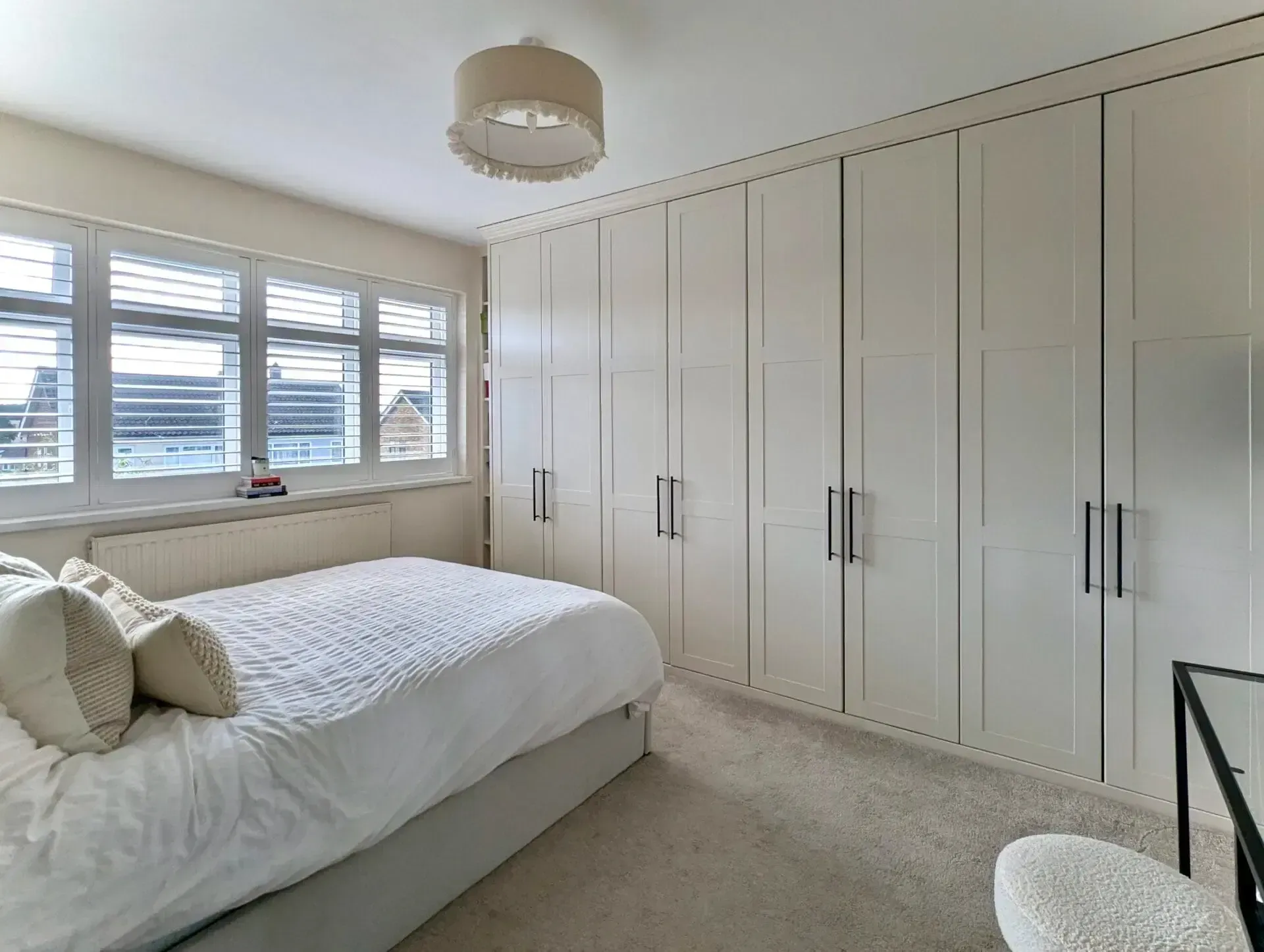
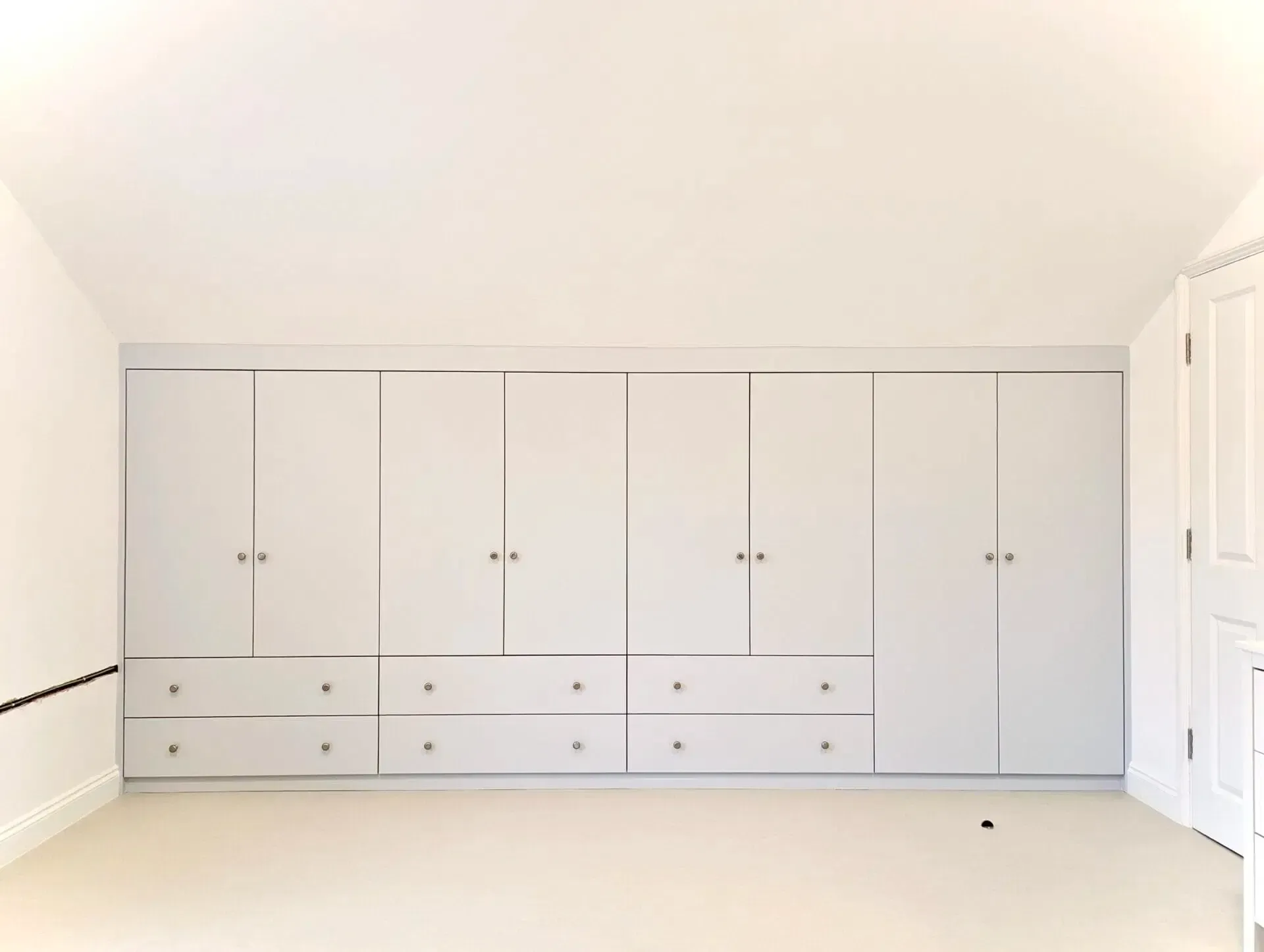
  • Floor-to-ceiling — maximises storage and reads as premium.
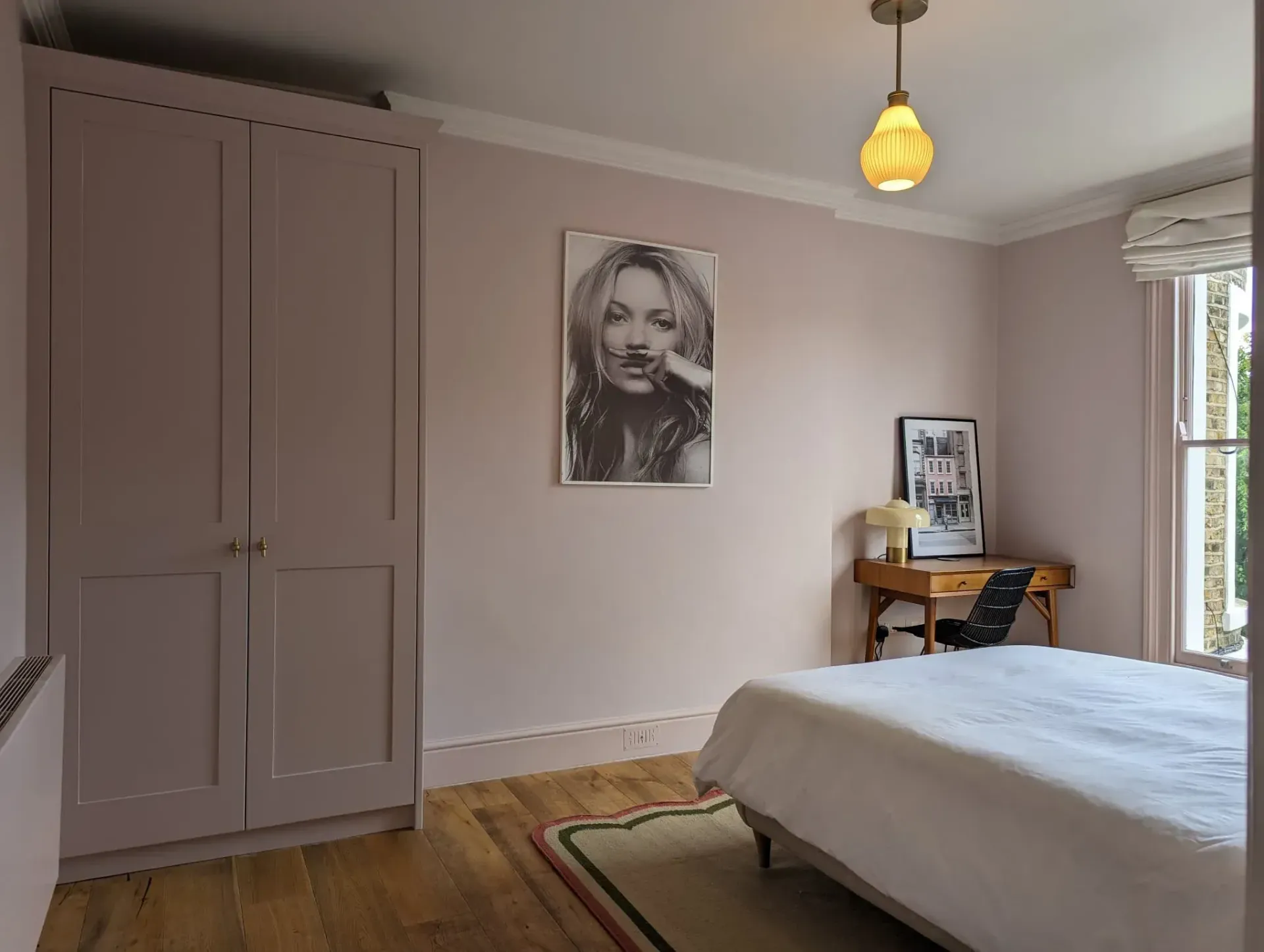
  • Neutral hand-painted colours — soft whites, warm greys, muted tones from the Little Greene range.
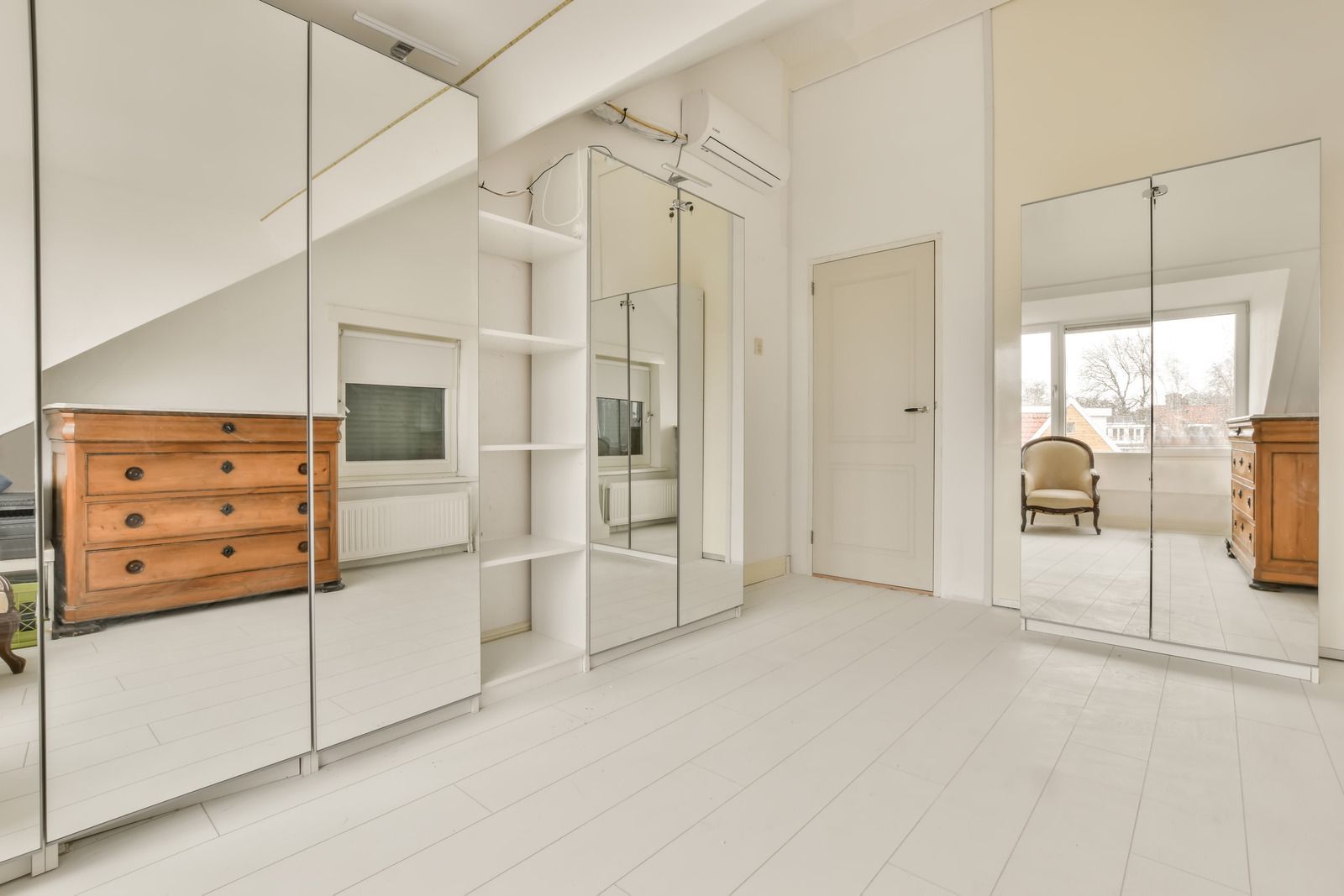
  • Integrated mirroring — expands the sense of space in smaller bedrooms.

Narrows the buyer pool:

  • Strong statement colours that read as personal rather than universal.
  • Heavily ornate period matching in properties that don't already have strong period features to match.
  • Very distinctive hardware that reads as era-specific.
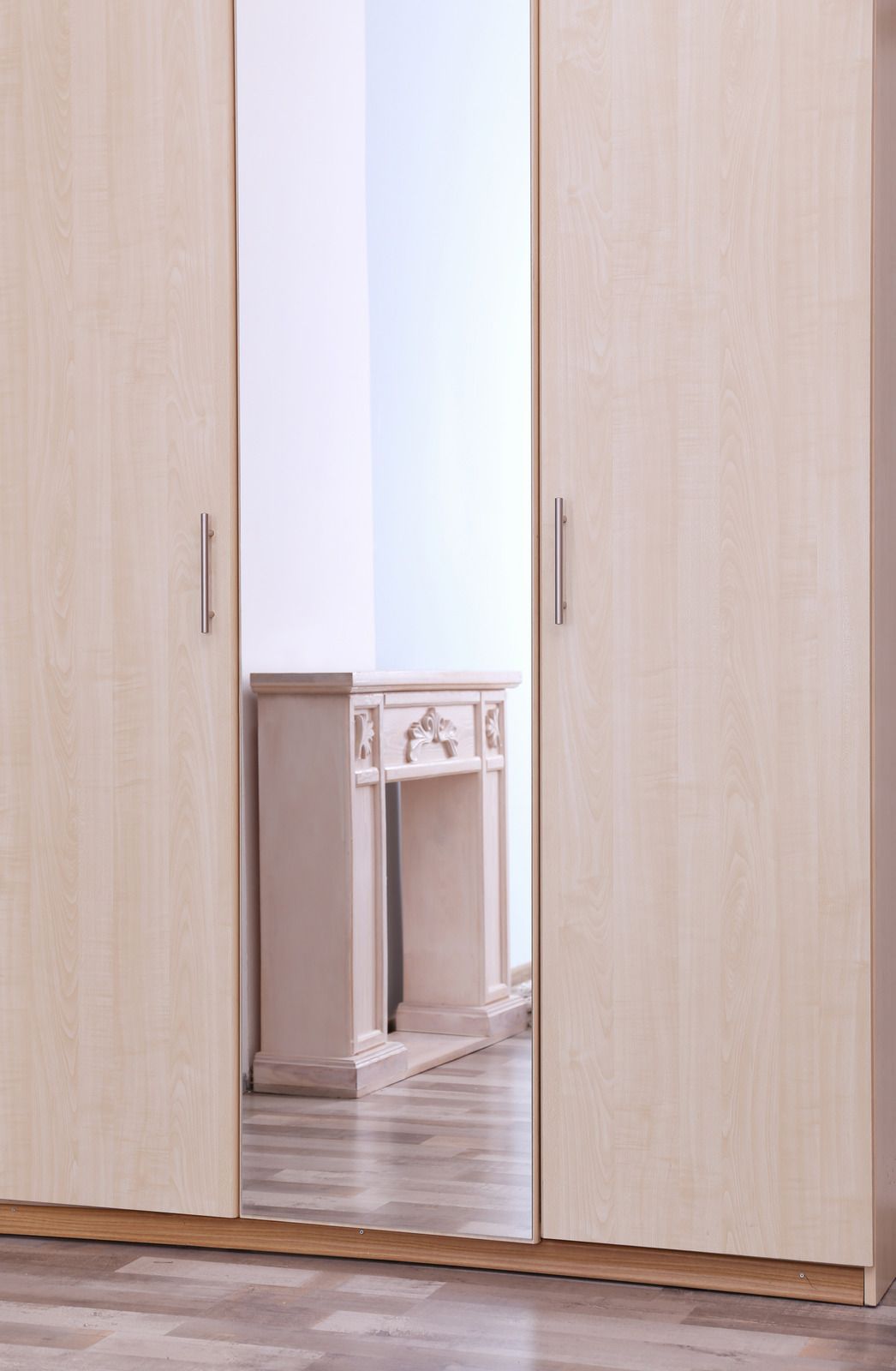
  • Wood grain-effect laminates in unusual tones — the Humphries laminate option is excellent for speed and durability, but colour choice within it matters for resale.

What styles appeal to London buyers right now

If fitted wardrobes are being installed with a sale in mind within the next two to five years, style choices matter differently than if they're being installed for personal use.

This doesn't mean "always play it safe." Homeowners who plan to stay longer have more latitude. It does mean that if the sale window is short, style neutrality is a defensible choice.

When NOT to install before selling

Three situations where installing fitted wardrobes before a sale is probably the wrong move:

  1. The listing is imminent, and the work won't finish cleanly in time. Fitted wardrobes — especially hand-painted, which require a separate on-site painting visit after the carpentry — cannot be rushed without showing it. A half-finished install during viewings actively harms the sale. Either commit with enough lead time or skip it.
  2. The style doesn't match the incoming buyer. If the property is clearly targeted at renovators, investors, or very high-end buyers likely to redesign, the spend may not be recovered.
  3. The room itself has other fundamental problems. Fitted wardrobes don't compensate for damp, bad light, a compromised layout, or disrepair elsewhere in the property. Spend the money on the bigger issue first.

As a guideline: if you're uncertain whether your timeline allows for proper design, manufacturing and installation (including the on-site hand-painting visit if that finish is chosen), have that conversation with the designer at the free design visit before committing. An honest "this won't land in time for your listing" is more useful than a rushed install that disappoints.

Getting the return — a pre-sale checklist

If fitted wardrobes are going in specifically to support a sale within the next 12–24 months:

  • Choose a neutral, timeless finish. Soft whites, warm neutrals, or muted tones from the Little Greene range. If you want faster turnaround and lower maintenance, Humphries' wood grain-effect laminate in a neutral tone is a genuine alternative.
  • Specify soft-close hinges and drawer runners — though these are standard on every Humphries unit, worth confirming on any quote you compare against.
  • Keep hardware conservative. Standard handle options rather than statement ironmongery.
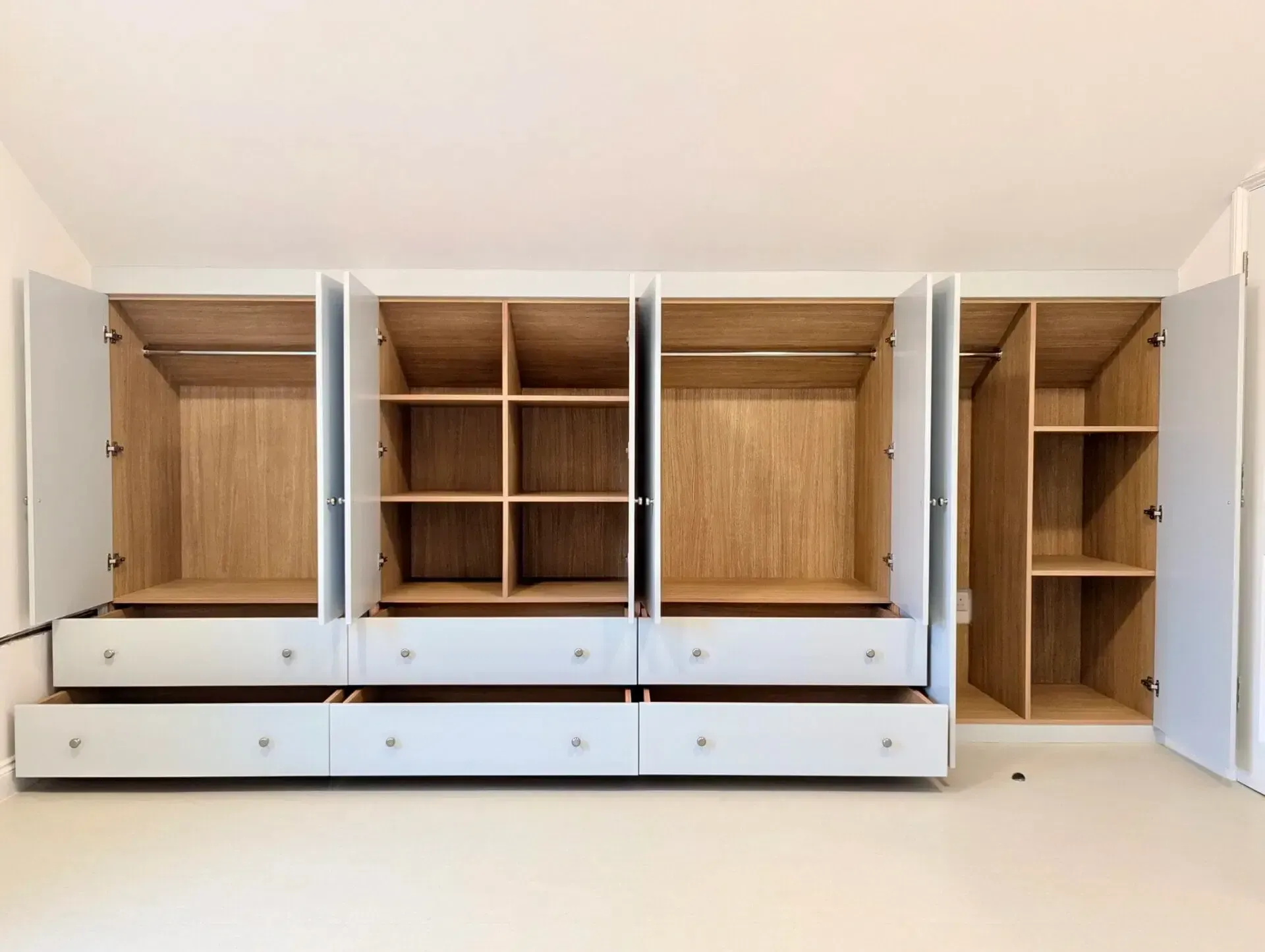
  • Include proper interior fittings — hanging rails, drawers, shelving, and shoe storage. A beautiful exterior with a threadbare interior undersells the investment.
  • Work with an agent who understands the premium. A listing agent who highlights fitted storage in marketing copy and photography gets more out of the investment than one who buries it.
  • Retain all paperwork. The 3D drawings package, the quote, the specification sheet, and critically the 15-year guarantee Humphries provides on its work — all of these can transfer to the buyer and reinforce the quality signal at viewing and solicitor stages.
  • Photograph the wardrobes well. Listing photography that features the storage, not just the bed, makes the investment visible to every viewer.

A frank conversation before you commit

If you're planning a sale within the next one to two years and weighing whether fitted wardrobes are worth the investment for your specific property, the most useful first step is a free design visit. A designer comes to your home within the M25, surveys the space properly, and can give you an honest read on whether fitted makes sense for your property type, your timeline and your likely buyer — not a sales pitch to install regardless.


Worth reading alongside the existing piece on how bespoke fitted furniture can increase your home's value, which covers the broader case for fitted work beyond the pre-sale lens.


Browse the Portfolio to see how fitted wardrobes have been built into the kinds of London properties described above — period conversions, loft rooms, modern flats, family houses. The range gives a clearer sense of what "fitted" actually looks like in a real property, which is often more useful than any valuation estimate.


Call 02082594871 or book online. If the timing or the property type doesn't support the spend, the design visit is the place to find that out — before the workshop starts cutting.

Recent Posts

Built-in sage green storage cabinets in a bright room with a woven chair by the window.
April 30, 2026
Somewhere in most fitted wardrobe projects sits a decision the buyer doesn't always realise they're making. The fitted wardrobe market has two broad supplier types
Small attic office with bookshelves, desk, gray sofa, and skylight window.
April 30, 2026
Most buyers don't think about install day until it's two days away. Up to that point, the focus has been on the design — measurements, finishes, interior layouts, the 3D drawings
Minimalist mirrored hallway with beige walls, wood floor, and navy cushions along the sides
April 30, 2026
There's a tier of fitted furniture beyond even a full wall of wardrobes: the dressing room. An entire room — or a generous walk-in extension of a bedroom
April 30, 2026
With that caveat settled, this guide walks through what most London homeowners actually need to know. London has one of the highest concentrations of listed buildings and conservation areas in the UK
Bright attic room with skylight, white built-in cabinets, radiator, and potted palm on carpeted floor
April 30, 2026
Bespoke fitted furniture is built to outlast several sofas, several cars and at least one round of redecoration. The work is hand-built, properly finished, and comes with a 15-year guarantee on the carpentry
White paneled closet doors with brass knobs in a bright hallway
April 30, 2026
You've got two quotes sitting in your inbox. Both are for fitted wardrobes in the same bedroom, both describe roughly the same layout, and one is significantly cheaper than the other.
Bright bedroom with white built-in wardrobes, bed, window blinds, and beige carpet
April 30, 2026
London is a city of leaseholders and long-term tenants. A large share of its housing stock is flats, a large share of those flats are leasehold, and a large share of tenancies in prime boroughs run for years rather than months.
Bright empty bedroom with bay window, white radiator, and built-in pale green wardrobes
April 30, 2026
Most people who visit the Humphries Cabinets website and hover over the "Book a Free Design Visit" button don't click it. Not because they're not interested
April 30, 2026
If you're asking how long fitted wardrobes take, there's usually a deadline behind the question. A baby on the way. A completion date on a flat in Clapham.
By Nitin Abhi April 1, 2026
London homes are as diverse as the city itself. From compact modern flats to elegant period properties, each space presents its own unique opportunities and challenges—particularly when it comes to storage. Wardrobes play a crucial role in maintaining organisation and enhancing interior design. However, standard solutions often fall short in London homes, where layouts can be irregular and space is at a premium. Bespoke wardrobe design offers a tailored approach, allowing storage to be adapted precisely to the architecture and style of each property. This ensures maximum efficiency without compromising on aesthetics. This guide explores the best wardrobe design approaches for London homes, helping you create a solution that complements both your space and your lifestyle.
Show More