How to Prepare Your Home for Fitted Furniture Installation: A Checklist for London Homeowners
Most buyers don't think about install day until it's two days away. Up to that point, the focus has been on the design — measurements, finishes, interior layouts, the 3D drawings, and the paint colour. Then the email lands confirming the install date, and the practical question arrives: What am I supposed to do before they get here?
This guide answers that question properly. It's the pre-install handover no supplier gives you formally — a clear, timeline-based checklist covering everything from the weeks before to the moment the fitters knock on your door. At Humphries Cabinets, our team brings dust sheets, protects flooring, and cleans up thoroughly at the end of every job. But installation still goes better — faster, cleaner, with less risk to your belongings — when the homeowner has prepared the space properly. Here's how.
Why pre-install preparation actually matters
A fitted furniture installation is a real piece of construction work happening inside your home. It involves carrying long panels through hallways, cutting MDF on site, using drills and power tools, and moving repeatedly between the vehicle and the room. The cleaner and clearer the space is when the fitters arrive, the faster they can work, the less risk there is to surrounding furniture or decoration, and the better the finished result will be.
Humphries' fitters arrive with dust sheets, plastic sheeting and their own protection materials. Workshop preparation happens before they leave the workshop, so on-site cutting is kept to a minimum. But even with all of that, a cluttered room, an uncleared wardrobe, or a blocked hallway adds time and friction to a day that should flow smoothly.
Think of this guide as a light partnership. We handle the install; you handle the space.
2–3 weeks before installation
The early stage is mostly about confirming what's already been agreed:
Final design sign-off
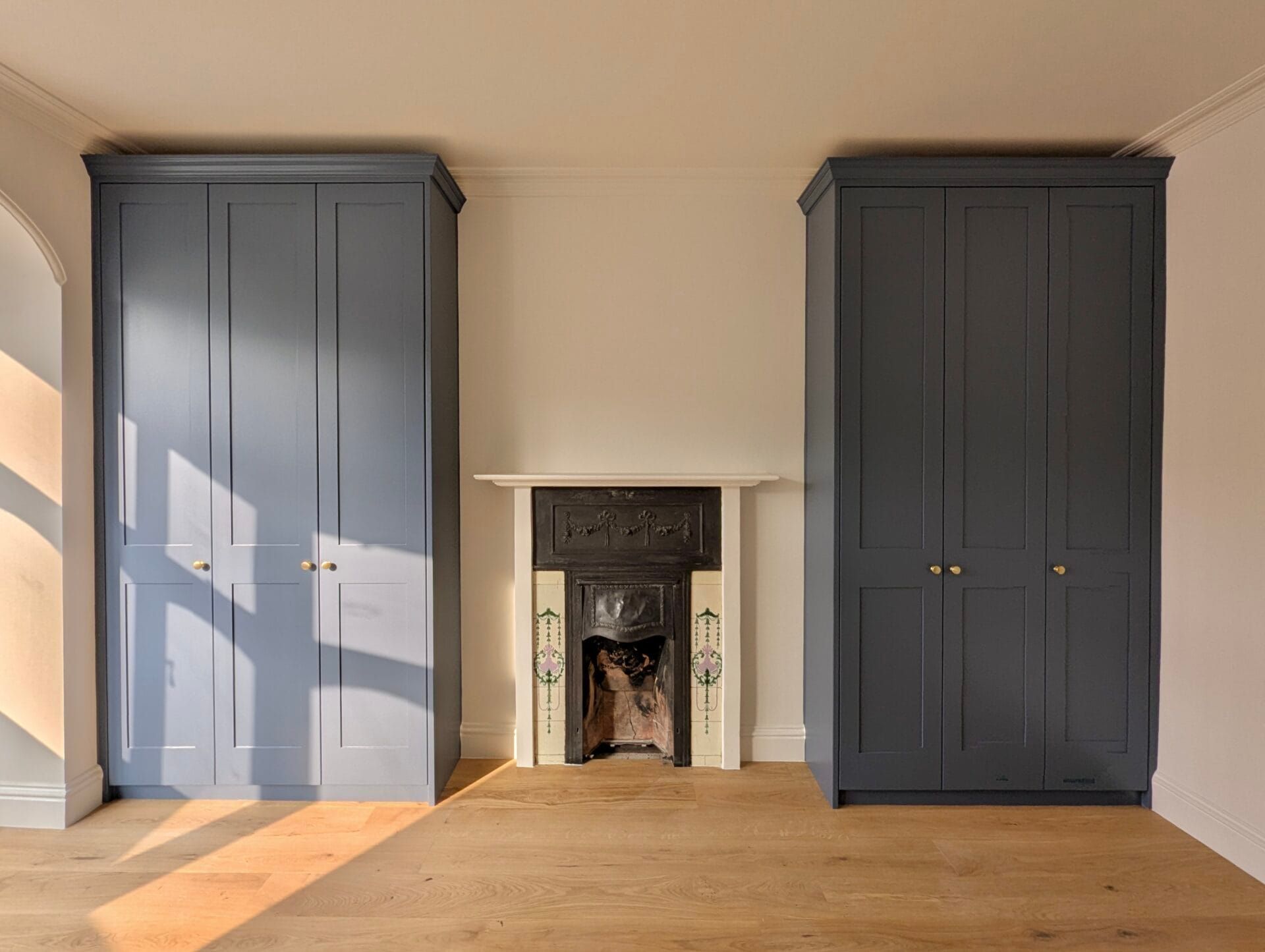
The 3D drawings, the finish, the Little Greene colour (if hand-painted), the interior layout, the door style, and the handles. Everything should be signed off before the workshop starts, cutting — and that means now.
Install date and (for hand-painted projects) painting visit scheduling
Hand-painted finishes are applied on-site as a separate visit after the carpentry is complete. If your project is hand-painted, you'll have two separate visits in the diary, not one — worth confirming both dates are booked and understood.
Communication expectations
Humphries makes a point of keeping clients updated during the process, so if start dates need to be adjusted or unexpected issues come up, you'll hear about it early. If you haven't had a recent update as install day approaches, a quick call or email to your project contact (Dariia, Marina, or whoever has been looking after your project) is a sensible move.
Any access or parking questions
If you live somewhere that presents access challenges — a mansion block, an upper-floor flat, a conservation area — flag it to the team now rather than the day before.
For all four layouts, Humphries produces a full 3D drawing package as part of the design process, so you can see exactly how the proposed layout will work in your specific room before anything is built. Walking through the drawings is often the clearest way to tell whether a layout that looks fine on paper will actually feel right in the space.
1 week before installation
This is where the practical preparation starts. Give yourself a weekend to work through it, not an hour.
Clear the installation room of freestanding furniture. Beds, dressers, bedside tables, freestanding wardrobes — whatever was in the room needs to be somewhere else. Either move to another room in the house or push into the centre and cover, depending on how much space there is and how much the fitters need to work against the walls.
Empty existing wardrobes, drawers and alcove furniture. If Humphries is replacing existing built-in furniture, the contents need to be out. Clothes bagged or boxed, personal items relocated. This is often the single most time-consuming part of preparation — start early.
Remove wall-mounted items in the installation zone. Pictures, mirrors, shelves, sconces, and any hooks. Fill the holes if you're planning to repaint afterwards. If the fitted work is going floor-to-ceiling or full-wall, the walls need to be blank canvas.
Protect the pathways the fitters will use. Think about the route from your front door to the room being worked on. Rugs in hallways are worth rolling up. Valuable or fragile items along the route are worth relocating. A tight corner where a panel might catch is worth noticing now rather than during the install.
Move valuables and fragile items further away. Nothing catastrophic tends to happen, but even with dust sheets, fine particles travel. Artwork, delicate electronics, silk lampshades — move them to a different room while the work is happening.
Confirm what Humphries will and won't move. Practices vary across fitted-furniture suppliers. Some pieces will be worked around; others need to come out completely. If you're uncertain about specific items, ask your project contact during the design sign-off or the week before install.
The day before installation
The final run-through:
Confirm arrival time with the team, including any flexibility on start window. Fitters typically arrive first thing in the morning, but confirm what "first thing" means so you're not up at 6am unnecessarily or still in pyjamas when the doorbell goes.
Clear parking where possible. This is where London-specific preparation really matters — we'll cover it properly in the next section.
Ensure clear access from the front door to the room. Take a quick walk through the route. Close any doors that don't need to be open. Move anything that's drifted into the hallway back to where it belongs.
Plan around pets and kids. Fitters work efficiently, but the day inevitably has drilling, cutting, and movement. Dogs often find it stressful; young children even more so. If possible, the installation room (and ideally the hallway leading to it) should be off-limits to pets and small children during working hours. A friend's house, a day at nursery, a long walk — whatever works for your household.
Stock up on tea, coffee and biscuits. British tradespeople run on them. It's not a formal expectation from Humphries, but offering a cup of tea to the team is the cultural norm, and a small kindness that's universally appreciated.
London-specific considerations
London installations come with their own logistical layer, and getting these right makes a meaningful difference on the day.
Parking. Controlled parking zones (CPZs), residents-only streets, pay-and-display restrictions, school-zone timings — all of it matters. If your street has restricted parking, look into visitor permits or day passes from your borough in advance. Some councils allow digital purchase of visitor parking on the day; others require permits ordered ahead of time. Let Humphries know any parking constraints ahead of install day so they can plan vehicle access around them.
Narrow hallways and stairs. Mansion blocks, converted period buildings, and upper-floor flats often have access challenges that flat-pack buyers don't encounter. Panel sizes are limited by what can physically fit through the route. Humphries' workshop prep accounts for most of this — but if your building has an unusual access profile (tight turns on a staircase, narrow lift, unusual door widths), mention it early so the team can design around it.
Upper-floor flats without lifts. Walking panels, tools and materials up multiple flights of stairs adds time to the job. Not a problem, but worth flagging when you book, so scheduling and logistics account for it.
Listed or conservation-area properties. If your property is listed or in a conservation area, any specific consent requirements should already have been handled before the install date. On the day itself, there may be rules about the use of communal areas, working hours, or access that affect scheduling — particularly in mansion blocks with active building management. Check with your management company in advance.
Shared entrance buildings. Being considerate of neighbours — forewarning them if it's a larger installation, keeping noise within reasonable hours, not leaving tools or materials in shared areas — makes the experience smoother for everyone.
What Humphries handles on install day
To set expectations clearly, here's what you can reasonably expect from the team when they arrive:
Dust sheets and plastic sheeting
laid down before any work begins, protecting both the flooring and the nearby furniture
Workshop prep complete
as much as possible of the cutting and finishing work has been done before arrival, reducing on-site dust and mess
On-site cutting kept minimal
and is done outside wherever the weather and property access allow
Clean-as-we-go approach
reviews repeatedly highlight that Humphries' carpenters vacuum throughout the day, including (in one customer's case) the front garden where cutting had happened, to prevent dust travelling back into the house
Full cleanup at the end of the day
ith the work area vacuumed and the space left tidy
Communication during the work
if anything unexpected comes up, rather than silent surprises at the end
What to expect during installation
The fitters arrive, protect the space, bring panels and materials in from the vehicle, and start assembly. Larger installations may run across multiple days, particularly for full-wall wardrobes or projects with multiple rooms involved. For hand-painted projects, the carpentry phase is usually the longer visit; the painter returns separately, sometimes days later, once the carpentry is fully complete.
The sequence is generally: prep and protect, position carcasses, fit doors and drawer fronts, install interior fittings, final adjustments, and a walk-through with you before the team leaves.
Every unit is fitted with soft-close hinges and drawer runners as standard, so the finished work should close softly and sit flush when shut.
Immediately after installation
Before the team leaves:
Walk through the finished work with the lead carpenter. Check that everything matches the drawings. Open and close doors and drawers. Check interior configurations are as specified. Anything you notice on the day is easier to resolve on the day.
Understand the timeline for moving belongings back in. For laminate-finished units, this is usually immediate. For hand-painted units, there's a window after the painter's final visit before heavy use is ideal — ask the team for specifics on your project.
Keep the paperwork. Drawings, quote, specification sheet, 15-year guarantee details. Useful for any aftercare conversations, and if you ever sell the property, it is useful to transfer to the buyer.
2–3 weeks before:
- Sign off on final design, 3D drawings, finish and interior layout
- Confirm install date (and painter's date for hand-painted projects)
- Flag any access, parking or property-specific considerations
1 week before:
- Clear the installation room of freestanding furniture
- Empty existing wardrobes, drawers, and alcove furniture
- Remove wall-mounted items in the installation zone
- Protect pathways and move valuables further away
- Confirm with Humphries what will and won't be moved by the team
Day before:
- Confirm arrival time
- Sort parking (CPZ permits, visitor passes)
- Ensure clear access from the front door to room
- Plan pets and kids around the day
- Stock, kettle, and biscuits
Install day:
- Expect dust sheets and protection down first
- Walk through the finished work before the team leaves
- Keep paperwork and drawings filed
The full checklist
For quick reference, here's the consolidated version by timeline:
FAQs
Do I need to move out during installation?
No. Fitters work with dust sheets and plastic sheeting and keep disruption contained to the working room. The rest of the house remains usable throughout.
Do you move heavy furniture for us?
Practices vary by project. Worth confirming specific items with your project contact ahead of install day rather than assuming.
What about protecting my carpets and flooring?
Dust sheets go down before any work starts. Cutting is kept outside where possible. Vacuuming happens throughout and at the end of the day.
Can installation happen around builders or decorators?
Humphries specialises in new fitted furniture built from the ground up, and the wardrobes typically go in once the room itself is ready. If you're coordinating multiple trades, flag it to your project contact early so scheduling can accommodate.
What happens if something's not right at the end of the day?
Raise it with the lead carpenter during the walk-through or contact Humphries directly via 020 8259 4871 or info@hcabinets.com. The team treats aftercare seriously — customer reviews describe Humphries returning for minor issues years after installation, which reflects how the business is run.
Your design visit is the best place to start
Preparation is the easy part once you know what to expect — and with Humphries, the communication that runs from the design visit through to installation day means you won't be left guessing at any stage.
If you haven't yet booked your project, a free design visit is the starting point. Our designer comes to your home, measures the space, and walks you through what your specific project will involve — including the practical realities of install day for your property.
For more on the Humphries process and standards, the FAQ page covers materials, guarantees, and what's included as standard.
Call 02082594871
or book online. Install day runs smoothly when the preparation is right — and now you know exactly what that preparation looks like.
Recent Posts