What to Expect from a Free Design Visit: A Step-by-Step Guide for London Homeowners
Most people who visit the Humphries Cabinets website and hover over the "Book a Free Design Visit" button don't click it. Not because they're not interested — they are. It's because they're quietly unsure what they're signing up for. Will there be a hard sell at the end? Does the room need to be "ready"? Do they need to know exactly what they want before a designer turns up? Will a half-tidied bedroom embarrass them?
This guide clears all of that up. It's a frank, step-by-step walkthrough of what actually happens during a fitted wardrobe design consultation with HUMPHRIES BESPOKE FITTED WARDROBES & CUPBOARDS FULHAM LIMITED — who turns up, what they do, what you should have ready, and what happens after they leave. No sales theatre. No pressure. Just the information you need to decide whether booking a visit is worth your time.
Spoiler: for most London homeowners considering fitted furniture, it is.
What a free design visit actually is (and isn't)
A free design visit fitted wardrobe appointment with Humphries is two things: a wardrobe survey and a design conversation. It isn't a sales pitch, it isn't timed against a quota, and it doesn't come with an expectation that you'll commit to anything on the day.
The visit itself is, in Humphries' own words, free with no obligation. A designer comes to your home — anywhere within the M25 — measures the space properly, talks through what you want to store and how you want it to look, and goes away to produce a full design and quote. You're free to say yes, say no, or take weeks to think about it. None of that costs you anything.
What the visit isn't: a situation where you're pressured into signing, a generic catalogue walkthrough, or a quick five-minute tape-measure job. Humphries specialises specifically in wardrobes, cupboards, shelves and related built-in furniture — not kitchens, bathrooms, internal doors, flooring or partition walls — and that specialism is reflected in how thoroughly the design visit is run. It's a proper conversation, not a drive-by.
Before the visit — what to prepare (and what you can skip)
You don't need to prepare much, but a few things genuinely help the designer give you the most useful conversation:
A rough budget bracket
You don't have to share a number, but having one in mind helps the designer steer the conversation toward finishes and features that realistically fit. Bespoke has meaningful choice points — a wood grain-effect laminate finish versus hand-painted, standard handles versus your own sourced ironmongery, ornate beading and cornice versus clean modern lines — and each changes the overall picture.
A mood board, Pinterest board, or screenshots
Images of wardrobes you like — or, equally useful, ones you don't like — shortcut the style conversation by a long way.
Rough measurements of what has to fit inside
The length of your current hanging rail and how full it is. How many pairs of shoes need a home? Whether you have long dresses or coats that need full-length hanging. Humphries' designers work hard on interior layout and will measure your existing hanging rail us
A reasonably tidy room
Not spotless. Not staged. Just enough that the designer can access the walls and see the space. Every London property has its quirks, and the team has genuinely seen it all.
What you can skip: a finished design, a detailed brief, exact dimensions, or a decorator's finish on the walls. The whole point of the visit is that you don't need to arrive with any of that.
The visit itself, step by step
Every home is different, and every designer brings their own rhythm, but a typical bespoke furniture home visit moves through four distinct phases. Here's what to expect.
Step 1 — Walking the space and discussing how you live
The visit usually starts with a walk-through and a conversation, not a tape measure. The designer wants to understand how you actually use the bedroom — whether you get dressed standing in front of the wardrobe or sitting on the bed, whether you need a dressing mirror inside the door or on the outside, whether double-hanging rails will get more out of your clothes than one long rail, whether you want drawers for underwear and folded items, whether shoes need a dedicated section or pull-out trays.
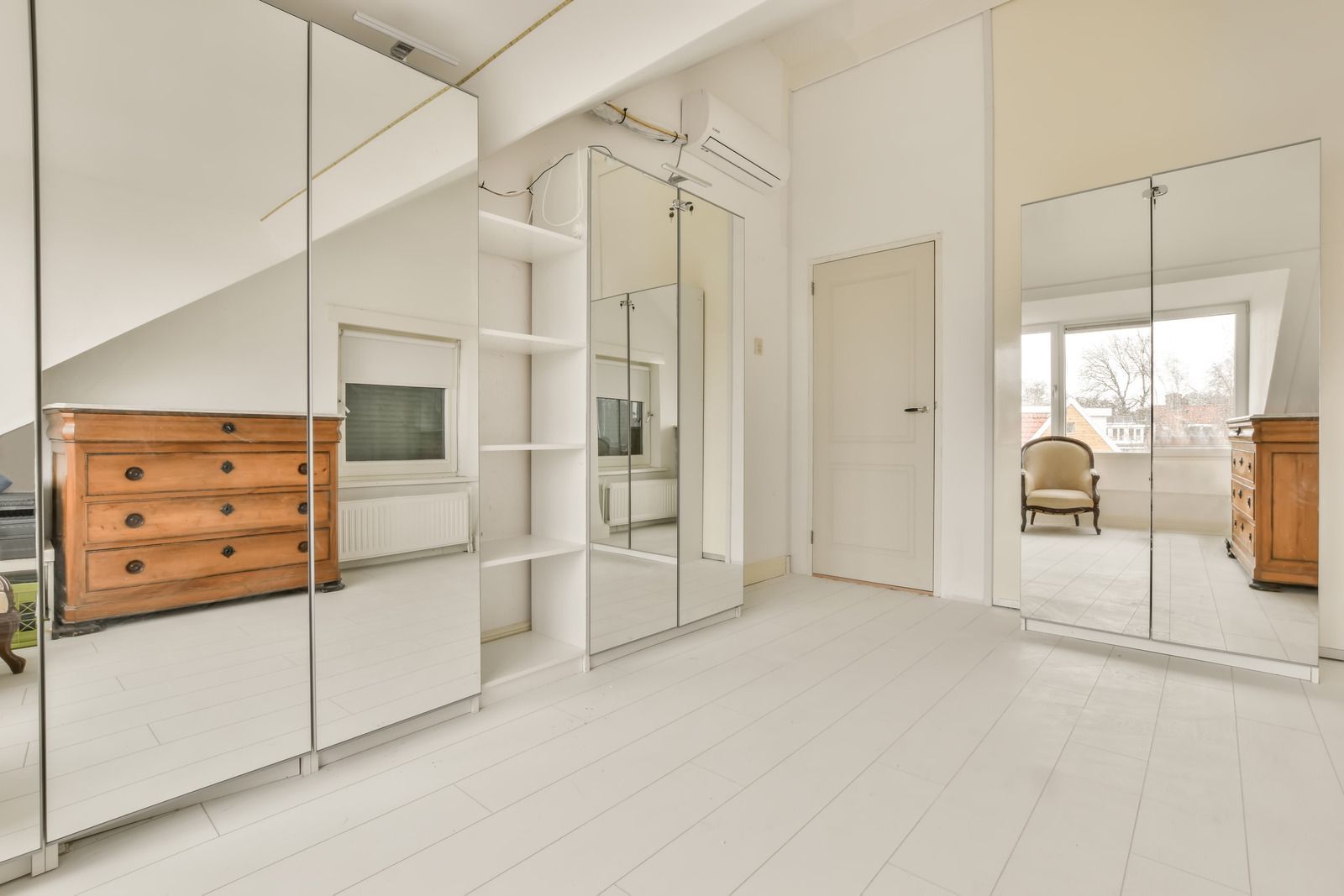
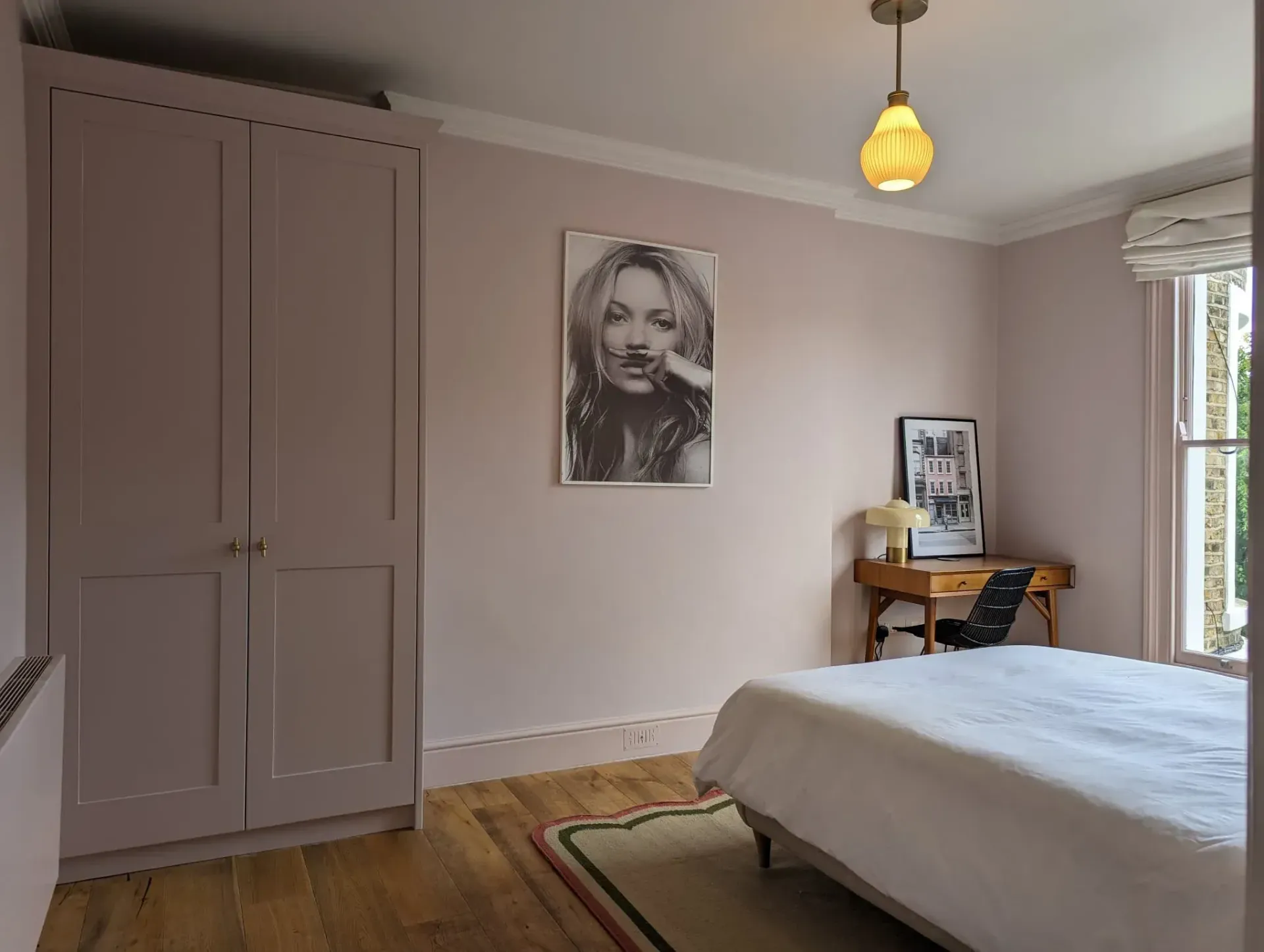
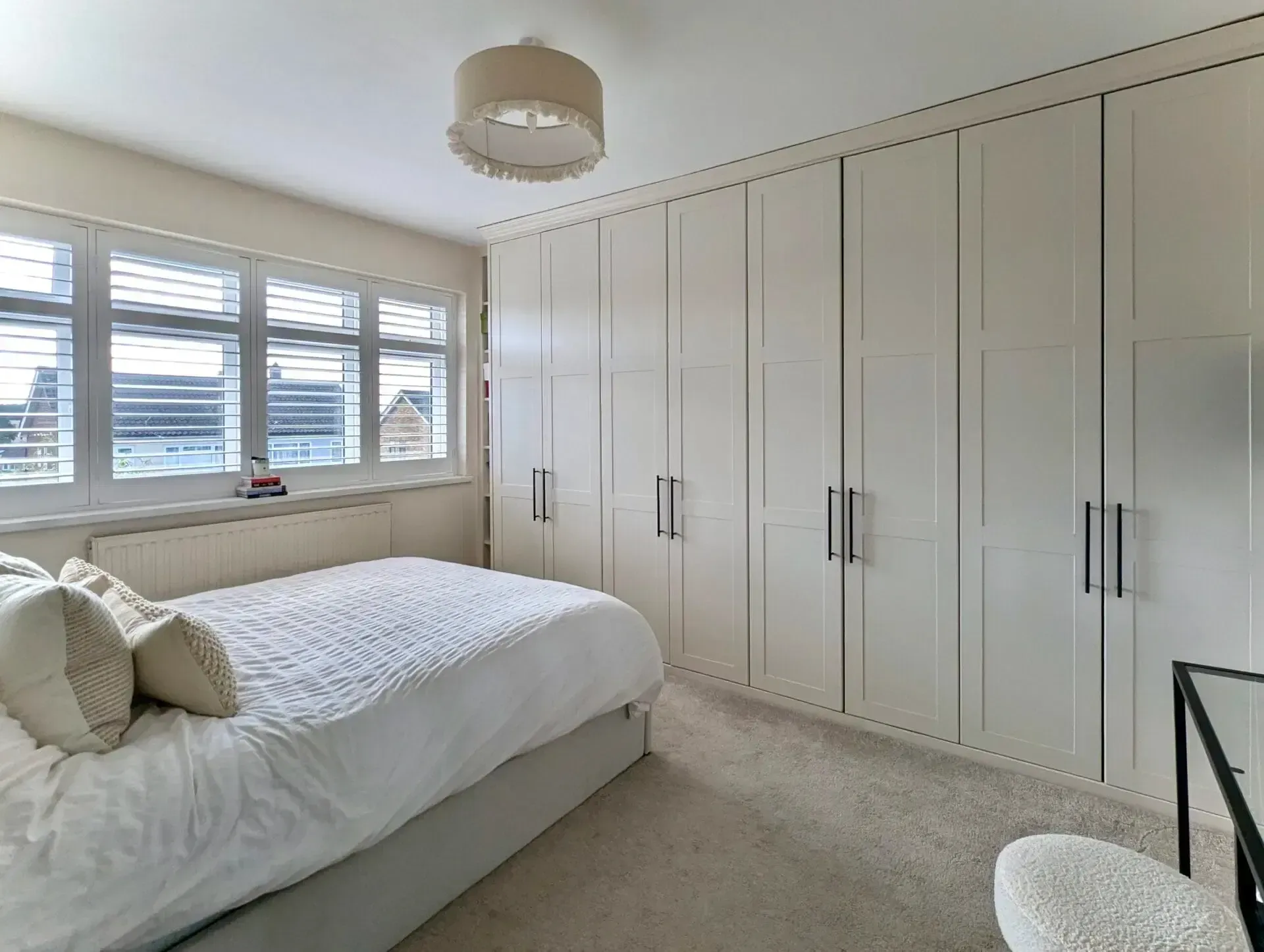
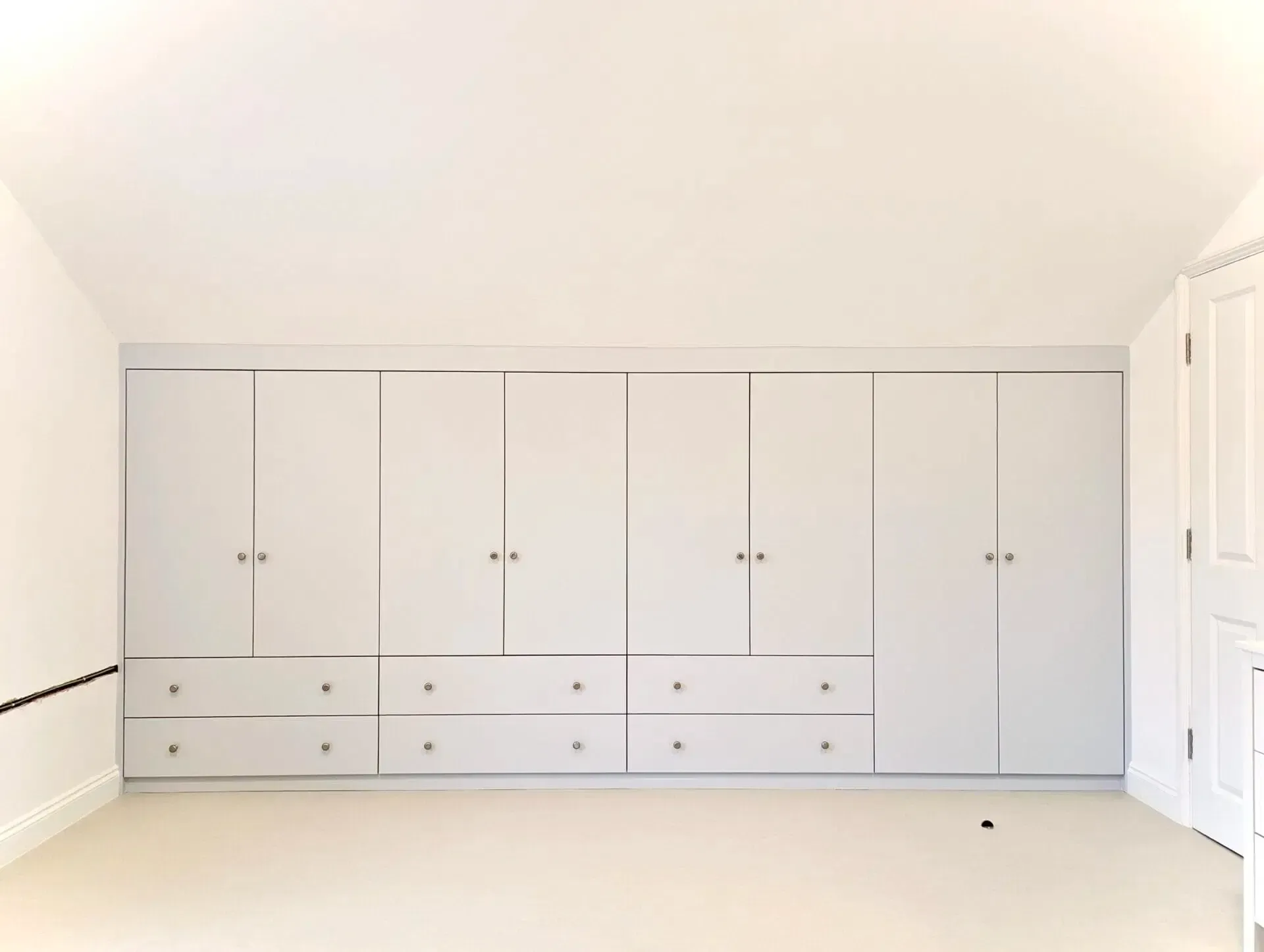
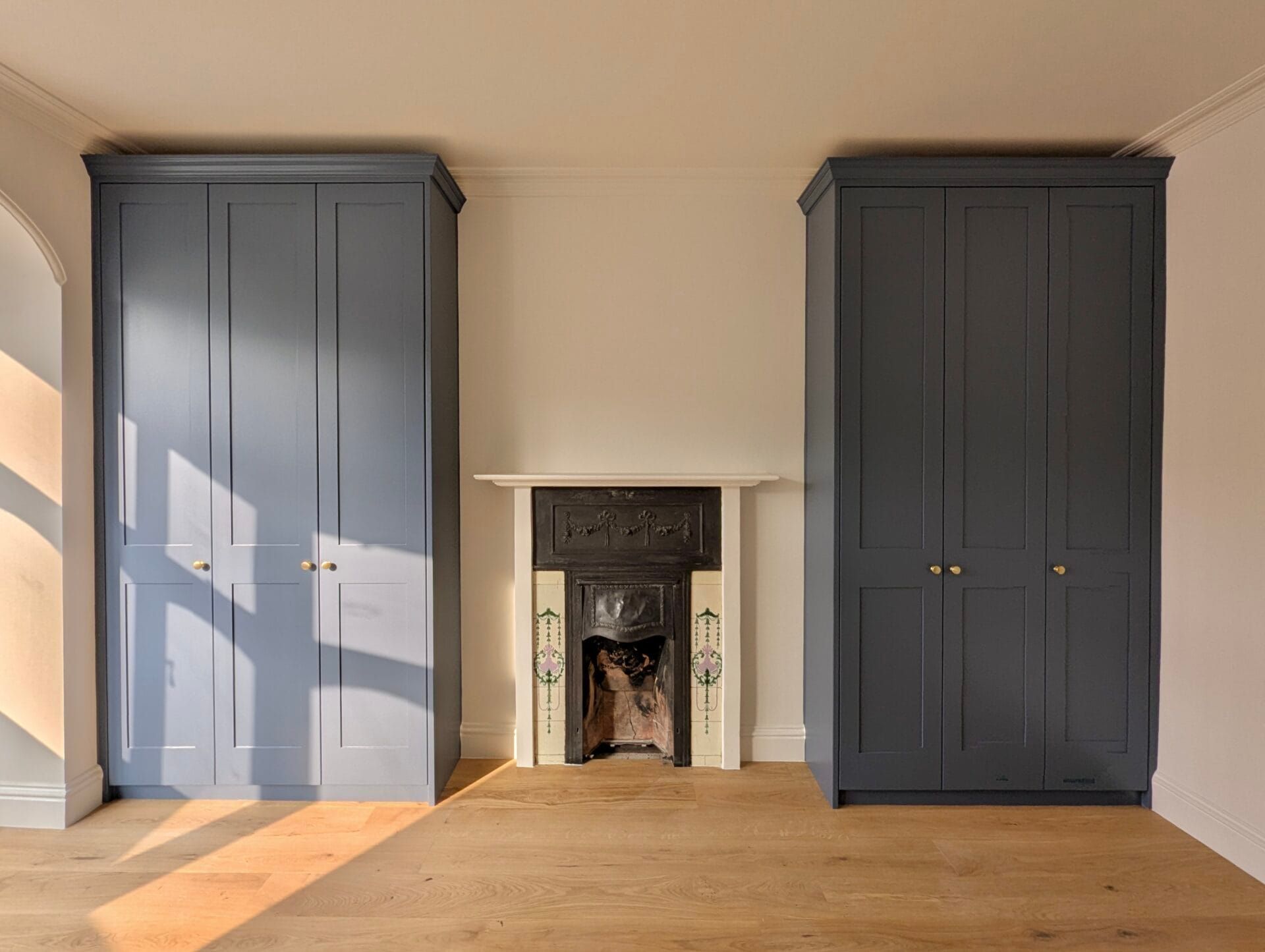
This is also where you talk through the bigger style direction: traditional with cornice crowning the top and ornate beading on the doors, modern with handleless push-shut mechanisms, floor-to-ceiling to maximise storage height, Shaker to fit the character of a Victorian or Edwardian house, sliding doors where floor space is tight, or full mirrored fronts to open up the room.
This stage matters more than the measuring does. Dimensions are dimensions — but what you tell the designer here shapes everything that comes next.
Step 2 — Detailed measuring and surveying
Once the conversation is clear, the wardrobe survey begins in earnest. A London property — especially anything Victorian, Edwardian, or in a converted period building — almost never has walls that are actually square, floors that are actually level, or ceilings that are actually flat. The designer is measuring for all of that.
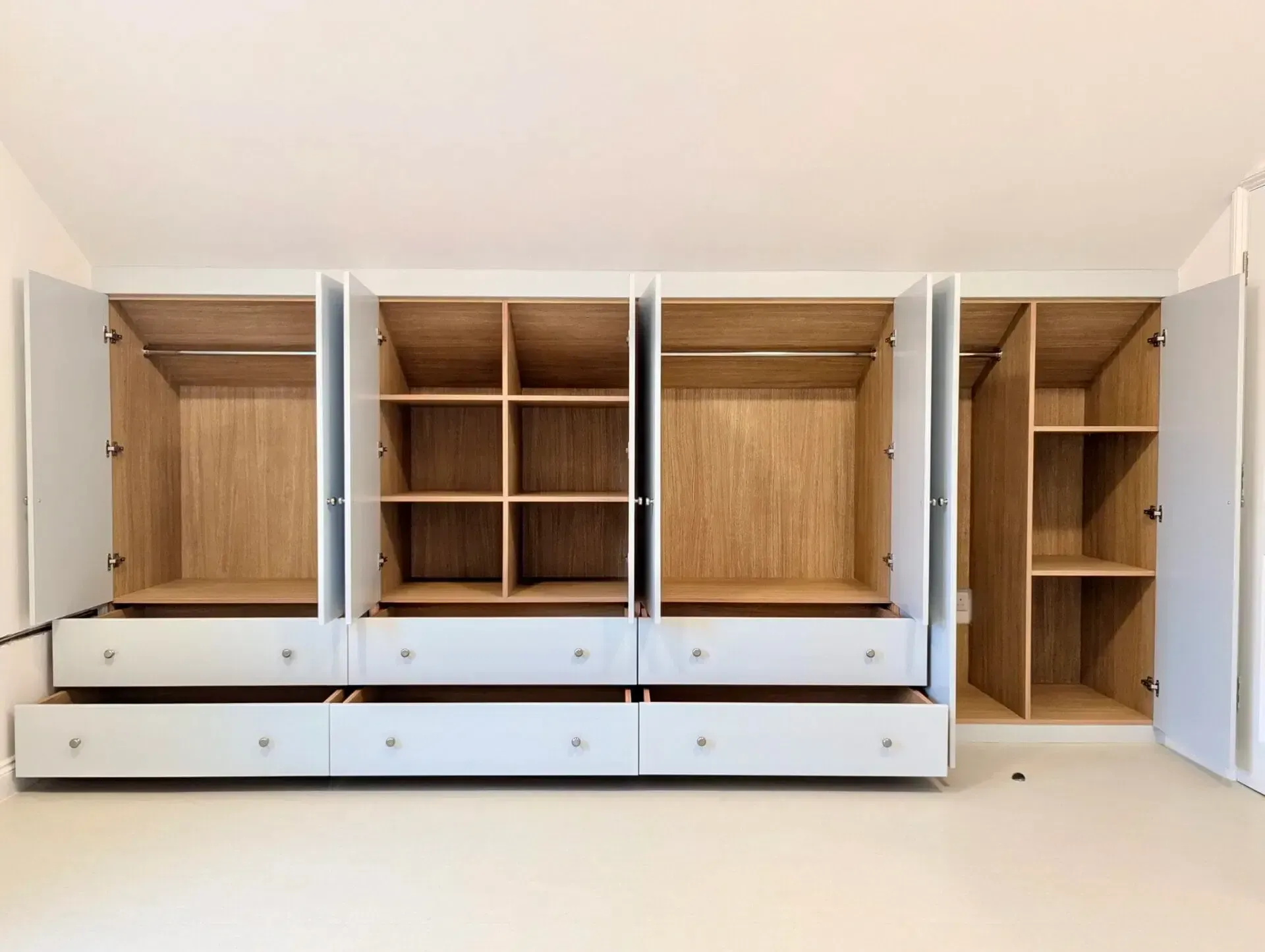
They'll capture the overall dimensions, check for out-of-square walls, look at skirting and cornice depths, note floor levels, and identify anything in the space that will affect the build — pipes, vents, radiators, power points, awkward alcoves, or eaves if it's a loft bedroom. For loft wardrobes and loft eave units, the survey gets especially detailed because the wardrobes have to follow non-standard angles and skirting lines.
This is the part of the visit where the difference between fitted and flat-pack becomes visible. You're not being measured for a box — you're being measured for furniture that will sit inside the specific geometry of your room, to the millimetre.
Step 3 — Design conversation and materials
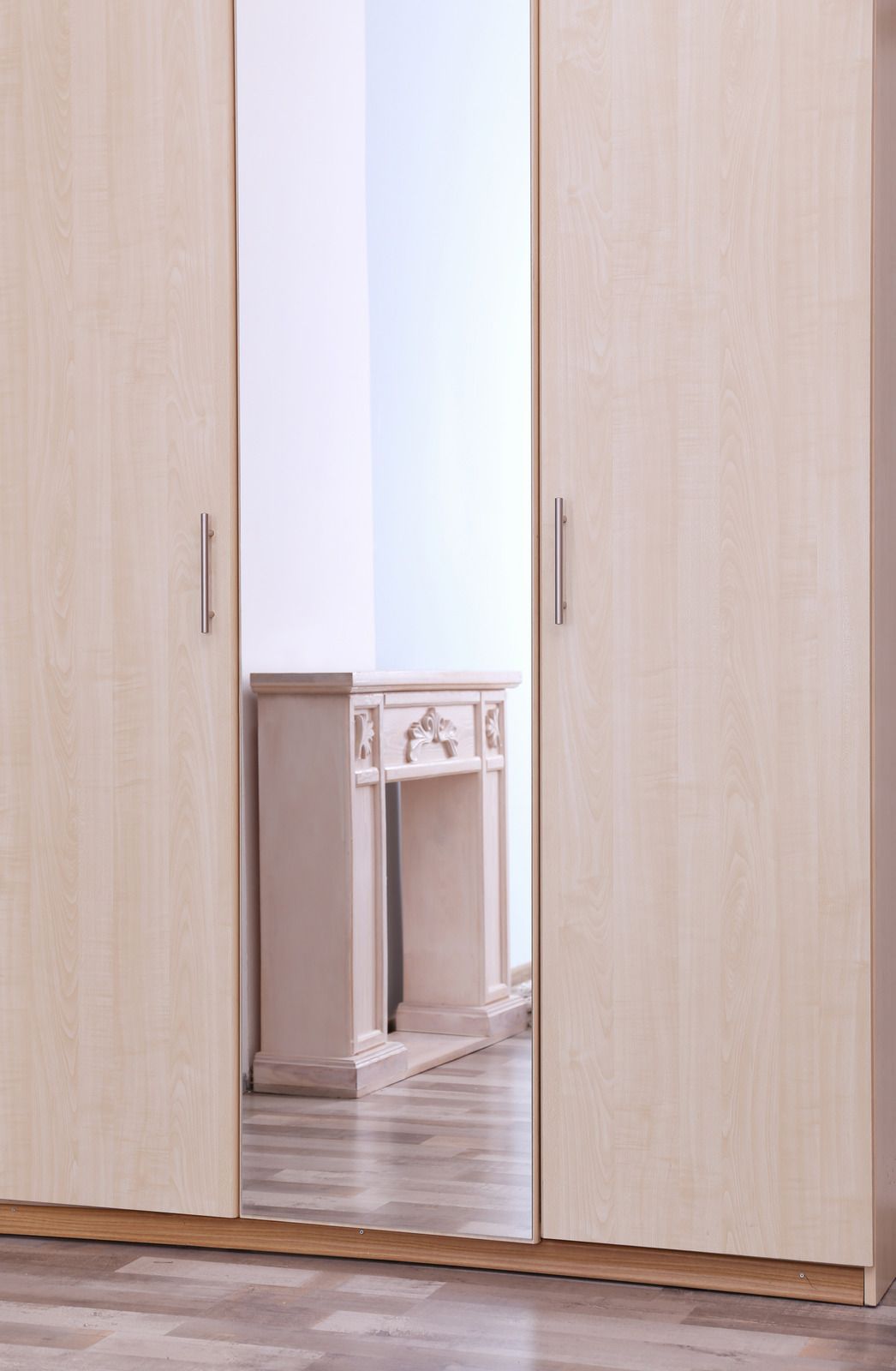
With the space understood, the designer walks you through the material and finish options. Humphries builds with high-quality MDF, which can be either hand-painted or finished in a luxury wood grain-effect laminate. Hand-painted finishes use Little Greene paints — an environmentally friendly brand Humphries uses as standard — and you can choose from the full Little Greene colour range.
Other details discussed at this stage: door style (Shaker, modern, traditional with beading, flat, mirrored), handle choice or handleless push-shut doors, soft-close hinges and drawer runners (fitted as standard on every unit), sliding versus hinged doors, feature additions like cantilevered drawers doubling as bedside tables, shoe trays on drawer runners, and integrated LED lighting that switches on automatically when the doors open.
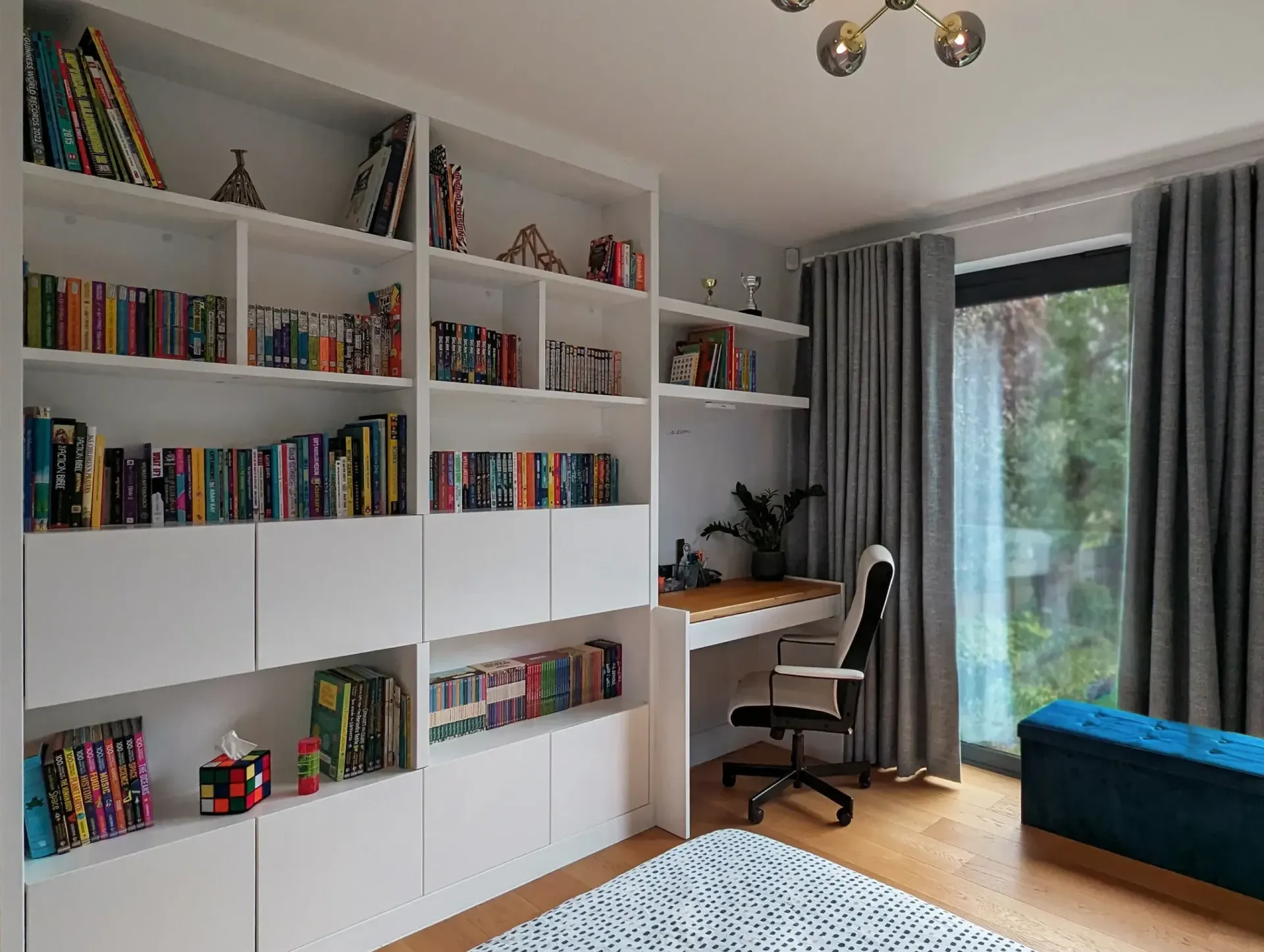
Interior layout is built out in the same conversation — double-hanging versus long-hanging sections, drawer banks, shelves for folded clothes, jewellery drawers, tie racks, belt hooks. If the room has specific constraints (a sloped ceiling, a chimney breast, a bay window), the designer will talk through how those will be handled.
Step 4 — What happens to the price
A firm quote needs drawings — there's no way around that with bespoke furniture. The design team needs to produce a full 3D drawings package before a proper number can be given, because the details of finish, interior layout, doors, hardware and any feature extras each affect the figure.
What the designer can do on the day is help you understand which choices are standard and which sit at a premium — for instance, super-custom period matching (where beading and mouldings are replicated to match an original feature in the house exactly) is offered at a premium price, while standard Shaker and modern door styles are not. That visibility helps you shape the design toward a spec that works for you before drawings go back to the workshop.
After the visit, what happens next
Once the designer leaves, the project moves into the drawings stage. Humphries' design team — including Denisa, who produces detailed CAD technical drawings and 3D renderings and has apprenticed on-site with the carpenters to understand the build inside out — turns the survey and conversation into a full 3D drawings package. You see exactly what the wardrobes will look like in your room before anything is built.
Revisions are normal and expected. Customers routinely ask for a removable shelf added, a hanging rail moved, a drawer swapped for shelves, or a door configuration changed. Those adjustments get worked through before sign-off. The final step is approving both the drawings and the quote, at which point the project moves into manufacturing.
For more details on the full journey from this point, see the separate guide on
how long fitted wardrobes take from first enquiry to finished install.
Questions worth asking the designer
A fitted wardrobe measuring appointment is a rare chance to get real answers from someone who actually understands the product. Worth asking:
- What's included in the price and what isn't? Handles are a common variable — you can pick from standard options or source your own, and each route has different implications for timeline and cost.
- Who makes the furniture and where? Humphries' primary base is in Kidbrooke near Greenwich, and the company only does wardrobes, cupboards, shelves and similar built-in items. The same team handles drawings, carpentry and hand-painting — hand-painting was specifically brought in-house to keep standards consistent.
- What's the guarantee? Humphries provides a 15-year guarantee on its work.
- What happens if I change my mind after sign-off? Worth asking directly — the answer depends on where the project is in the manufacturing queue.
- How is the rest of my home protected during installation? The team uses dust sheets, does as much workshop prep as possible before arriving, and cleans up fully at the end. Because fitted work involves cutting that has to be done on site, some dust is unavoidable — but containing it is a priority.
- What happens with hand-painted finishes? Hand-painting happens on site, as a separate visit, after the carpentry is complete. Worth discussing how that's scheduled around your life.
Common concerns we hear (and why they're not a problem)
"My room isn't finished yet."
A survey now still helps. Knowing the fitted wardrobe spec, finish, and layout early means you can coordinate with decorators, flooring and other trades instead of retrofitting everything afterwards. Humphries does new-build projects from the ground up — so the wardrobes typically go in once the room itself is ready, but the design work can happen well before.
"My walls are wonky."
Every London property has quirks. Out-of-square walls, uneven floors, sloped ceilings in loft conversions, awkward alcoves in period homes — bespoke is built for exactly this. A fitted wardrobe is measured, cut and finished specifically to the geometry of your room, which is the entire point of the survey.
"I don't know what I want yet."
That's what the visit is for. Most people arrive with a rough direction and leave with clarity — on style, layout, finish and budget. You don't need a finished brief; you need a starting point.
"I'm not sure I'm ready to commit."
You don't have to. The visit is free, there's no obligation, and the quote and drawings are yours to consider in your own time. The company is built on repeat business and recommendations — the pressure to sign on the day simply isn't part of the model.
Book when you're ready
A fitted wardrobe design consultation is the fastest way to find out whether fitted furniture works for your space, your budget, and your deadline. It costs nothing, there's no obligation at the end of it, and you come away with a 3D drawings package and a real quote instead of a rough Google estimate.
Humphries covers all of London within the M25. You can book a free design visit through the website, or call 020 8259 4871 (lines open Monday to Friday, 8am–8pm).
While you're deciding, the portfolio is worth a browse — the range of projects across period homes, modern flats and awkward loft conversions gives a clearer sense of what bespoke actually means in a real London property. The About page introduces the family behind the company, including third-generation carpenter Zephyr Humphries, lead designer Laurence Milton, and drawings specialist Denisa.
The visit is genuinely the easy part. Everything interesting happens from there.
Recent Posts