The Hidden Costs of Cheap Fitted Wardrobes: What to Watch Out for Before You Sign
You've got two quotes sitting in your inbox. Both are for fitted wardrobes in the same bedroom, both describe roughly the same layout, and one is significantly cheaper than the other. The obvious question is: am I being overcharged by the expensive one, or undersold by the cheap one?

Most of the time, the answer is neither. The gap is almost always in what's not written on the cheaper quote. Fitted wardrobes are not a single product with a single price — they're a bundle of materials, finishes, hardware, installation, and post-install responsibilities, and a cheap quote usually achieves its price by quietly removing items from the bundle. The units still get installed. They just don't last as long, don't look as good, or come with an invoice for "extras" that lands later.
This guide walks through where those gaps typically appear, what to ask any supplier before signing, and what a transparent quote actually looks like. It's written so you can compare any two quotes on equal terms — not to push you toward the most expensive option.
Why one fitted wardrobe quote can be significantly cheaper than another
Fitted wardrobes are inherently variable. The headline price on a quote reflects a specific set of decisions about material, finish, hardware, interior spec, painting process, scribing, and installation. Two suppliers looking at the same bedroom can quote meaningfully different numbers because they've silently made different choices on any of those dimensions.

That's not automatically bad faith. Some suppliers genuinely operate at a lower spec level and price accordingly — and for some projects, that's the right answer. The problem is when the spec differences aren't visible on the quote, because you're not actually comparing like for like. You're comparing headline numbers that represent different products.
The fix is to force the spec into writing. The sections below are a practical guide to where the gaps tend to hide and what to make any supplier confirm before you sign.
Ten hidden costs to check for
1. Carcass material quality and thickness
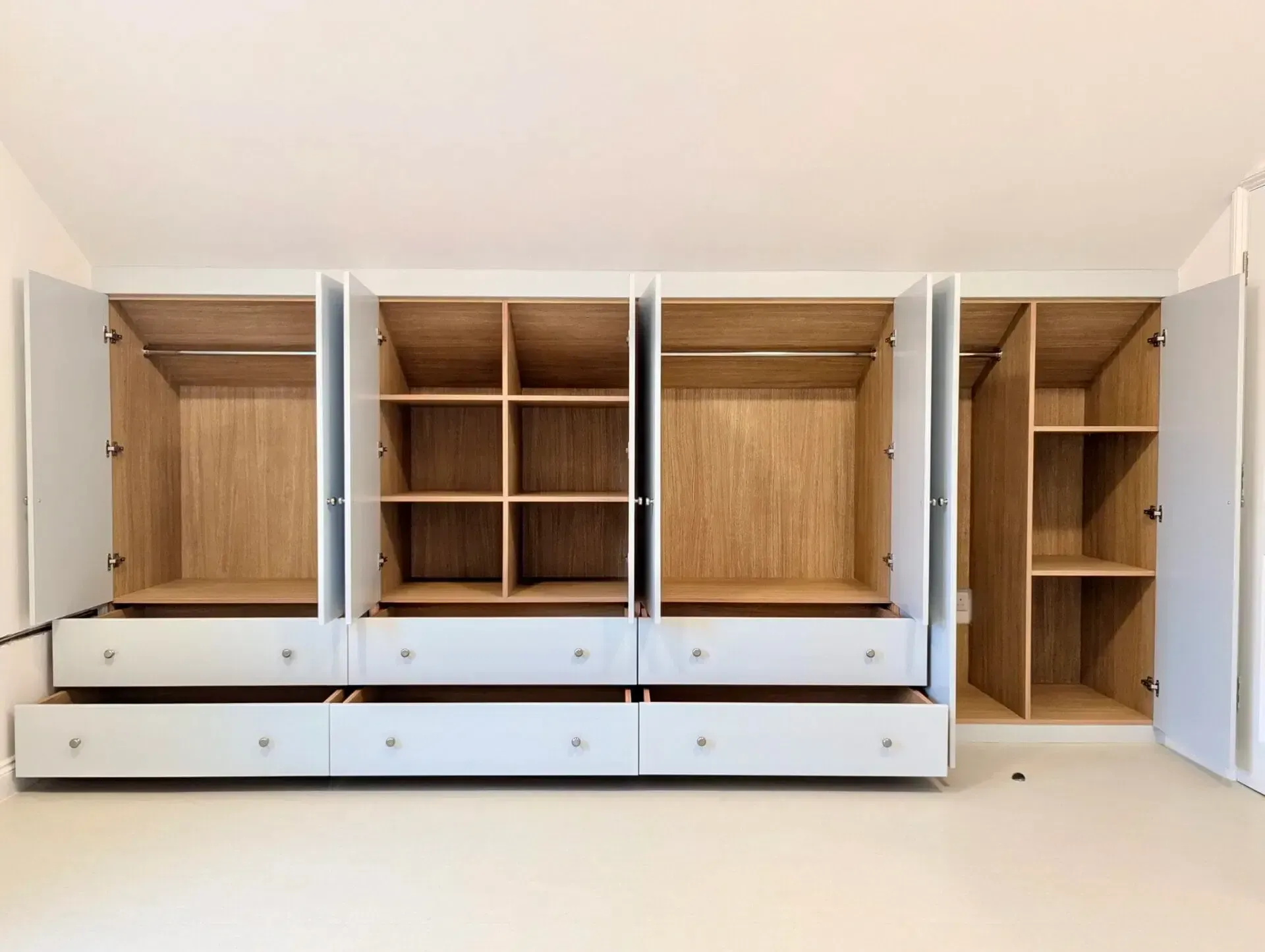
The carcass is the structural box behind the doors. Thin or low-grade materials sag under the weight of clothes over time, and seams come loose. Ask what the carcass is made of and what thickness is being used. Humphries Cabinets, for reference, builds with high-quality MDF throughout — worth having that as a benchmark when comparing other quotes.
2. Backing boards and hidden components
The back panel of the wardrobe, the base, and the internal dividers aren't visible once the doors are closed, which is exactly why cheaper suppliers cut costs there. Ask specifically what the backing boards and internal components are made of — not just what the doors are.
3. Hinges and drawer runners
Soft-close hinges and drawer runners are what make a wardrobe feel expensive every single day you use it. Standard friction hinges slam, wear out, and fall out of alignment. Ask whether soft-close is standard or an upgrade. On Humphries units, soft-close hinges and drawer runners are fitted as standard on every wardrobe — no upgrade fee.
4. Paint system and finish quality
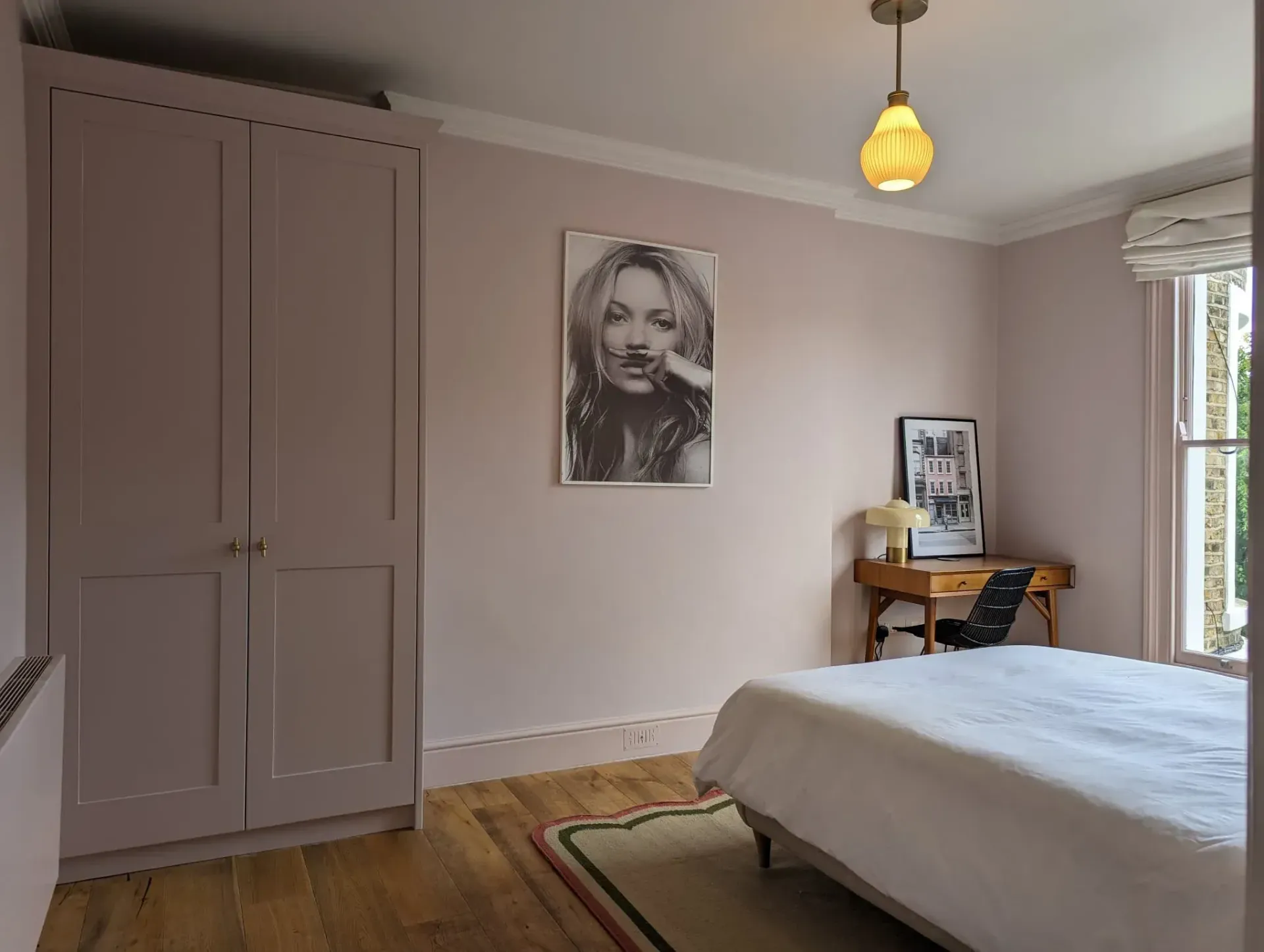
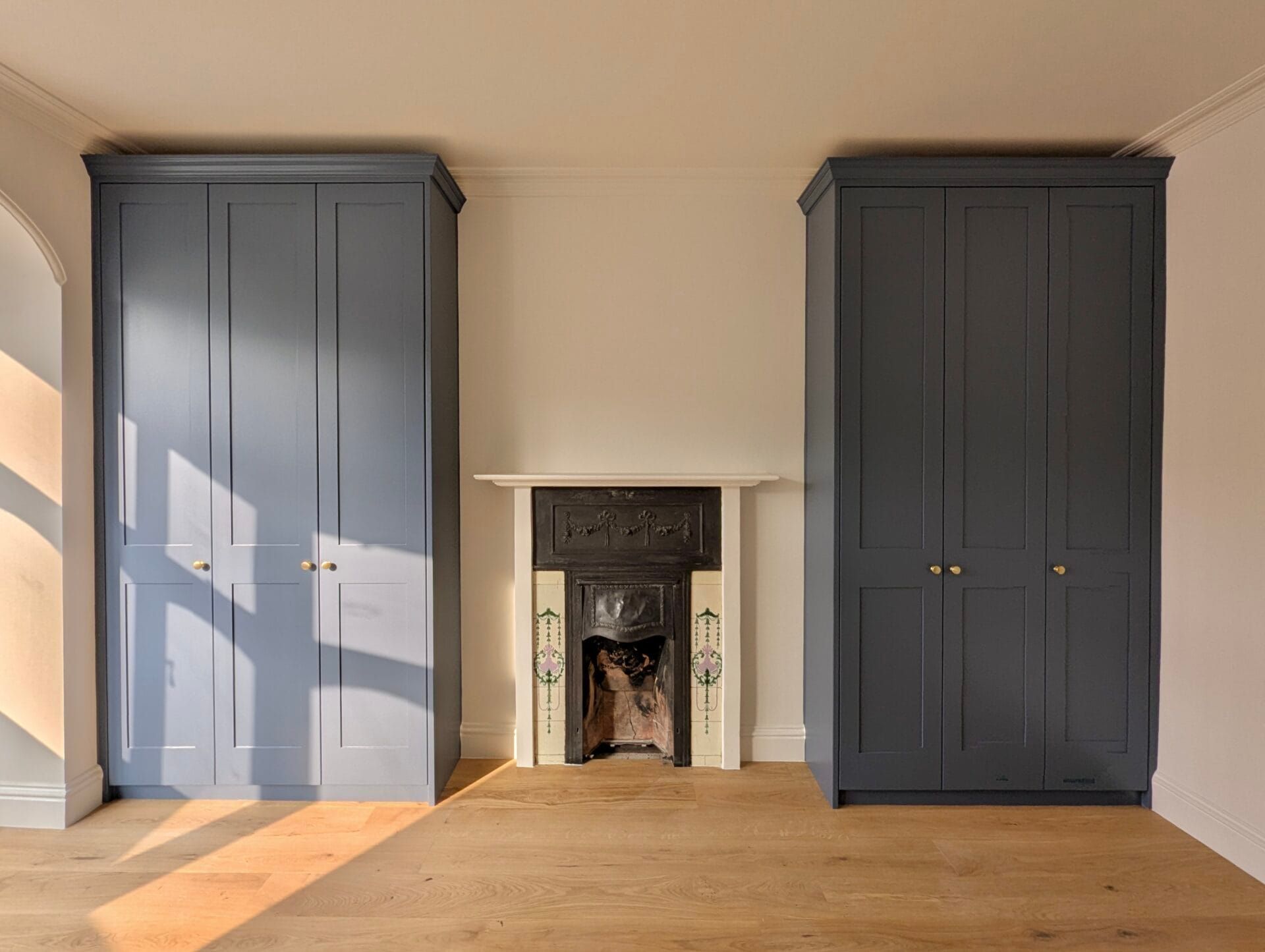
A painted wardrobe is only as good as the paint system behind it. Ask how many coats, what primer, and — critically — whether the painting is sprayed or hand-applied, and whether it's done in the workshop or on site. Humphries brought hand-painting in-house specifically to keep quality consistent, and hand-paints on site after the carpentry is complete, using Little Greene paint from the full colour range. Spray painting isn't offered. That's a definite choice, with trade-offs worth understanding at the quote stage.
5. Interior finishing
"Exterior finish only" is a common cost-cutting move. The visible outside of the wardrobe is finished properly; the interior is raw MDF, visible edges are unfinished, or the shelves are a different spec from the doors. Ask for the interior finish to be confirmed in writing, including edge finishing.
6. Scribing and filling against walls, floors and ceilings
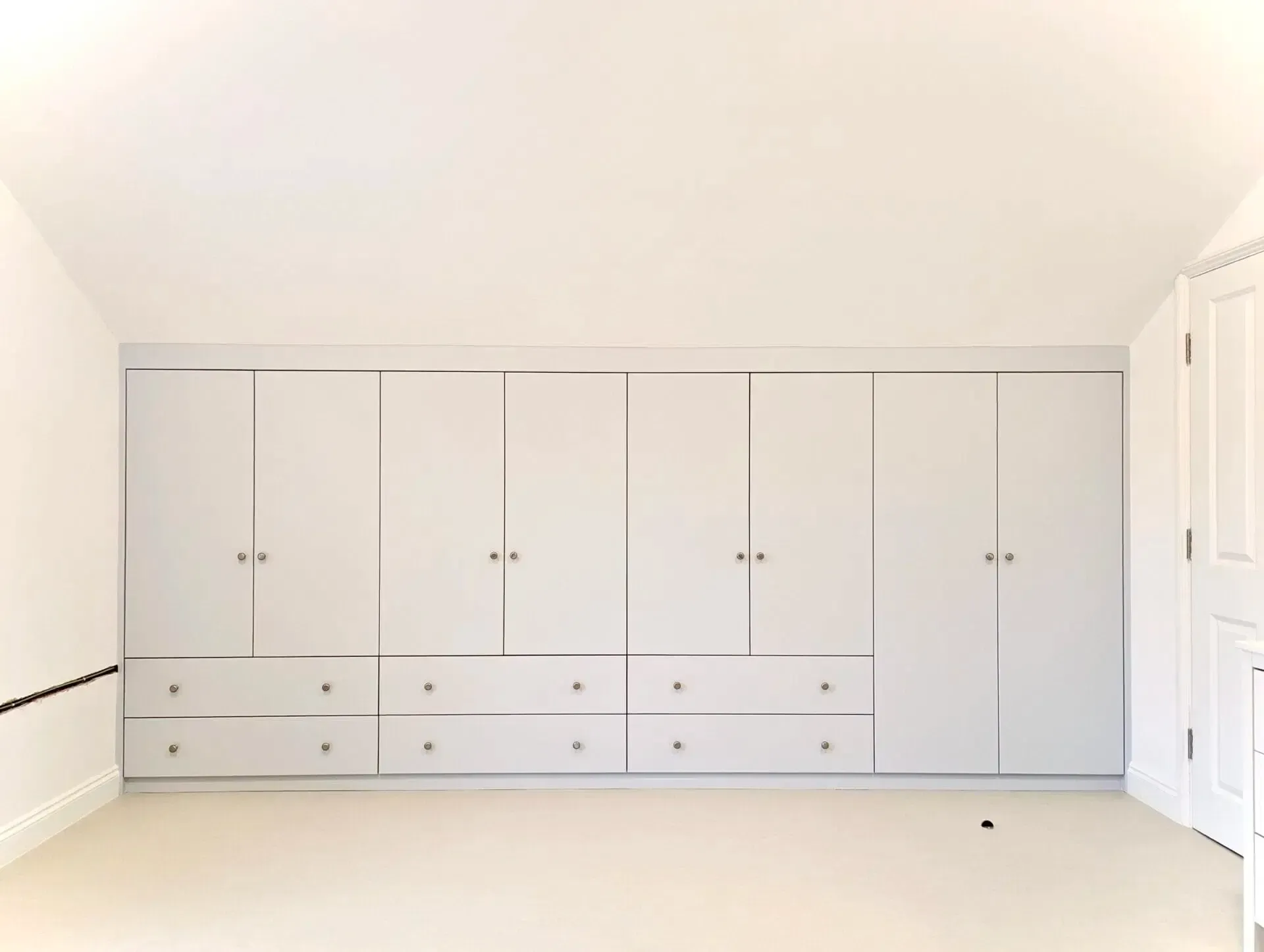
Almost no London property has walls that are square, floors that are level, or ceilings that are flat. A properly fitted wardrobe is scribed — cut, and shaped to follow those imperfections exactly — so there are no visible gaps once installed. A cheap install leaves gaps, fills them with caulk, or uses cover strips that look applied rather than integrated. Ask explicitly how the supplier handles out-of-square walls.
7. Colour and finish options
Ask whether the quoted price covers any colour you want, or only a standard palette, with custom colours charged extra. Humphries, as a reference point, allows you to choose from the full Little Greene colour range without forcing you into a standard-only palette — worth benchmarking against when you read other quotes.
8. Hardware, handles and interior fittings
Handles are one of the most common "extra" items that don't appear on the headline quote. Some suppliers quote the wardrobe and then itemise handles, hanging rails, shelving, drawer banks, shoe storage, or internal lighting as additions. Ask for a single, comprehensive quote that includes everything you saw in the drawings — and if you're planning to source your own handles, confirm how that's handled in the pricing.
9. Making good of walls and decoration
Installing fitted wardrobes sometimes requires minor works to the walls — particularly if the wardrobes replace existing furniture or need pipes and vents routed around. Ask whether making good, redecoration behind or around the wardrobes, and any consequential wall repair, is included or excluded.
10. Delivery, access, parking and installation
In London, access matters. Flat entries, mansion blocks, narrow stairwells, restricted parking, and loading-bay availability can all affect what a supplier charges. A cheap quote may exclude these costs and add them later. Ask for an all-in installation figure with access assumptions stated explicitly.
Red flags on a written quote
A quote is a contract in miniature. Before signing, check for:
- Vague line items. "One wardrobe unit — £X" tells you nothing. Proper quotes list materials, door count, drawer count, interior configuration, finish, and hardware.
- No written material specification. If the supplier won't put carcass material, thickness, and finish in writing, that's a problem. Assume anything not in writing is not in the price.
- No warranty mentioned. Ask directly. The written warranty length and what it covers (cabinetry, paint, hardware), should be on the quote or in an attached document. Humphries, for comparison, provides a 15-year guarantee on its work — if a supplier is offering far less, or won't commit in writing, ask why.
- No named team or contractor. Who actually builds the wardrobes? Who installs them? Is the work subcontracted? A supplier that can't introduce you to the team has taken the trust out of the arrangement before it's started.
- Unusual deposit demands. Deposits are normal for bespoke work — the workshop has to commit materials and workshop time before installation. What matters is whether the deposit is proportionate and what it protects. Ask what the deposit covers, what happens if the supplier fails to deliver, and what consumer protections apply (credit-card payment of at least part of the deposit, for example, gives additional protection under UK consumer law).
Questions that protect you
Put these to any supplier in writing and keep the answers:
- Can I see a sample of the door and the carcass material before sign-off? Photos and descriptions aren't the same as physical samples.
- Is everything I see in the drawings included in the price? Get a yes or no.
- What's explicitly excluded from this quote? The exclusions list matters more than the inclusions list.
- What's the warranty on the cabinetry, the paint and the hardware? Ideally, each separately, in writing.
- What happens to the guarantee if your company ceases trading? Some guarantees are company-backed, others are insurance-backed. Worth understanding before you commit.
- Who handles communication during the project? Suppliers who take client communication seriously will have a named point of contact.
- What's your process for revisions after sign-off? Genuine fitted suppliers build revisions into their workflow. Ask how it works.
When "cheap" is actually fine
This article isn't anti-value. There are situations where a lower-spec fitted wardrobe makes complete sense:
- Short-term rental properties are being prepared for let, where the cosmetic upgrade matters more than 15-year durability.
- Flips where the property is being sold, not lived in.
- Temporary solutions in rooms you plan to reconfigure within a few years.
- Children's bedrooms that will be restyled as the child grows.

In those cases, laminate finishes in particular — because they come fully finished from the workshop and skip the on-site painting visit — are often the right answer on both time and cost. Humphries offers a luxury wood grain-effect laminate as a genuine alternative to hand-painted finishes, and it's a faster, lower-overhead option that isn't a downgrade on quality, just a different choice.
The article is anti-surprise, not anti-cheap. A well-specified laminate wardrobe at a sensible price is a much better deal than a hand-painted wardrobe at a "too good to be true" price that turns out to be missing half its components.
What a transparent quote looks like
A fitted wardrobe quote you can actually trust tends to have these characteristics — worth using as a checklist when you read your own:
- Built on a full 3D drawing package. You can see exactly what the wardrobes will look like in your room before anything is signed. Humphries produces this as standard for every project.
- Material specified. High-quality MDF is stated, not implied. Finish is stated — hand-painted using Little Greene, or wood-grain-effect laminate.
- Finish process explained. Hand-painting happens on-site, as a separate visit after the carpentry is complete. That's a real cost to be captured in the quote, not a surprise at installation.
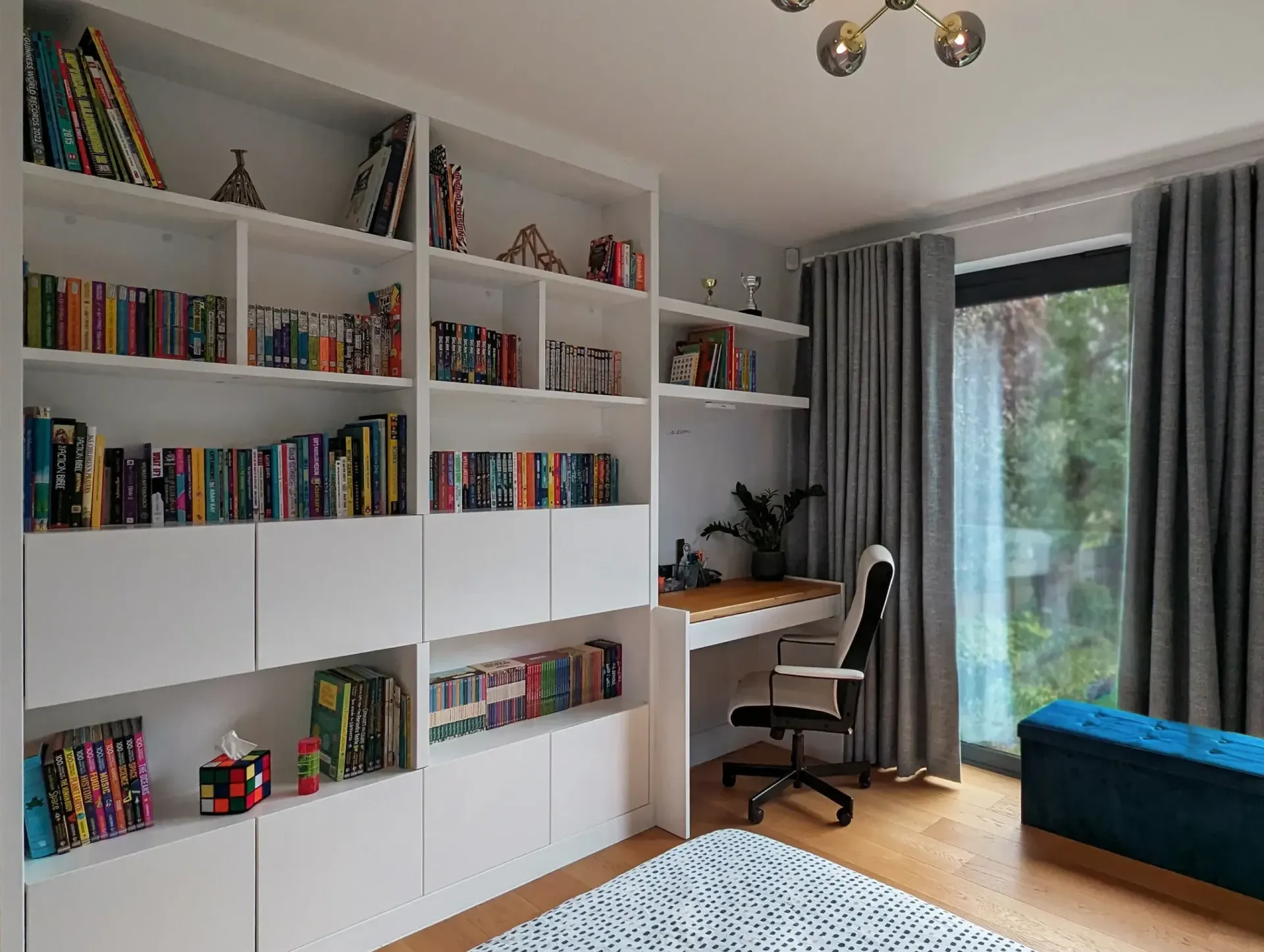
- Standard inclusions visible. Soft-close hinges and drawer runners on every unit. Interior configuration — drawers, double-hanging rails, shelves, shoe storage, mirror positioning — drawn and priced in.
- Scope clarity. Humphries specialises in new fitted wardrobes, cupboards, shelves and similar built-in furniture built from the ground up — they don't work in bathrooms, kitchens or wet areas, and don't handle repairs or upgrades to existing furniture. Knowing that up front keeps expectations aligned.
- Named people. You meet the designer at the home visit, Humphries' drawings team (including drawings lead Denisa) produces the 3D package, and one of the company's lead carpenters installs the work. The About page introduces the people involved.
- Warranty in writing. 15-year guarantee on the work.
- Communication commitment. The team actively updates clients if start dates shift or issues arise — written into how the company operates, not an afterthought.
- Compare any quote you're considering against this list. Wherever the quote goes quiet, ask directly.
A no-surprises quote, on the house
The most direct way to pressure-test any fitted wardrobe quote you've received is to get a second one with full spec visibility and no obligation. Humphries Cabinets offers a free design visit across every London borough within the M25 — a designer comes to your home, surveys the space properly, talks through what you actually want, and the team produces a full 3D drawings package and quote you can compare against anything else on the table.

Book a free design visit through the website, or call 020 8259 4871 (Monday to Friday, 8am–8pm).
Worth reading alongside:
- The FAQ page confirms materials, guarantee, paint system, and what's included as standard.
- The About page introduces the family-run team behind the work — useful if "who actually builds my wardrobes" is one of your quote-comparison questions.
- The 253+ reviews on the homepage are the most useful real-world evidence of what the finished experience actually looks like, from dust-sheet coverage during install to aftercare on minor issues years later.
The quote you sign should answer every question you asked — and the ones you didn't know to ask. If it doesn't, get another one.
Recent Posts