Fitted Wardrobes vs. Sliding Wardrobe Companies: What's the Real Difference?

April 30, 2026

Share this article

Somewhere in most fitted wardrobe projects sits a decision the buyer doesn't always realise they're making. The fitted wardrobe market has two broad supplier types — large national brands operating at scale, and independent bespoke makers building one project at a time — and the finished photographs on their websites can look remarkably similar. The showroom image of a white Shaker wardrobe looks like a white Shaker wardrobe, whether it's from a national chain or an independent craftsman, and most buyers reasonably assume the product sitting behind the photograph is broadly the same.


It isn't. The approaches are meaningfully different, and the differences tend to show up in the parts of the wardrobe you don't photograph — the carcass construction, the scribing against your walls, the finish depth, the question of who is actually on site doing the work, and the relationship you have with the supplier five or ten years later when something needs attention. This guide walks through those differences honestly, not to dismiss either approach, but to help you match the supplier model to your specific project.

Two supplier models in the fitted wardrobe market

Broadly, fitted wardrobe suppliers fall into two categories.


Large national brands. These operate at scale across the UK, with showroom networks, well-established marketing, standardised product ranges, and modular building systems designed to deliver consistent results across thousands of installations per year. Design, manufacturing and installation are often handled by separate teams — sometimes separate companies entirely, with installation sub-contracted to independent fitters who work across multiple brands. The business model optimises for predictability, volume and geographic reach.


Independent bespoke makers. Smaller in scale, craft-oriented, typically family-run or founder-led. Humphries Cabinets sits in this category. Each wardrobe is designed from scratch for a specific room, built to that room's exact dimensions, and finished to the customer's specification. Design, drawings, workshop manufacturing, installation and painting are typically handled by the same in-house team — in Humphries' case, a family-run business now into its third generation of carpentry, based in Charlton and serving all of London within the M25.


Both categories deliver fitted furniture. The operational and craftsmanship differences between them are substantial.

The depth-of-customisation question

This is the central editorial distinction, and it's where the two models diverge most visibly.


Standardised systems are built around modular components — panels, carcasses, drawer boxes and door modules — sized to fit the majority of rooms in the majority of homes. Customisation happens within the system. You choose from a defined range of door styles, finishes, interior configurations, and hardware. The modules are then assembled and installed in your room. It's efficient, it's consistent, and for many projects it delivers a perfectly acceptable result.


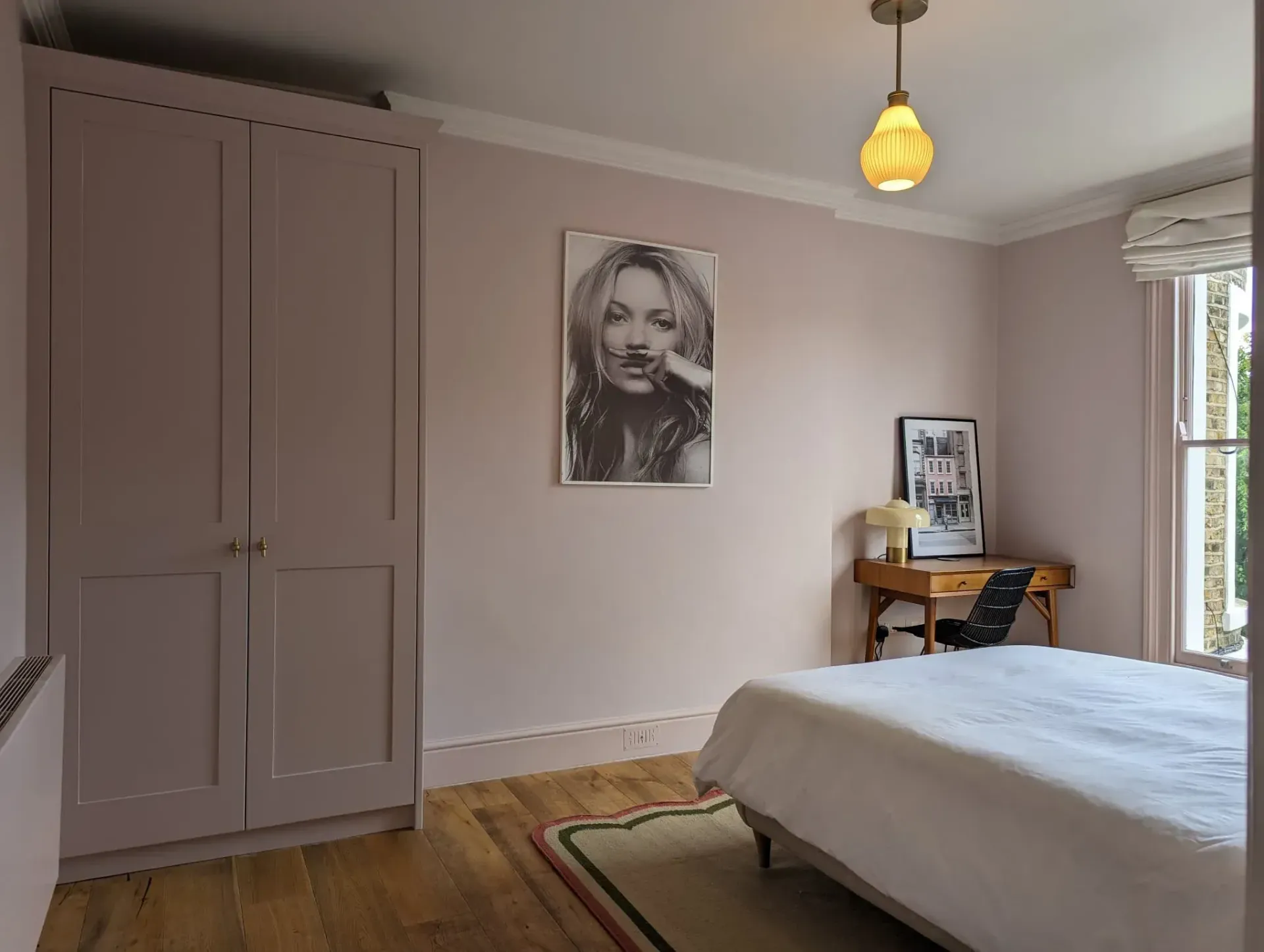
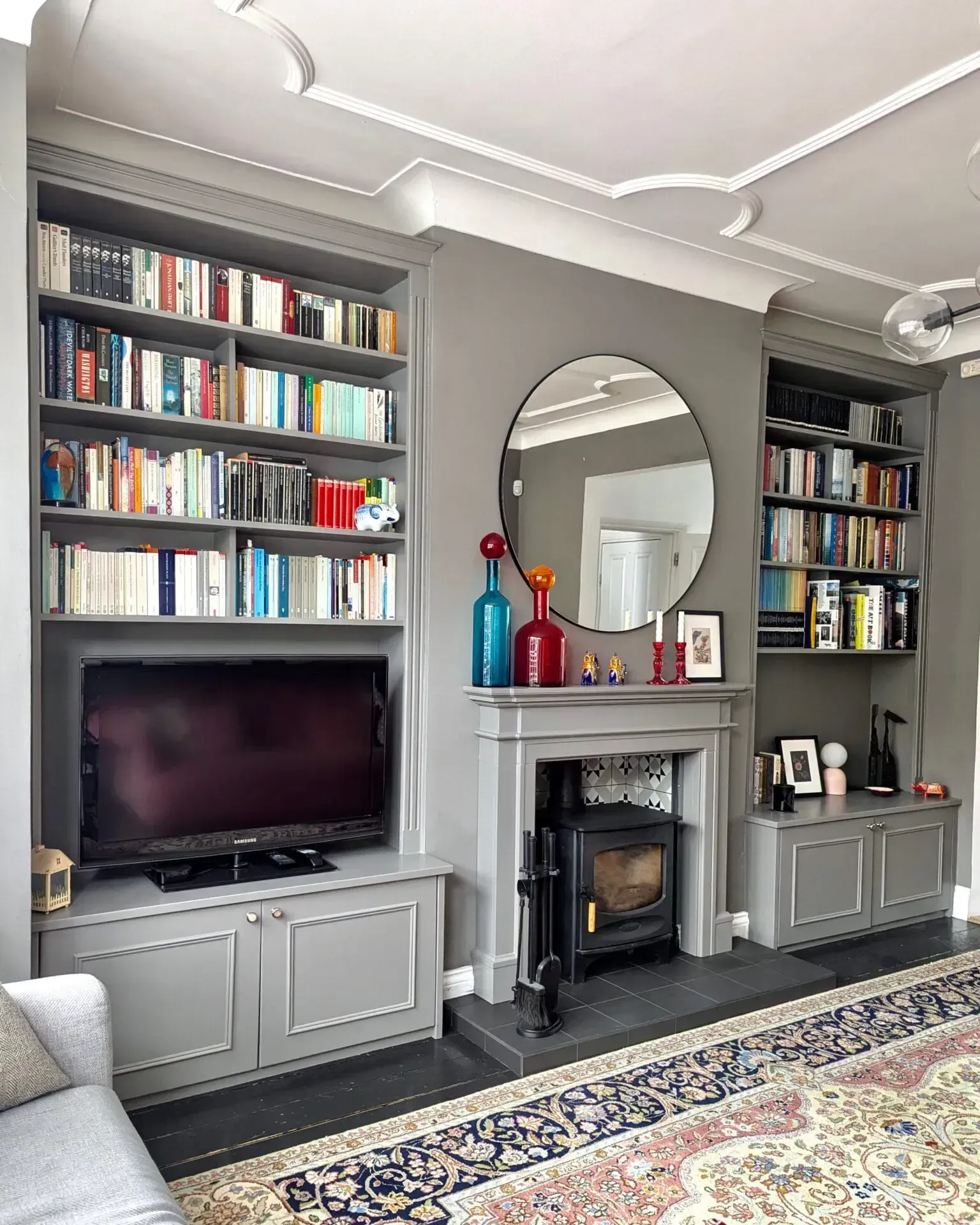
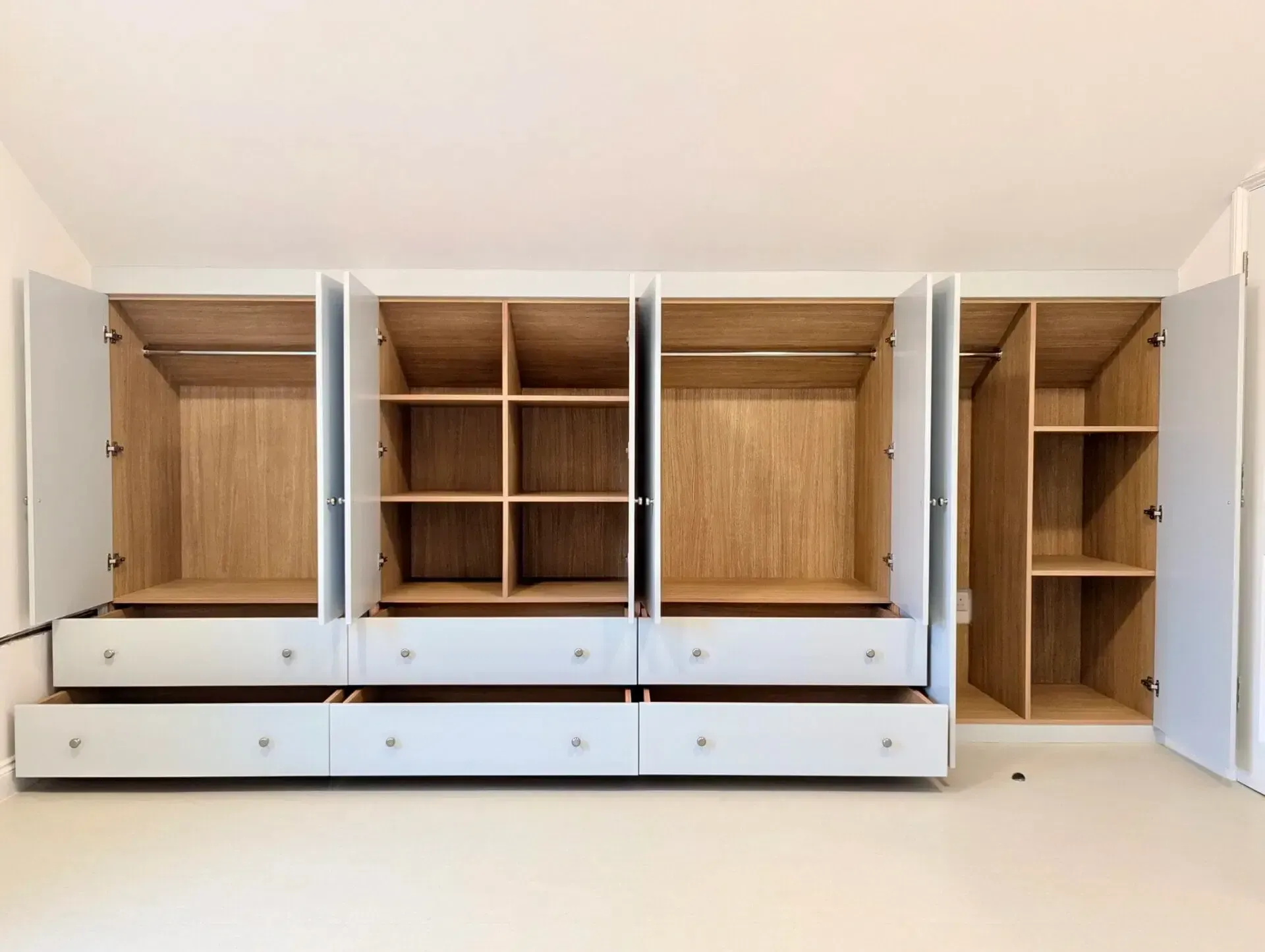
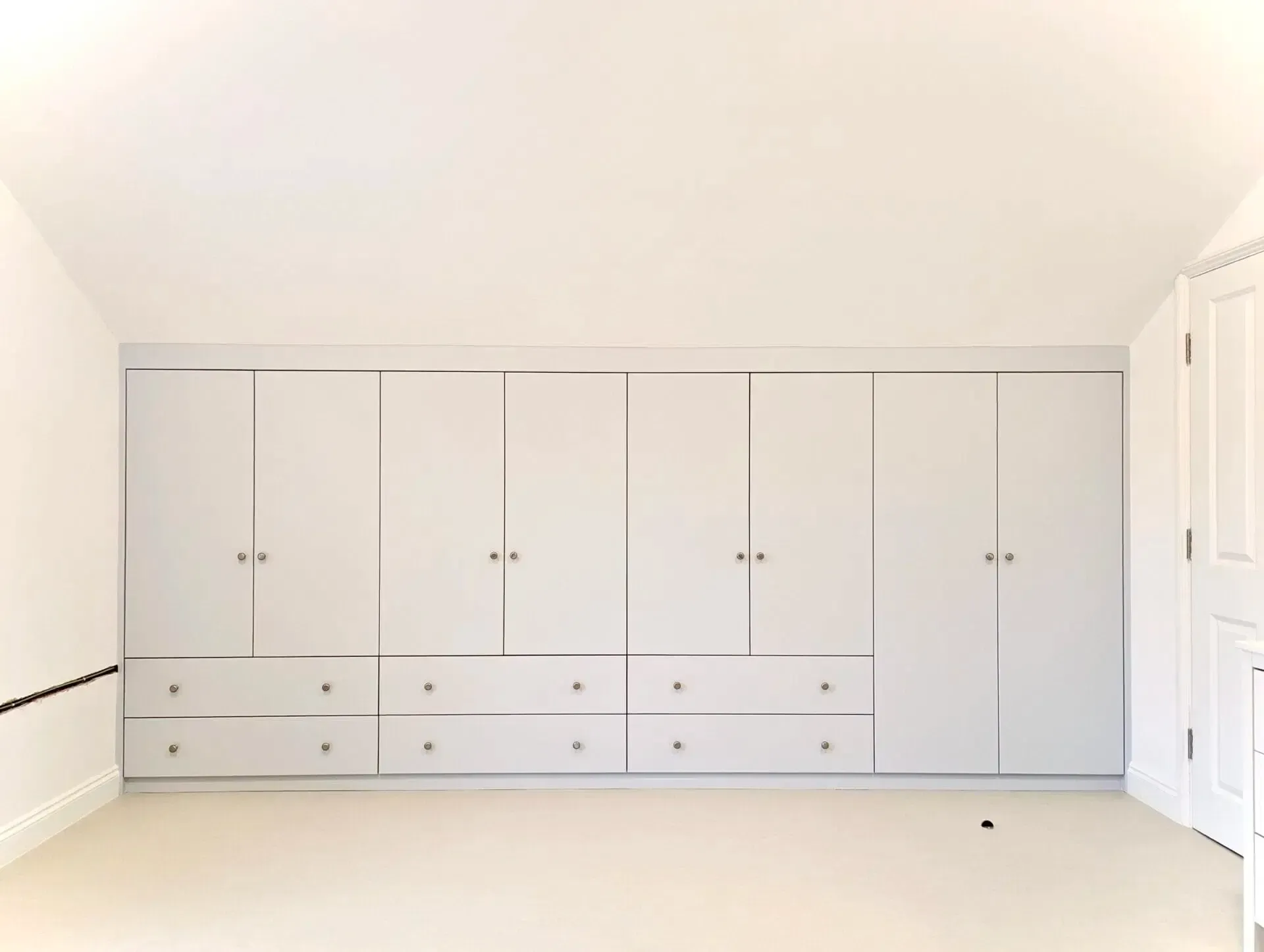
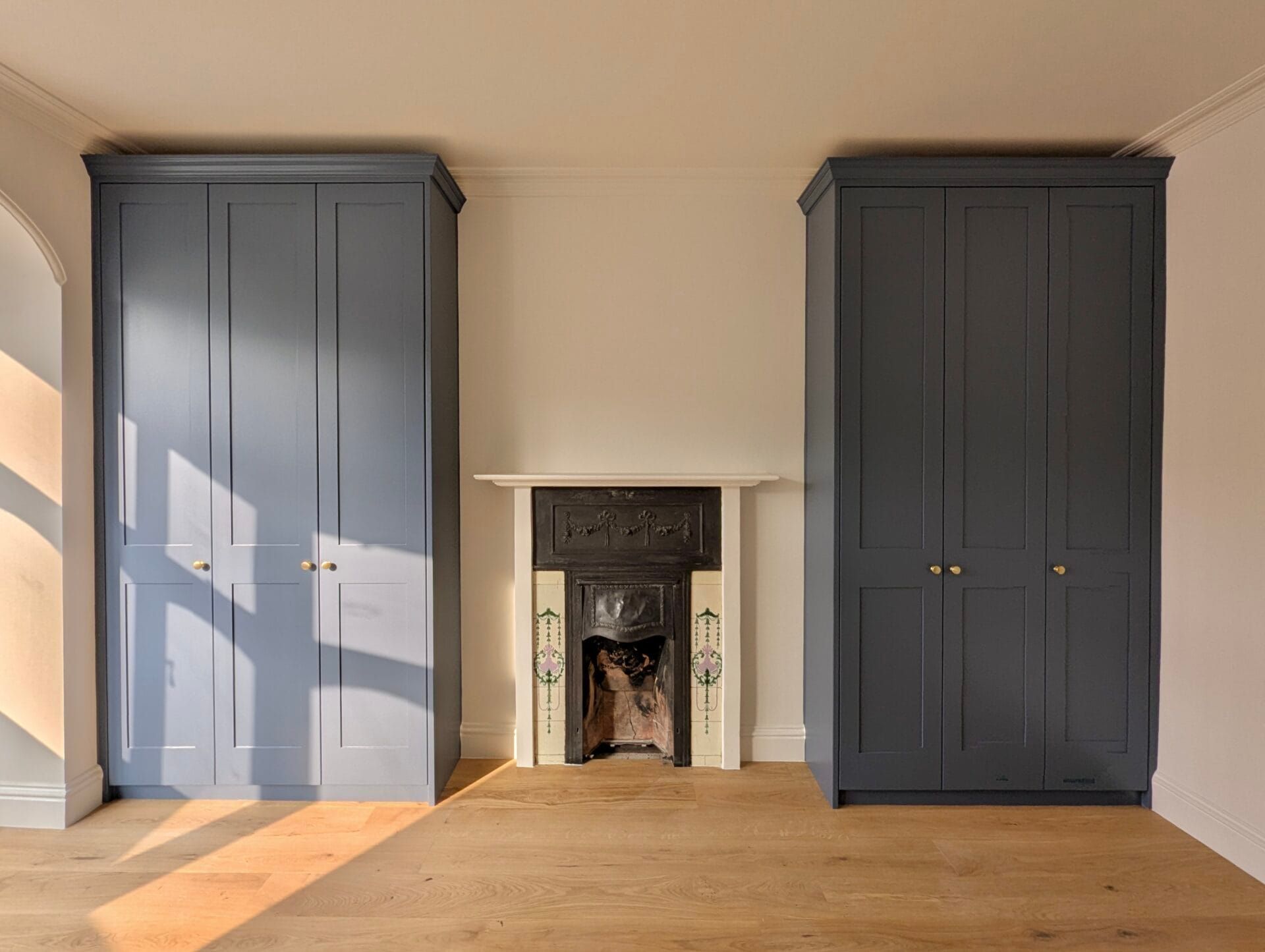
Bespoke building starts from a different premise. Humphries builds every carcass from scratch, cut to the exact dimensions of your specific wall, floor and ceiling. Door styles aren't chosen from a catalogue — they're matched to the property, which might mean Shaker profiles for an Edwardian semi, traditional cornice and ornate beading for a Victorian period home, handleless push-shut for a modern flat, or custom detailing that replicates an existing feature elsewhere in the house. Finishes include any colour from the full Little Greene range, hand-painted on site, or a luxury wood grain-effect laminate where durability and speed are priorities. Interior layouts are designed around what you actually own — existing hanging rail usage is measured during the design visit, shoe counts are captured, and accessory storage is built around real collections rather than standard drawer kits.


The trade-off is time. Bespoke work takes longer. The trade-off for the supplier is volume. Bespoke work doesn't scale the way modular production does.


What the bespoke approach delivers is a wardrobe that fits your room, not a room generally. For most London properties — particularly period ones — that distinction is the entire point.

Sliding doors aren't the only option

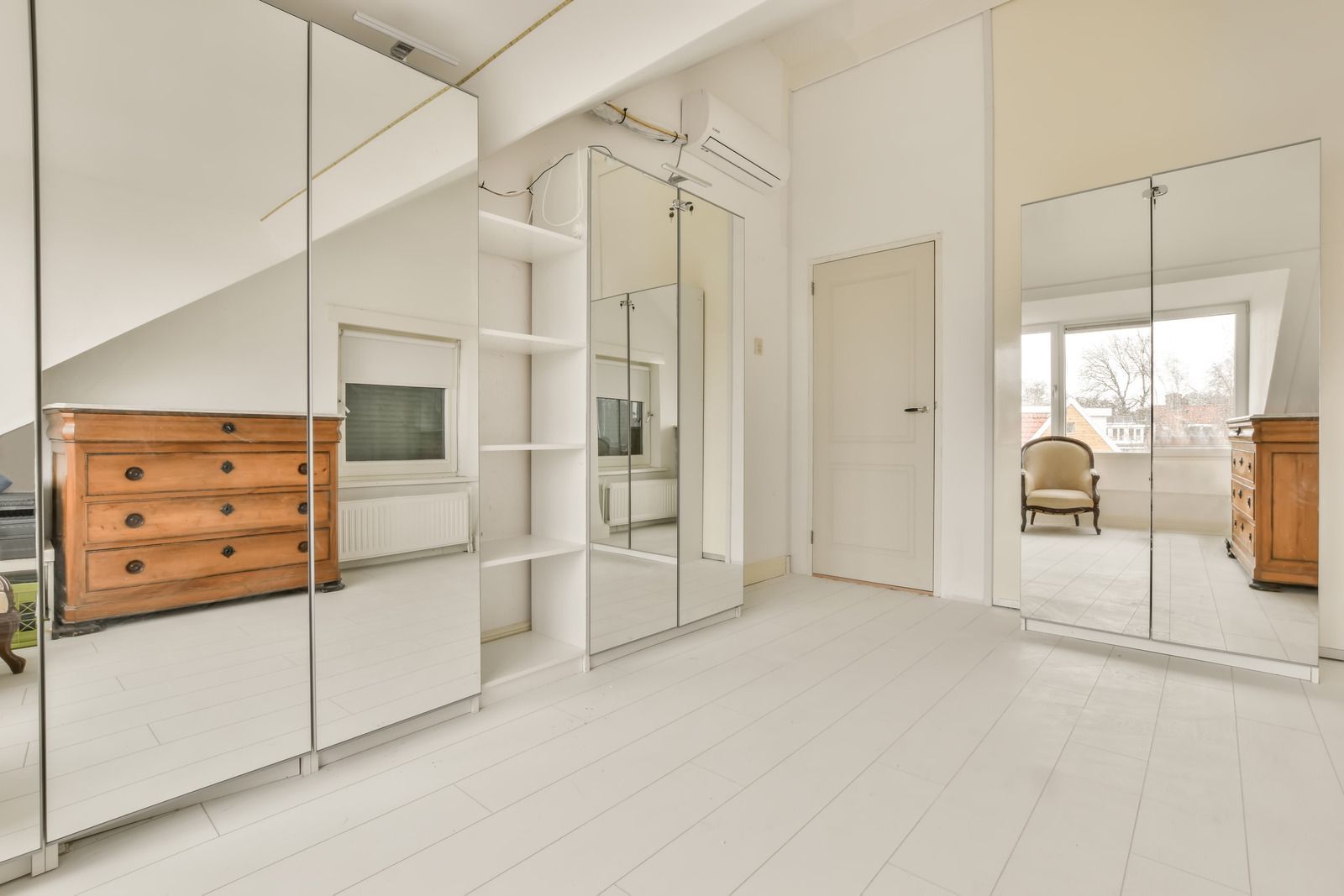
Many large suppliers lead with sliding doors as a signature configuration, to the point that the whole category is sometimes mentally filed as "sliding wardrobe companies." Sliding doors are a legitimate choice with real use cases — tight rooms where hinge-swing clearance isn't available, visual preference for unbroken wall-to-wall fronts, and mirrored sliding panels that double as dressing mirrors.


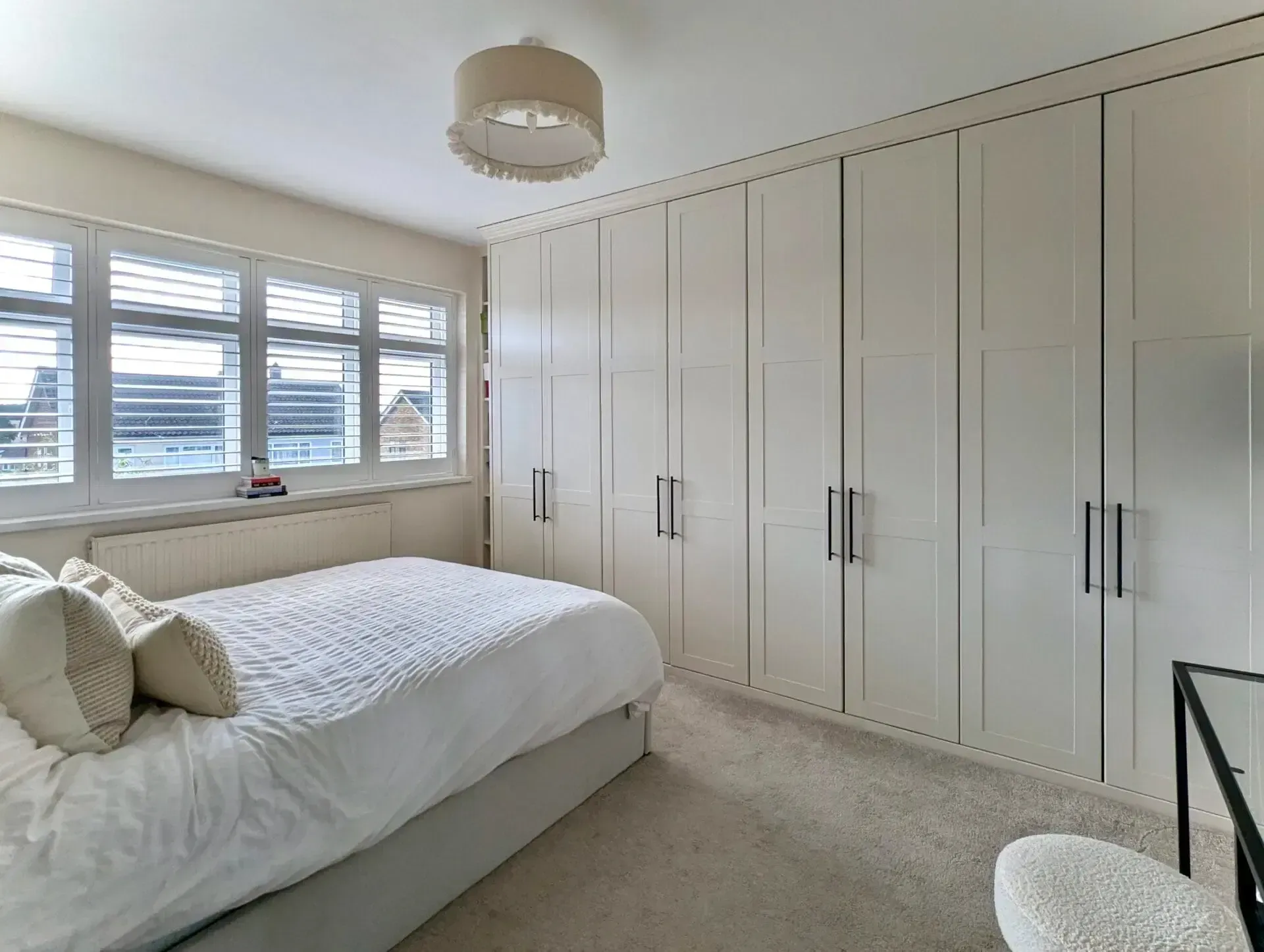
But sliding is one configuration among several, not the whole category of fitted wardrobes. Hinged doors give full access to storage and deliver a traditional appearance. Walk-in configurations behind hinged or sliding doors deliver a dressing-room feel. Full floor-to-ceiling runs with hinged fronts capture vertical capacity in rooms where sliding rails would be fussy. The right supplier for your specific room is one who offers both sliding and hinged options, and recommends the right one for your space — not one committed to sliding by default because it's central to their product range.


Humphries designs and builds hinged-door wardrobes, sliding-door wardrobes, walk-in configurations, and floor-to-ceiling runs. The design visit is where the decision gets made, based on the dimensions and character of your room, rather than a default answer.

Factory finishing vs hand-painting on site

A genuine technical distinction that affects both the finish and the lead time.


Factory-finished wardrobes arrive complete. The doors, frames and visible surfaces have already been sprayed or coated in the factory, sometimes weeks earlier. Installation is essentially assembly. The advantages: quick install days, consistent finish across the whole unit, and no on-site mess from painting. The trade-off: fewer colour options (anything outside the standard palette is constrained), and the specific depth of a hand-applied finish is harder to replicate in factory processes.


Humphries' hand-painted wardrobes follow a different sequence. The carpentry is built in the workshop and installed first. A separate painting visit follows after the carpentry is complete, with the finish applied by hand on site using paint from the full Little Greene colour range. The advantages: any colour the Little Greene range offers, depth of finish that's specific to hand-application, and the ability to touch up and match perfectly in future if needed. The trade-off: a longer overall project timeline, because painting is its own visit.


Neither approach is objectively better. They're different, and the right one depends on what matters to you — speed, or finish depth, or specific colour matching.


Humphries also offers a luxury wood grain-effect laminate as an alternative to hand-painting. Laminate-finished units come complete from the workshop and skip the on-site painting visit entirely, which is useful when the timeline is the priority.

Fit against uneven walls and period features

This is where the engineering differences become most visible, particularly in London.


London's housing stock is, architecturally, one of the most varied and quirky in the country. Victorian and Edwardian terraces, inter-war semis, mansion blocks, warehouse conversions, loft extensions — very few rooms have walls that are actually square, floors that are actually level, or ceilings that are actually flat. Any fitted wardrobe has to deal with that reality one way or another.


Modular systems typically handle wall imperfections using cover strips and filler panels — strips of finished material that bridge the gap between a standardised panel and an uneven wall. Functional, but visible if you look for them.


Bespoke makers handle it through scribing: each panel is cut and shaped to follow the exact contour of the wall, floor and ceiling it meets. No gaps, no filler strips, no cover pieces. The wardrobe integrates with the room's geometry rather than being applied to it. On out-of-square Victorian walls, this is the difference between a wardrobe that reads as "built in" and one that reads as "pushed up against."


Period features complicate this further. Chimney breasts with flanking alcoves, picture rails, skirting that deepens at corners, and cornice that sweeps across the top of the wall — bespoke work integrates with these features. Standardised systems accommodate them with the tools the system has.

The journey from design to installation

Standardised suppliers typically separate the stages. A designer visits; a factory builds; a fitter — often a self-employed contractor working across multiple brands — installs. The people you meet at the start of the project are not usually the people you meet at the end.


Humphries keeps every stage in-house. The designer who visits your home is part of the same family-run team as the drawings specialist (Denisa), the lead carpenters (Mark, Jim, and others who've been with the business for years), the installers, and the on-site painters. Craig Milton, one of the owners, handles the management and systems that keep the show on the road. The people you meet on the design visit are the people who end up responsible for the finished work.


That continuity matters at the margins — when a design change needs to be made mid-build, when a question comes up during installation, when something needs attention years later.

Reading a fitted wardrobe quote

Regardless of which supplier category you're considering, the quote itself is where most of the substance lives. A few principles apply:


  • Look for specification details. "One wardrobe unit" tells you nothing. Proper quotes specify materials, carcass construction, door style, finish, hardware, interior layout, and what's included vs extra.
  • Standard inclusions matter. Humphries fits soft-close hinges and drawer runners as standard on every unit. Other suppliers may charge for these as extras. Compare quotes on matched spec, not headline figures.
  • Extras vs inclusions. Handles, bespoke hardware, hand-painting, making good of walls, delivery and access — all can be quoted separately or bundled. Ask explicitly which is which on any quote you receive.
  • Long-term cost. A cheaper quote with a shorter guarantee and less scribing may cost more over a ten-year horizon than a proper bespoke build with a durable finish and a long guarantee. The honest comparison is whole-life, not invoice-day.

Guarantees and who you're dealing with in year 8

Fitted wardrobes are meant to last. Most projects assume a horizon of at least a decade, often longer. That makes the long-term question — who are you dealing with if something needs attention in year 8? — genuinely important.


Some guarantees are company-backed (you're relying on the supplier still existing and being responsive). Others are insurance-backed (coverage is provided by an underwriter independent of the supplier). Either can work, but the distinction is worth understanding.


Humphries provides a 15-year guarantee on its work. Beyond the formal guarantee, customer reviews repeatedly describe the team returning for minor issues years after installation — one review describes Humphries replacing a cracked mirror on a wardrobe years after the original install, offering it at cost and then not charging when a missing washer was identified as the cause. That kind of responsiveness is a function of a small, family-run business built on repeat customers and recommendations rather than one-off sales.

When a large national brand is the right answer

To be clear: national suppliers genuinely suit some buyers. If your preference is a showroom-led experience where you can walk in, see physical samples, and work within a defined product range, a national brand's network of showrooms delivers that. If you're specifically looking for sliding doors and the brand specialises in sliding configurations, you'll get a competent outcome. If you're coordinating installations across multiple properties and need consistent processes across cities, national reach is a real advantage.


None of this is wrong. It's just different from what a bespoke maker delivers.

Customisation depth matters

specific colours, period-sympathetic detailing, interior layouts designed around what you actually own


Period features need genuine integration

cornice matching, panelling, picture rails, original skirting, chimney breasts with working alcoves


The building has unusual geometry

loft conversions, heavily out-of-square walls, unusually high or low ceilings, awkward access


Hand-painted finishes are the priority


A single-team relationship matters

the same people through design, build, install and aftercare


Resale character matters

integrated, scribed, finished-to-the-room furniture typically reads as a premium feature rather than an addition

For London homes with any of these characteristics, the case for bespoke is usually straightforward.


When a bespoke maker is the right answer

Bespoke tends to be the right model when:

Questions worth asking any fitted wardrobe supplier

Whichever supplier you're considering, these questions are worth putting in writing:


Is every panel scribed to the wall, or are cover strips used?

Who actually builds the wardrobe, and who installs it? Are they the same team, or subcontracted?

Is the finish factory-applied or hand-painted on site?

What's the guarantee, and who backs it?

What's explicitly included in the quote and what's an optional extra? Get the extras list in writing.

Who's my point of contact throughout the project?

What happens if something needs attention in year 8 or year 10?


The answers separate suppliers clearly, regardless of how similar their websites look

FAQs

  • Are bespoke wardrobes always more expensive than national-brand fitted wardrobes?

    Not necessarily. Comparison is only meaningful when the specifications are matched. Once soft-close hardware, hand-painted finishes, scribed fittings, interior layouts and long guarantees are all accounted for, the gap often looks very different from the headline numbers.

  • Do I need a showroom to commission fitted wardrobes?

    No. Humphries' approach is the design visit — a designer comes to your home, measures the space, discusses style options, and produces full 3D drawings. Everything is based on your actual room rather than a showroom approximation.

  • Can bespoke makers match any style?

    Most contemporary and period styles, yes — Shaker, modern handleless, traditional with cornice and beading, floor-to-ceiling, mirrored, walk-in. Humphries specifically specialises in new-build fitted furniture across wardrobes, cupboards, shelves and similar categories; the business doesn't work on repairs or upgrades to existing furniture.

  • How do I compare quotes from different supplier types fairly?

    Request detailed written specifications from each. Match inclusions (soft-close, hardware, finish type, interiors). Ask about scribing, factory vs on-site finishing, and guarantee terms. Compare on matched spec rather than headline quote figures.

A no-obligation bespoke benchmark

If you're weighing options — or have already received a quote from a national supplier — the most useful thing you can do next is book a free design visit with HUMPHRIES BESPOKE FITTED WARDROBES & CUPBOARDS FULHAM LIMITED. A designer visits your home, surveys the space properly, and produces a full 3D drawing package and quote you can compare against anything else on the table.


No obligation, no pressure. Just an honest look at what a bespoke alternative looks like for your specific room.


For more on the family-run team behind the work, the About page introduces Zephyr, Craig, Denisa, the lead carpenters, and the rest of the Humphries team. The FAQ page covers what's included as standard, guarantees, and materials.


Call 02082594871 or book a design visit through the website. The comparison becomes obvious once you can see both options side by side.

Recent Posts

Small attic office with bookshelves, desk, gray sofa, and skylight window.
April 30, 2026
Most buyers don't think about install day until it's two days away. Up to that point, the focus has been on the design — measurements, finishes, interior layouts, the 3D drawings
Minimalist mirrored hallway with beige walls, wood floor, and navy cushions along the sides
April 30, 2026
There's a tier of fitted furniture beyond even a full wall of wardrobes: the dressing room. An entire room — or a generous walk-in extension of a bedroom
April 30, 2026
With that caveat settled, this guide walks through what most London homeowners actually need to know. London has one of the highest concentrations of listed buildings and conservation areas in the UK
Bright attic room with skylight, white built-in cabinets, radiator, and potted palm on carpeted floor
April 30, 2026
Bespoke fitted furniture is built to outlast several sofas, several cars and at least one round of redecoration. The work is hand-built, properly finished, and comes with a 15-year guarantee on the carpentry
Gray built-in wardrobe with brass handles in a bedroom, beside a window with dark curtains
April 30, 2026
The short answer is yes — with meaningful caveats. The longer answer is the one you actually need if you're spending real money before a sale.
White paneled closet doors with brass knobs in a bright hallway
April 30, 2026
You've got two quotes sitting in your inbox. Both are for fitted wardrobes in the same bedroom, both describe roughly the same layout, and one is significantly cheaper than the other.
Bright bedroom with white built-in wardrobes, bed, window blinds, and beige carpet
April 30, 2026
London is a city of leaseholders and long-term tenants. A large share of its housing stock is flats, a large share of those flats are leasehold, and a large share of tenancies in prime boroughs run for years rather than months.
Bright empty bedroom with bay window, white radiator, and built-in pale green wardrobes
April 30, 2026
Most people who visit the Humphries Cabinets website and hover over the "Book a Free Design Visit" button don't click it. Not because they're not interested
April 30, 2026
If you're asking how long fitted wardrobes take, there's usually a deadline behind the question. A baby on the way. A completion date on a flat in Clapham.
By Nitin Abhi April 1, 2026
London homes are as diverse as the city itself. From compact modern flats to elegant period properties, each space presents its own unique opportunities and challenges—particularly when it comes to storage. Wardrobes play a crucial role in maintaining organisation and enhancing interior design. However, standard solutions often fall short in London homes, where layouts can be irregular and space is at a premium. Bespoke wardrobe design offers a tailored approach, allowing storage to be adapted precisely to the architecture and style of each property. This ensures maximum efficiency without compromising on aesthetics. This guide explores the best wardrobe design approaches for London homes, helping you create a solution that complements both your space and your lifestyle.
Show More