Planning Permission, Building Regs & Listed Buildings: Do You Need Approval for Fitted Furniture in London?
Important: This article is general information only. Rules around planning permission, Listed Building Consent, Building Regulations and conservation areas vary by property and local authority, and the stakes on getting them wrong can be serious — carrying out unauthorised works to a listed building is a criminal offence under UK law. Always verify your specific situation with your Local Planning Authority (LPA), and for listed or sensitive properties, engage a qualified planning consultant or heritage architect before commissioning any fitted furniture work.
With that caveat settled, this guide walks through what most London homeowners actually need to know. London has one of the highest concentrations of listed buildings and conservation areas in the UK — especially in boroughs like Westminster, Kensington and Chelsea, Camden, Islington and Hackney — and the assumption "it's only internal, so it must be fine" is not always correct. Here's when fitted wardrobes are genuinely no-approval-needed, when they aren't, and how to approach the question without getting blindsided.
The short answer for most London properties
For the majority of freehold, non-listed Victorian and Edwardian houses in London, fitted wardrobes will not require planning permission. According to the UK Planning Portal, homeowners should not need to apply for planning permission for internal alterations, including building or removing internal walls, in most properties.
But "most" is doing heavy lifting in that sentence. Two big categories of property carry additional rules:
- Listed buildings, where almost any internal alteration affecting character can require Listed Building Consent.
- Leasehold properties, where freeholder consent may be required separately under the terms of the lease, are independent of planning law.
Conservation areas, by contrast, mostly affect external alterations — so internal fitted wardrobes in a non-listed property within a conservation area generally don't trigger additional planning requirements, unless an Article 4 direction is in force (more on these below).
The remainder of this guide covers each of these situations in turn.
Listed buildings — the big exception
Listed building status applies to buildings judged to be of national importance in terms of architectural or historic interest, included on the National Heritage List for England. Around 1 in 25 buildings in England are listed, and the concentration in central London boroughs is significantly higher than the national average.
The critical point for anyone owning fitted furniture plans: listed status covers the entire building — inside and out. According to UK planning guidance, Listed Building Consent is required for "alteration or extension of a listed building in any manner (including internal) which would affect its character as a building of special architectural or historic interest."
The three grades of listing in England are:
- Grade I — buildings of exceptional interest. Around 2.5% of listed buildings. Alterations are generally very tightly controlled.
- Grade II* — particularly important buildings of more than special interest. Around 5.8% of listed buildings.
- Grade II — buildings of special interest, warranting every effort to preserve them. The vast majority of listed buildings fall in this category.
Owners of Grade I or Grade II* buildings considering fitted furniture should treat professional planning advice as non-negotiable before any drawings are commissioned. For Grade II buildings, the rules still apply — but there is usually more flexibility, particularly where the work doesn't affect the features that originally warranted the listing.
What counts as "affecting character"
The phrase "affecting character" is deliberately broad, and the LPA is the body that makes the final determination. Common examples where fitted wardrobes could affect character include:
- Covering, removing, or damaging original cornice, moulding or panelling
- Obscuring sash window architraves or period linings
- Drilling into original plasterwork or historic fabric
- Integrating over or around original fireplaces, chimney breast detailing, or dado rails
- Removing skirting boards to scribe units flush to walls
- Altering the visible proportions of a historic room
Conversely, installing fitted furniture in a room that has no surviving original features — a modern extension, for example, or a back room that has already been stripped of its historic fabric during previous renovations — is less likely to affect character. But this is a determination for your LPA to make, not the owner or the furniture maker.
How to check if your building is listed
Three practical routes:
- The National Heritage List for England, maintained by Historic England, is the definitive public record. Search the list at historicengland.org.uk/listing/the-list.
- Your local planning authority's website usually has borough-specific mapping and listing information, and often flags conservation areas and Article 4 directions alongside listed status.
- Your conveyancing documents from when you purchased the property should note any listed status. Your solicitor can confirm if you're uncertain.
Conservation areas — usually fine for internal, but…
Around 10,000 conservation areas exist across England, and London has a high density of them — particularly in central and inner boroughs. Conservation area status is primarily designed to protect the external character of an area: the streetscape, rooflines, elevations and materials.
For a non-listed property inside a conservation area, internal fitted wardrobes generally don't trigger additional planning requirements beyond what would apply to any other property.
The exception: Article 4 directions. These are directions made by the LPA that remove some or all of a property's Permitted Development Rights — the rights homeowners normally have to carry out certain works without planning permission. Article 4 directions are most commonly applied to external changes (windows, doors, cladding, roof alterations) within conservation areas, but their scope varies by borough and by direction.
If your property is in a conservation area, it's worth checking with your LPA whether any Article 4 directions apply to your building — not because they typically affect internal fitted furniture, but because understanding the full picture of controls on your property is useful before any significant work.
Leasehold and freeholder consent — separate from planning
A reminder that planning law is not the only layer. If your property is leasehold, your lease may require written consent from the freeholder for internal alterations — completely independent of whether the LPA requires planning permission or Listed Building Consent.
This is covered in more detail in the separate guide on fitted wardrobes in rental properties and leasehold flats, but the key point for this article is that both permissions may be needed. A leaseholder in a listed flat might need:
- Listed Building Consent from the LPA, and
- Freeholder consent (licence to alter) under the terms of the lease
These are processed by different bodies, on different timescales, with different criteria. Starting both conversations early is the sensible approach.
Building Regulations
Building Regulations are a separate regime from planning permission, governing construction standards — structural integrity, fire safety, ventilation, insulation, and similar.
Fitted wardrobes alone don't typically trigger Building Regulations approval. The installation of furniture against a wall, even fitted furniture, is not "building work" in the regulatory sense. Where Building Regulations can become relevant:
- If the installation involves structural alterations, for instance, removing or modifying a supporting wall to create the space.
- If the project involves moving a radiator, rerouting electrics, or altering plumbing.
- If the installation affects fire escape routes — unlikely in a bedroom wardrobe, but a relevant consideration in any location affecting means of escape.
- If the fitted furniture integrates significant electrical work (mains-powered lighting, for example), the electrical element falls under Part P of the Building Regulations and needs to be carried out by a competent electrician.
For most fitted wardrobe projects — including those with low-voltage LED lighting integrated via a qualified electrician — Building Regulations are not triggered. But if your project includes any of the above elements, confirm with your LPA's Building Control team.
Working in London's strictest approval boroughs
Humphries Cabinets services every London borough within the M25, including those with the highest concentrations of listed buildings and conservation areas: Westminster, Kensington and Chelsea, Camden, Islington and Hackney.
In these boroughs, it's worth allowing extra time in any fitted wardrobe project for the consent process. Some practical observations on what homeowners typically encounter:
- Pre-application advice is often available from the LPA's conservation team, sometimes free and sometimes chargeable, depending on the borough. This is usually worth taking up — an informal steer from the conservation officer on what is likely to be acceptable can save weeks of revisions later.
- Heritage statements are commonly required with Listed Building Consent applications. These explain what is special about the building and how the proposed works avoid harm to that character. In straightforward cases, a homeowner can sometimes prepare this; in complex ones, a heritage consultant is worth the cost.
- Public consultation is a standard part of the process. Councils typically advertise applications and allow 21 days or more for public comment.
- Determination typically takes around eight weeks, though complex cases or applications requiring revisions can take longer.
- Listed Building Consent applications don't carry an application fee in England, but a planning consultant or heritage architect, if engaged, will charge for their work, as will any architect preparing drawings.
Worth stating clearly: these are general patterns, not guarantees. The specific process in your borough, for your specific property, is a question for the LPA.
The approval process, step by step
For owners of listed buildings considering fitted wardrobes, the typical sequence is:
- Confirm the listing grade and any conservation area/Article 4 status of your property via Historic England and your LPA.
- Engage a planning consultant or heritage architect if the property is Grade I, Grade II*, or has complex features. For Grade II with simple proposals, a direct conversation with the LPA's conservation officer may be sufficient as a starting point.
- Seek pre-application advice from the LPA's conservation team. This is an informal process where you outline your intention and get feedback on likely acceptability before formally submitting.
- Develop drawings and a heritage statement showing what is proposed, how it affects the building's character, and what mitigations are in place.
- Submit the Listed Building Consent application — this is typically done via the UK Planning Portal. There is no fee for the application itself.
- The determination period is typically around eight weeks, though complex cases can take longer.
- If approved, proceed with the work within the terms of the consent. If refused, you have the right to appeal (typically within six months) or to amend the proposal and resubmit.
- Freeholder consent (if leasehold) runs alongside this — start that conversation at the same time as the pre-application advice, not after.
Only once all required consents are in writing should the furniture commissioning process move to manufacturing.
Preserving original features rather than covering them
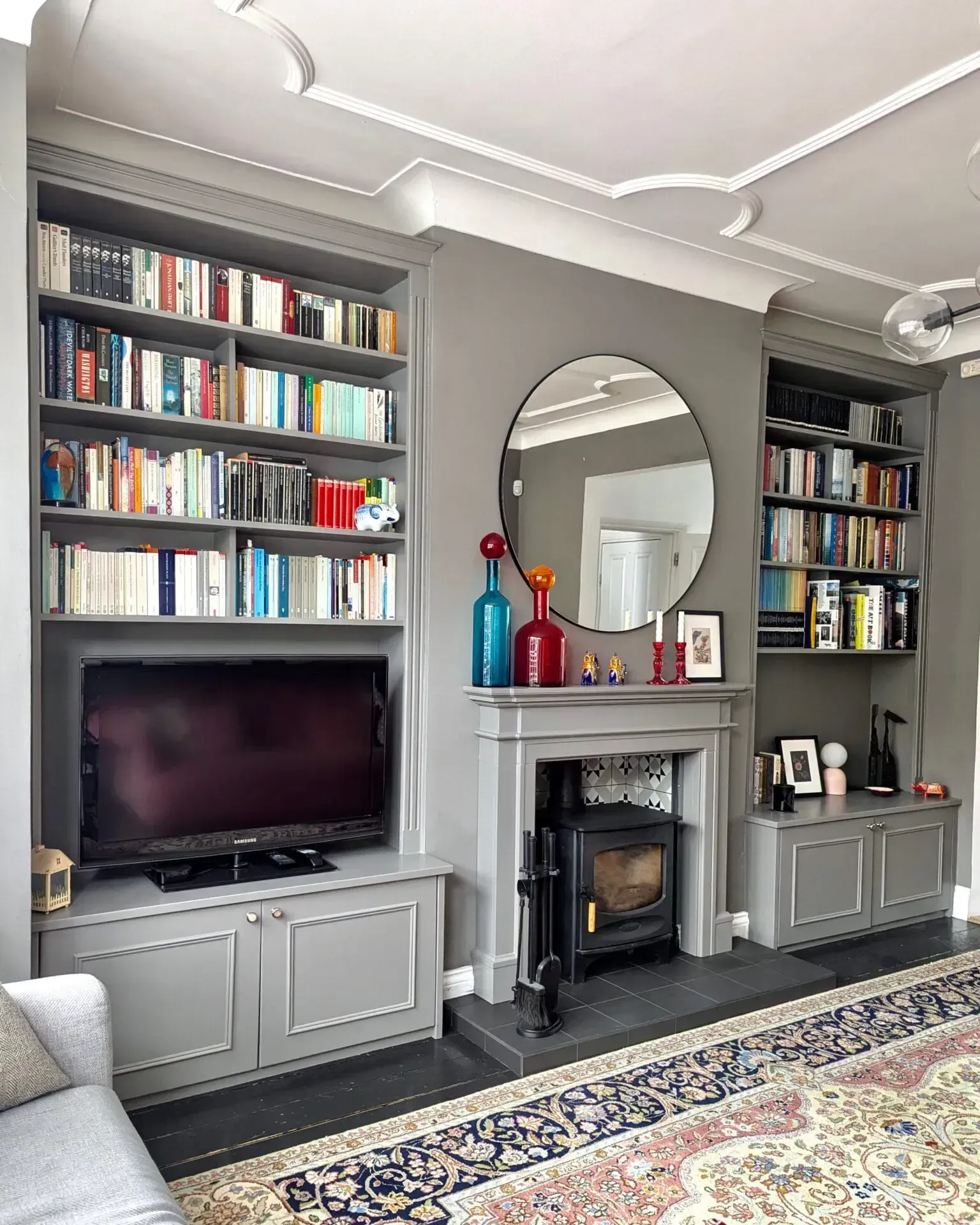
If the room has original cornice, skirting, panelling or fireplaces, a design that works around these rather than over them is more likely to be viewed favourably.
Clearly distinguishing new from old
Heritage guidance often values proposals where modern additions are clearly identifiable as modern, rather than pastiches of historic detail that could confuse future readings of the building.
Using finishes and materials sympathetic to the period
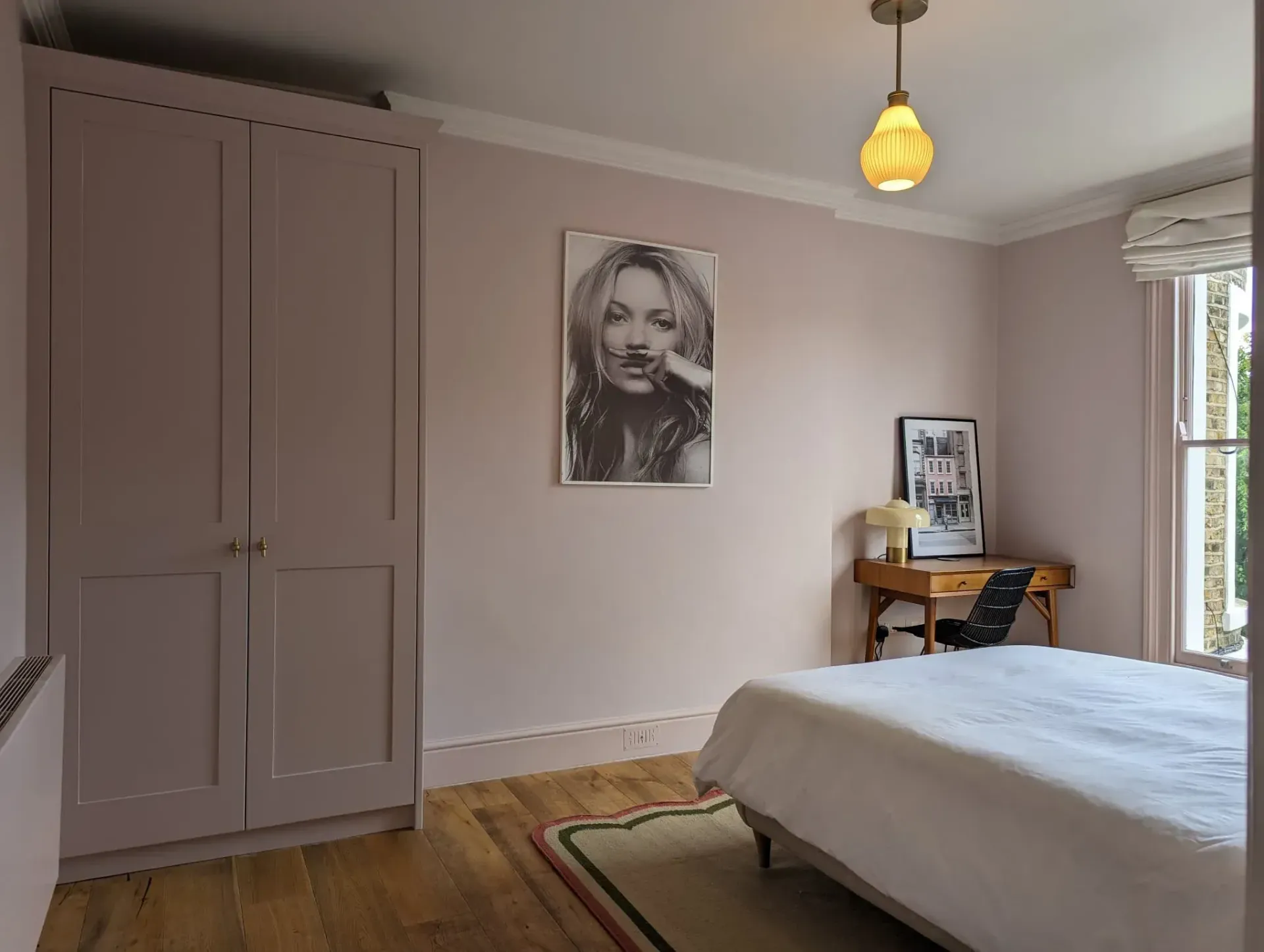
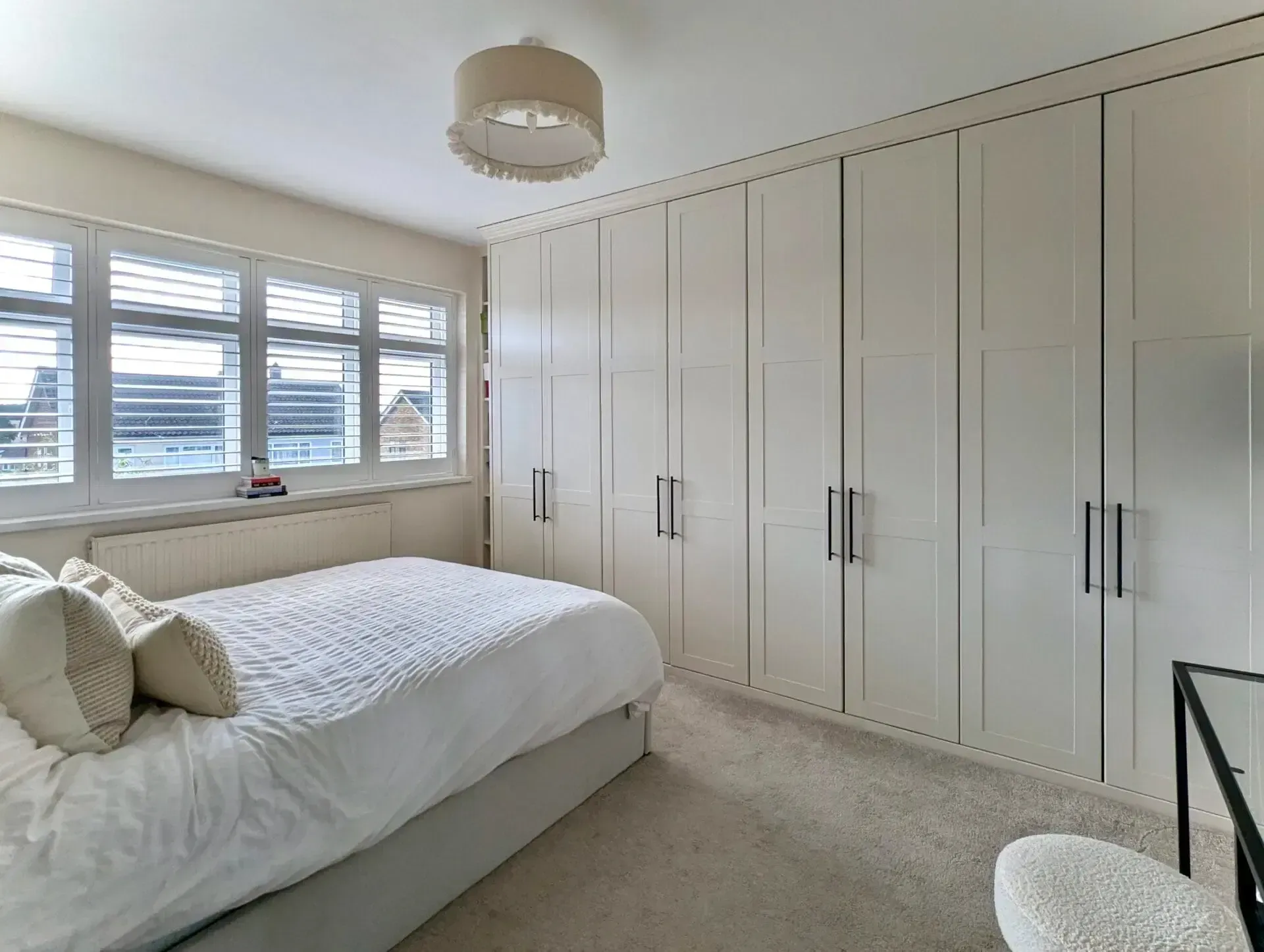
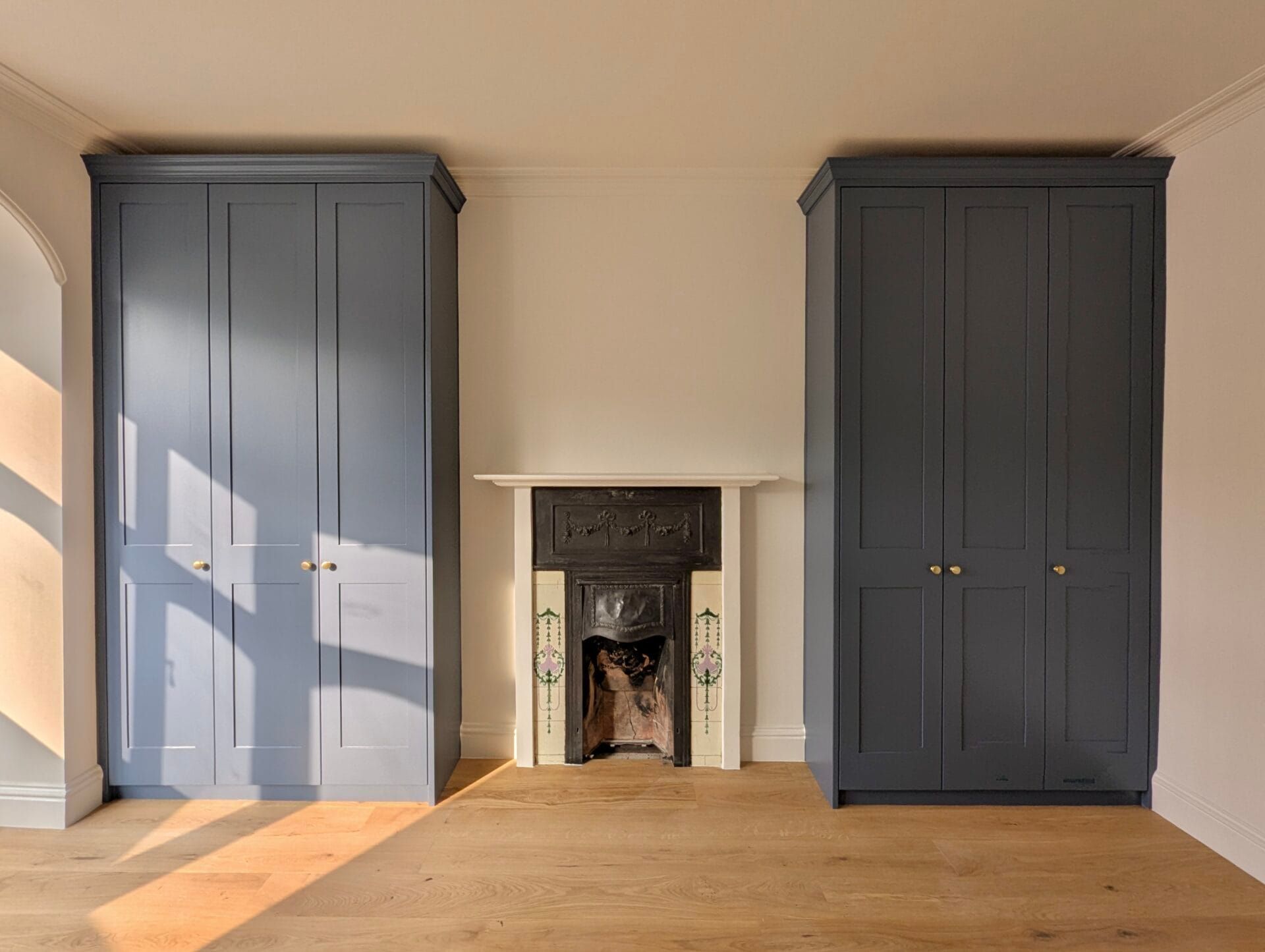
Humphries offers Shaker-style wardrobes that fit naturally into Victorian and Edwardian houses, traditional styles with cornice and ornate beading, and hand-painted finishes using Little Greene's colour range — any of which can be specified to complement rather than compete with an original interior.
Minimising irreversible impact on historic fabric
The less drilling into original plasterwork, the less removal of original skirting, the less disturbance of original joinery — the better the proposal tends to be received.
How a sympathetic design reduces approval friction
While planning responsibility sits firmly with the owner, the design choices made for the fitted furniture itself can meaningfully affect how an LPA responds to a Listed Building Consent application. Broadly, design choices that tend to read well in heritage assessments include:
Humphries' existing guide on built-in storage ideas for period homes without losing character covers the design philosophy in more detail, and is a useful starting point for conversations with both a heritage consultant and the LPA.
To be clear: these design choices do not guarantee approval, and they do not remove the legal requirement for Listed Building Consent where it applies. They simply make the consent conversation more constructive when it happens.
When to get professional planning advice
At a minimum, homeowners should engage a planning consultant or heritage architect when:
- The property is Grade I or Grade II* listed
- The property has significant surviving original features that the fitted furniture will interact with
- The LPA's pre-application advice raises concerns
- The project forms part of a wider renovation involving other alterations
- The lease or title deeds are ambiguous about the consent process
For Grade II listed properties with straightforward proposals — for instance, fitted wardrobes in a back bedroom that has already been stripped of original features — it may be sufficient to work directly with the LPA's conservation officer and submit a simple Listed Building Consent application. Even then, the LPA is the body determining whether professional input is needed; don't assume the simpler route applies to your property without confirming.
How to get started
If you own a listed building, a conservation area property, or any London home where the approval picture isn't obvious, the sequence is:
- Confirm the planning position for your property with the LPA and (where appropriate) a heritage professional.
- Once the approval picture is clear, book a free design visit with Humphries Cabinets to talk through what is buildable within the scope of whatever consent has been granted or is being sought.
- Use the 3D drawings package Humphries produces as part of any Listed Building Consent application, if applicable.
HUMPHRIES BESPOKE FITTED WARDROBES & CUPBOARDS FULHAM LIMITED works across every London borough within the M25 and understands the design considerations that come with London's period housing stock — Shaker styles for Victorian and Edwardian homes, designs that work around original features, and hand-painted finishes in period-appropriate Little Greene colours. What Humphries doesn't do — and nor should any furniture maker — is provide planning or legal advice. That responsibility sits with the owner, supported by professionals qualified to give it.
Call 02082594871or book a design visit online for the furniture conversation. For the planning conversation, start with your LPA.
Property types where fitted wardrobes tend to add the most value
Fitted furniture has the strongest impact where storage is genuinely a weakness of the property's current state. In London, that usually means:
Victorian and Edwardian conversions
These properties are visually beautiful but structurally awkward — walls out of square, chimney breasts creating alcoves, skirting and cornice that any freestanding wardrobe will clash with. Fitted wardrobes turn those quirks into assets. Humphries has built specifically around these properties across boroughs like Camden, Islington, Hackney and Wandsworth, producing Shaker-style wardrobes that honour the period character while delivering modern storage. For this property type, the alternative — a freestanding wardrobe fighting the geometry — genuinely detracts from how the home shows.
Loft conversions and top-floor flats
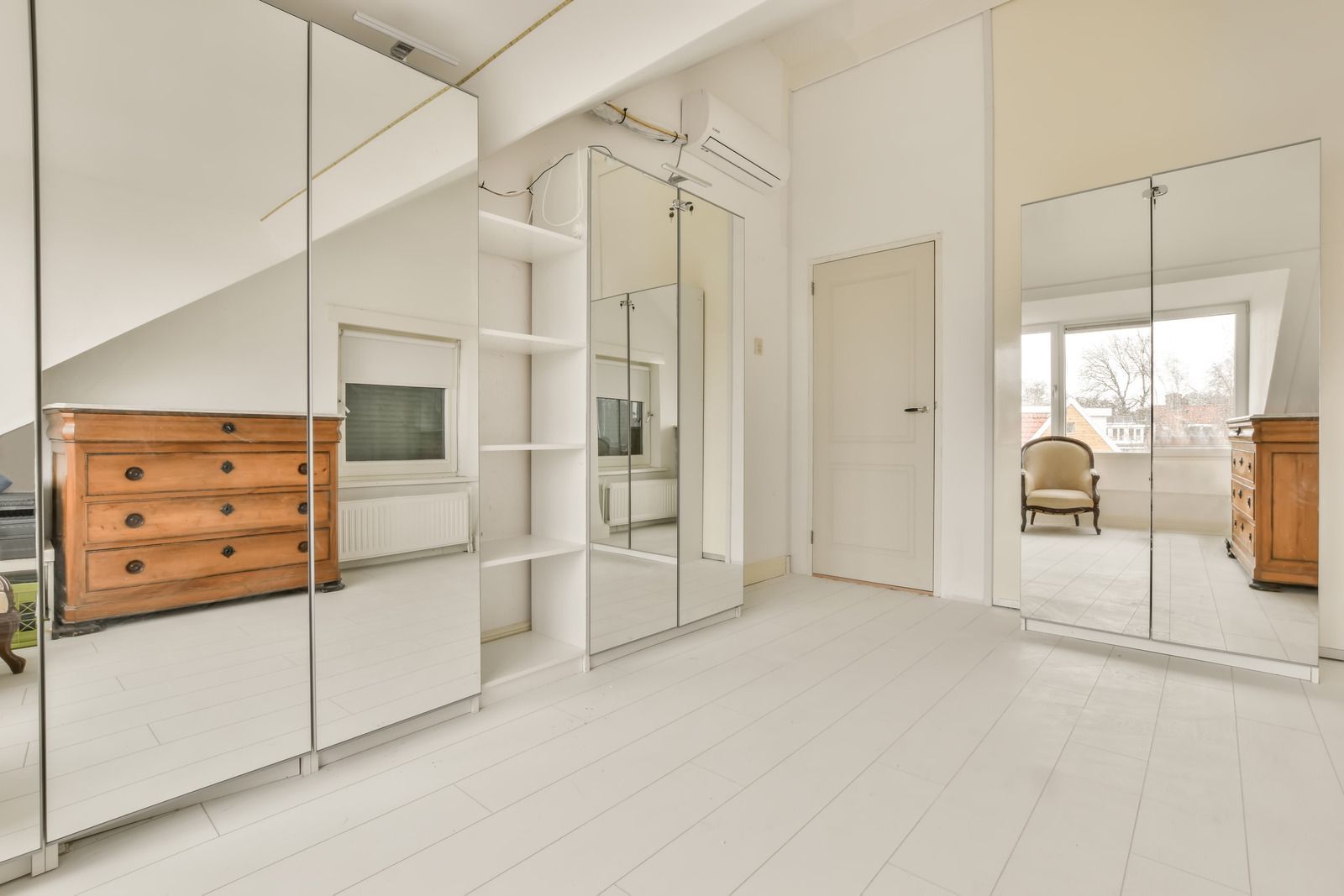
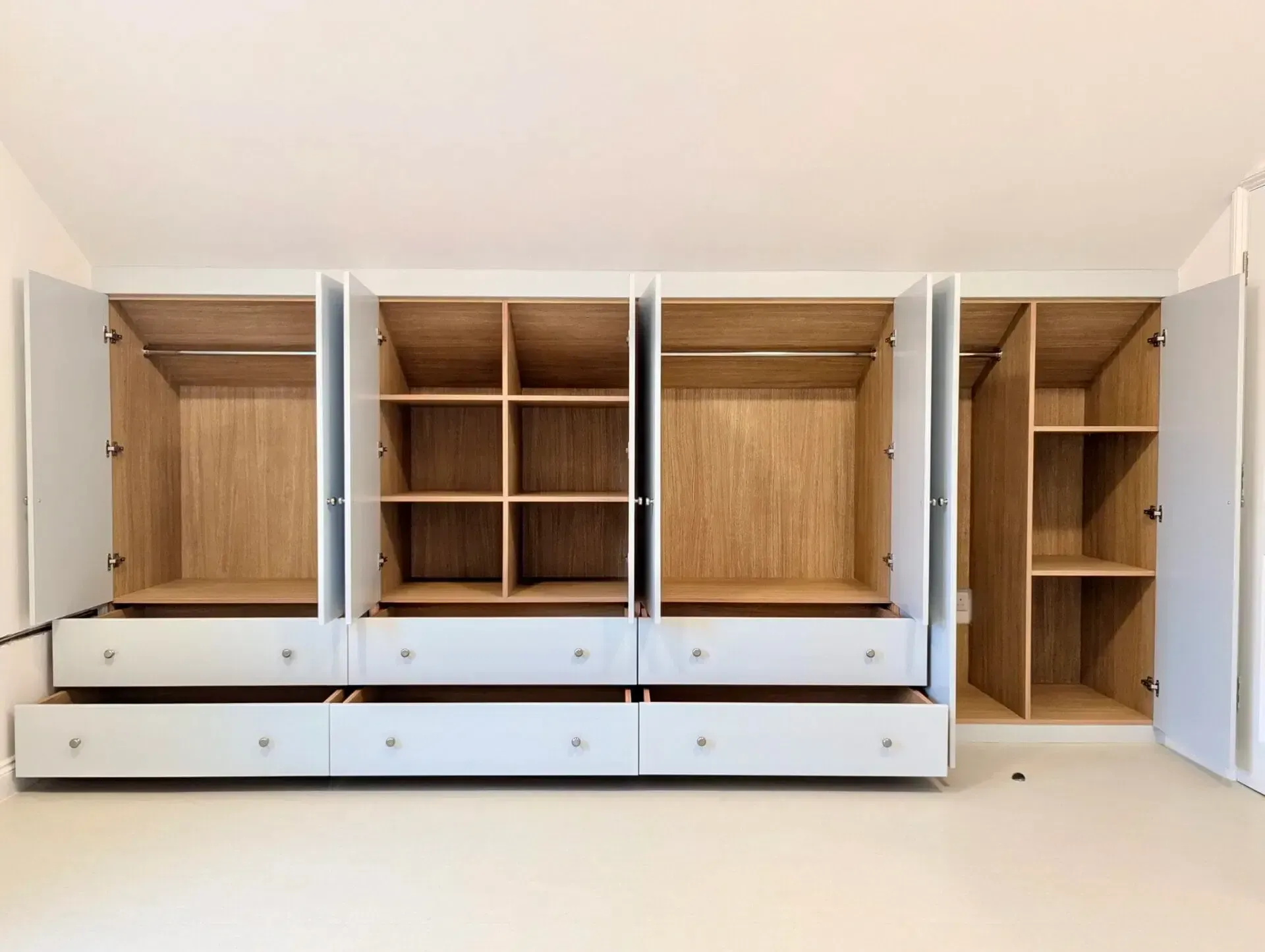
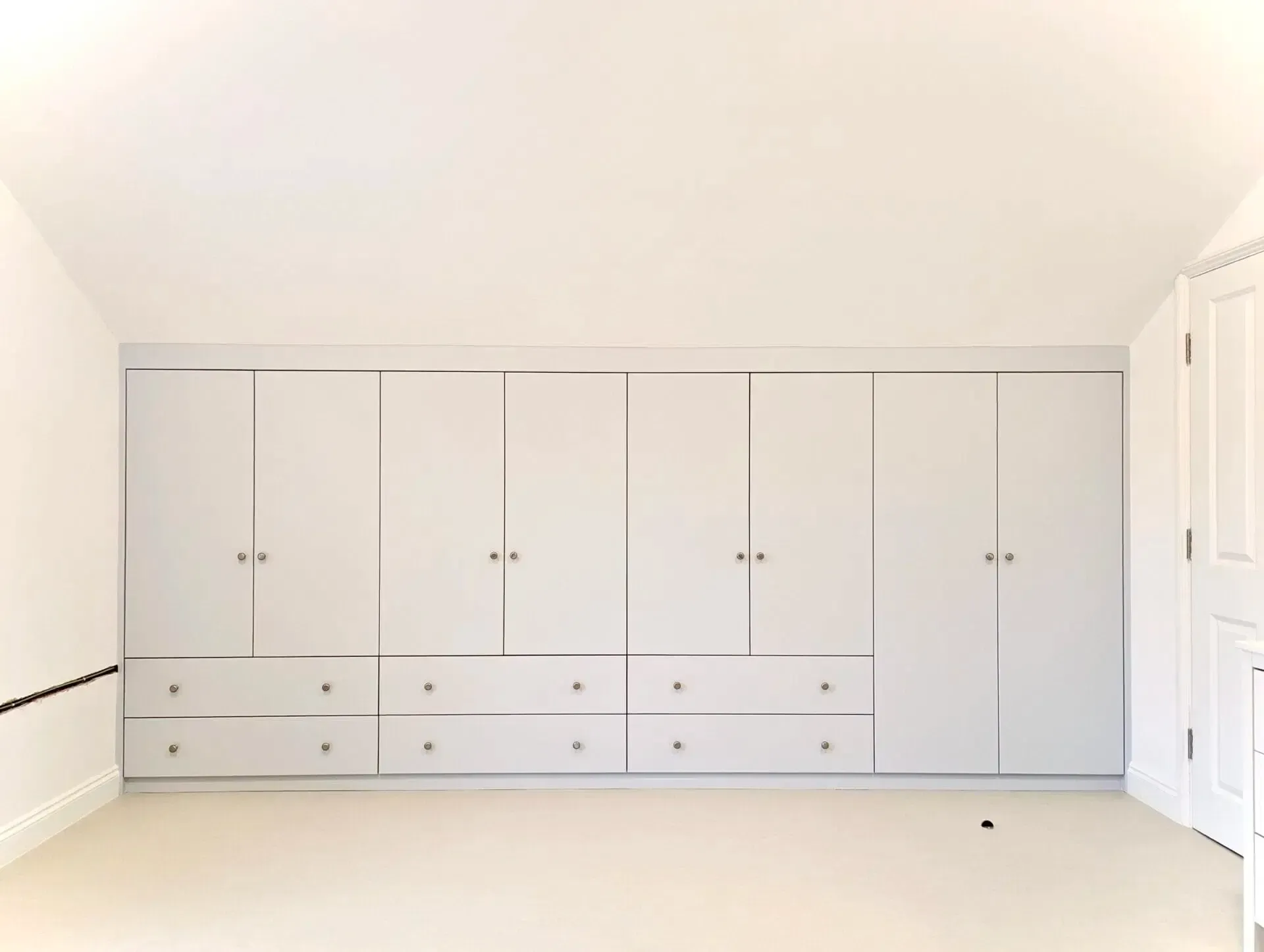
Loft bedrooms are the archetypal case for fitted furniture. Sloped ceilings, eave angles and irregular floor plans make freestanding wardrobes impossible to use efficiently. Humphries builds custom-shaped loft wardrobes and loft eave units that follow the exact angles of the room — turning storage from a compromise into a feature. In these spaces, the absence of fitted furniture is itself a limitation that buyers notice.
Family houses in zones 2–4
In houses aimed at families, storage is often the difference between "this works for us" and "we'd have to extend." A bedroom with properly built-in wardrobes — ideally floor-to-ceiling to maximise hanging and folded capacity — helps buyers tick the storage box at the viewing rather than add it to the mental renovation list.
Warehouse and industrial conversions
These properties sell on character — high ceilings, exposed brick, large volumes — but they're often short on closed storage. Well-designed fitted wardrobes, particularly modern handleless or floor-to-ceiling configurations, complement the aesthetic while solving the practical problem.
Recent Posts