Bespoke Bookcases and Home Libraries: A London Homeowner's Guide
Books occupy a distinctive place in the London home. Even in an age of digital reading, most households continue to accumulate physical books — some through active collection, some through gradual arrival over years, some through inheritance of family libraries. The question of what to do with these books, how to display them, and how to integrate them into the wider home design comes up in most homes eventually.
Bespoke bookcases and home libraries offer a level of thoughtful integration that off-the-shelf shelving cannot match. They can be designed to fit specific alcoves, adapt to unusual room proportions, accommodate the actual mix of book sizes you own, and integrate with the architectural character of period London properties. This guide explores how to think about bespoke bookcases for London homes, the design considerations that separate good installations from generic ones, and the range of approaches that work well in different types of properties.
Why Bespoke Beats Off-the-Shelf for Bookcases
Off-the-shelf bookcases are designed for idealised rooms with square walls and average book collections. Real London homes rarely match either assumption.
Wall dimensions vary. Period properties in particular have walls that aren't perfectly straight, ceilings that aren't perfectly level, and alcoves with dimensions that no standard bookcase matches. Off-the-shelf units leave gaps at the sides or top that look awkward and waste storage capacity.
Book collections vary. Some homeowners collect coffee-table art books; others fill their shelves with paperback fiction; others have technical libraries with oversized reference volumes. Standard shelf spacings don't match any of these collections particularly well. Bespoke bookcases can be built with shelf spacings matched to the actual heights of the books being stored.
Room integration varies. Books work differently in different rooms. Living room bookshelves need to feel like part of the wider room design. Home office libraries need to support work as well as display. Bedroom bookcases need to feel appropriate for the calmer atmosphere of a sleeping space. Bespoke design accommodates these distinctions in ways that generic shelving cannot.
Long-term durability matters. Books are heavy. A wall of loaded shelving carries substantial weight, and cheaper off-the-shelf units often sag or fail over years of use. Bespoke bookcases are built with structural integrity appropriate to their intended load.
For any serious collection or any home where the bookcases will be a visible feature of the interior design, bespoke construction typically produces better long-term results than off-the-shelf alternatives.
Common Bookcase Configurations
Several configurations recur in well-designed bespoke bookcase projects.
Full wall bookcase installations convert an entire wall into shelving from floor to ceiling. This is the most dramatic and highest-capacity approach, creating a genuine library feel and accommodating collections of hundreds or thousands of volumes. It works particularly well in living rooms, home offices, and studies where the bookcase becomes a defining architectural feature.
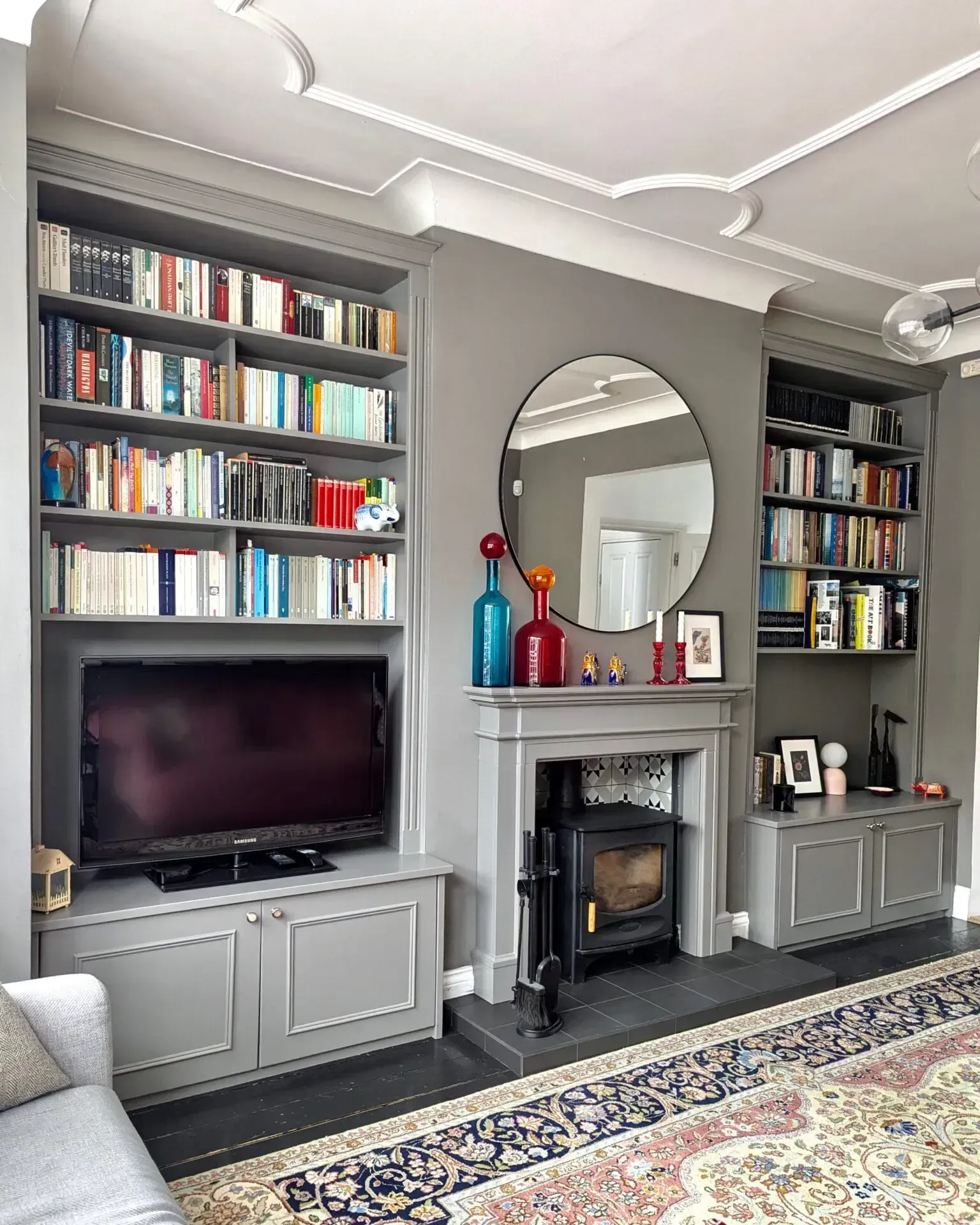
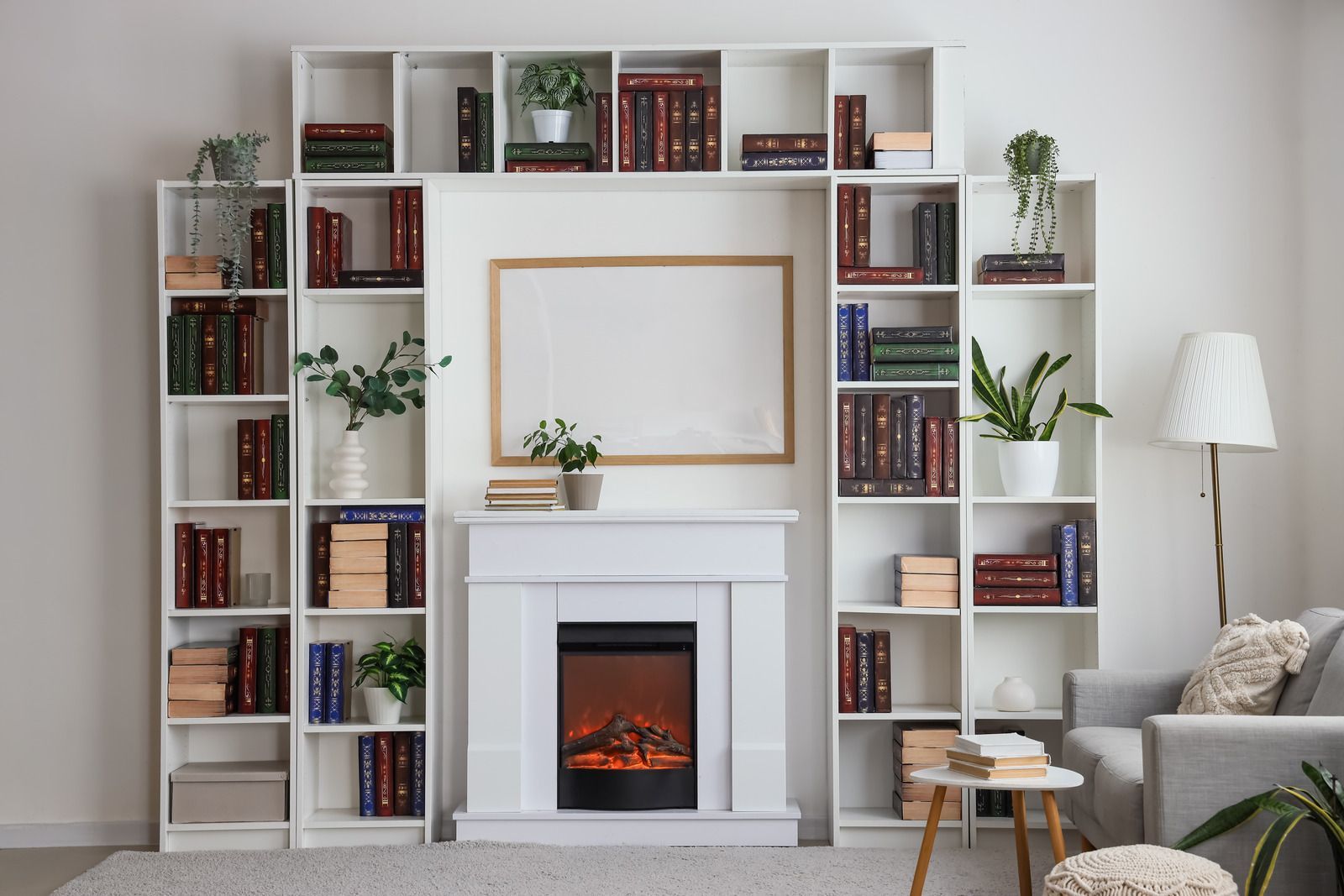
Alcove bookcases built into the recesses on either side of a chimney breast are among the most common bespoke bookcase projects in London homes. The natural alcove space suits shelving perfectly, the chimney breast provides visual separation between the two sides, and the finished result looks as if it was always part of the room.
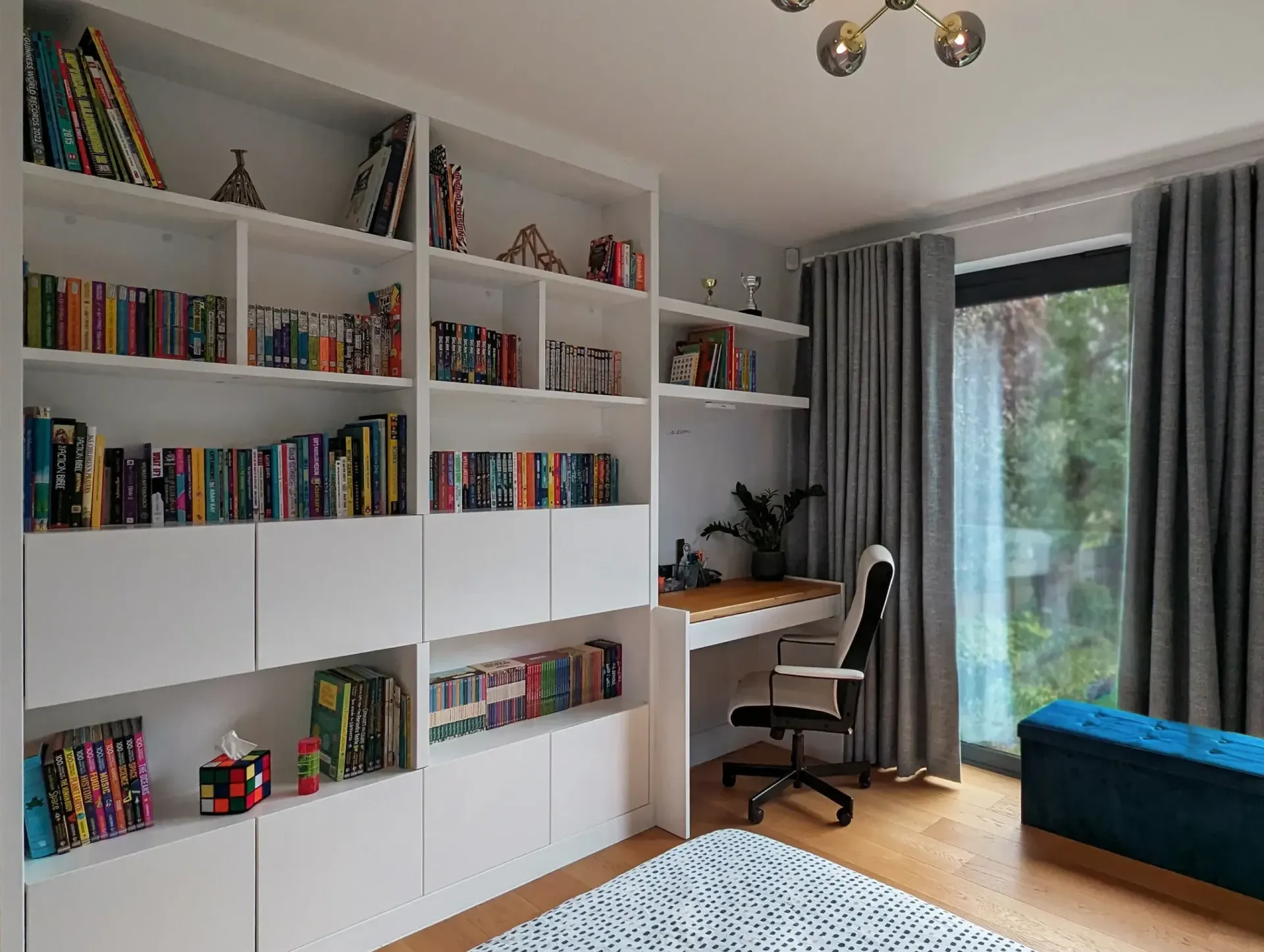
Combination bookcase and cupboard units provide open shelving above with closed cupboard storage below. This works well when the room needs both display capacity and concealed storage for less-attractive items (media equipment, family papers, general household clutter). The proportion between shelving and cupboards can be adjusted based on specific needs.
Reading nook installations combine bookcases with a built-in bench seat or reading corner. The bookshelves surround the seating area, creating a dedicated reading space that also serves as substantial book storage.
Sliding library ladder systems for very tall bookcase installations allow access to high shelves without requiring separate step stools. These make sense for full-height installations where the top shelves would otherwise be effectively inaccessible.
Integrated home office bookcases combine book storage with desk space, filing storage, and equipment cabinetry. These create dedicated work zones within wider bookcase installations, particularly useful for hybrid workers who need substantial book storage alongside their working setup.
Design Considerations for Bespoke Bookcases
Several specific design decisions shape how well a bespoke bookcase actually works.
Shelf spacing is the most important internal design decision. Standard shelf spacing (roughly 30cm to 35cm between shelves) accommodates typical fiction paperbacks and most hardcover books but leaves gaps above shorter volumes and doesn't accommodate oversized books at all. Well-designed bespoke bookcases vary shelf heights across the installation — shorter spacings for paperback sections, taller spacings for oversized art books, and dedicated compartments for unusually sized volumes.
Shelf depth affects both capacity and appearance. Deeper shelves (30cm+) accommodate almost any book size but produce heavy visual weight. Shallower shelves (20cm to 25cm) look lighter but limit which books they can hold. Different depths can be used in different sections of the same installation.
Adjustable versus fixed shelving has genuine trade-offs. Fully adjustable systems allow shelf positions to be changed as collections evolve. Fixed shelving typically produces cleaner, more architectural results but commits to a specific layout for the life of the installation. Hybrid approaches — some fixed shelves for structural integrity, others adjustable within specific sections — often produce the best of both.
Back panel treatment affects how the bookcase reads visually. Solid back panels (in painted colours or timber) create a defined structure for the shelving. Open back panels (showing the wall behind) produce a lighter effect but require careful attention to what's behind the shelving. Contrasting back panel colours can create striking visual effects.
Lighting integration transforms how bookcases function in evening use. Individual shelf lighting, spotlights on selected sections, or integrated LED strips all improve visibility and can highlight specific parts of the collection.
Structural support for heavy loads becomes critical for large installations. Fully loaded bookshelves are much heavier than most homeowners realise. Bespoke installations should include appropriate structural design for the actual expected load, with wall fixings, shelf supports, and framing sized to prevent sagging or failure.
Materials and Finishes for Home Libraries
The material and finish choices for bespoke bookcases follow similar principles to fitted wardrobes but with some specific considerations.
Painted finishes produce clean, controlled appearances that integrate with defined interior colour schemes. Popular colours for library installations include deep greens, warm creams, soft greys, and deep navies. Painted bookcases work particularly well in more formal library spaces.
Real oak finishes create traditional library aesthetics that echo classic study and library designs. Oak works especially well for installations that will be visually prominent and will be lived with for decades. The natural grain and warmth of real wood adds character that painted finishes cannot replicate.
Combination finishes using painted carcasses with oak or contrasting shelves create visual interest and can highlight specific sections of the collection.
Contrasting back panels are worth particular attention. A painted bookcase with a deeper-toned back panel creates depth and helps books stand out visually. A dark bookcase with a lighter back panel produces the opposite effect. These decisions substantially affect how the finished library feels.
Hardware choices for cupboard sections should complement both the bookcase design and the wider room. Traditional brass, brushed steel, aged bronze, and other options each produce different effects.
Home Libraries as Focal Points
For homeowners who want the library to be a defining feature of a room, several design approaches produce particularly strong results.
Symmetric compositions with matching sections on either side of a central feature (a fireplace, a window, a doorway) create balanced, considered installations that feel deliberately architectural.
Full-wall installations dominate a room visually and typically produce the strongest library feel. These work best when the collection actually justifies the shelf space — a wall of empty shelves looks awkward.
Ladder-accessible installations with proper library ladders add a distinctive design feature and allow full use of ceiling-height shelving. These make particular sense in double-height rooms or where the room has unusually tall ceilings.
Themed display sections interspersed with book storage can highlight collections beyond books — sculpture, photography, memorabilia, art — creating a more layered and personal composition.
Integrated seating creates a dedicated reading environment within the library installation, transforming it from storage into a functional room feature.
Rooms That Suit Bespoke Bookcases
Different rooms support different bookcase approaches.
Living rooms benefit from bookcases that feel like part of the wider design rather than isolated storage. Alcove installations, mixed shelf-and-cupboard units, and integrated media wall configurations all work well. The bookcases should complement the room's function as a place for relaxation and entertaining.
Home offices and studies support the most extensive library installations. The room's primary function accommodates substantial visual weight, and the working space benefits from immediate reference access to relevant books. Full-wall installations often make sense here.
Bedrooms benefit from smaller, more integrated bookcase installations. A bedside reading library, a small feature bookcase, or shelving integrated within a wider fitted wardrobe run all work. Larger installations can feel visually heavy in a sleeping space.
Hallways and landings can accommodate slim bookcase installations that don't require significant depth. These often become surprising features of the home, converting what would be dead space into usable storage.
Dining rooms occasionally suit bookcase installations, particularly for homes where the dining room doubles as a reading or working space. The proportions of dining rooms — typically longer than they are wide — often suit full-wall bookcase runs particularly well.
Kitchens rarely suit traditional bookcases but sometimes accommodate cookbook shelving as part of wider cabinetry, particularly in larger kitchens with room for a small reading corner.
Preserving and Displaying Collections
For homeowners with valuable, delicate, or specialist book collections, several additional considerations matter.
Environmental protection for rare or valuable books benefits from glass-fronted sections that reduce dust exposure and provide some UV protection. Full library environments may include humidity control for particularly sensitive collections.
Adequate structural support for heavy reference collections prevents shelf sagging over decades. Thicker shelves with proper support are essential for large loaded volumes.
Adjustable shelving allows the library to adapt as new large-format books arrive or as collection focus shifts.
Display sections integrated within general shelving allow particularly valued volumes to be displayed face-out rather than spine-out, transforming certain books into decorative features.
Cataloguing and organisation work best when the physical layout supports the intellectual organisation. A library organised by author benefits from consistent shelf spacing that accommodates any book. A library organised by subject may benefit from dedicated sections with distinct shelf configurations.
What Humphries Cabinets Offers
We design and install bespoke bookcases and home libraries across London, as part of our wider bespoke furniture services. Our services include:
- Home Libraries — bookcases and library installations
- Living Room — alcove bookcases, integrated shelving, and combined bookcase-cupboard units
- Office Desks — built-in workspaces with integrated book storage
- Bedrooms — fitted wardrobes with integrated shelving where appropriate
- Hallways — slim bookcase installations for landing and hallway spaces
- Lofts — bookcases designed for sloped-ceiling loft spaces
Every project starts with an in-home design visit and full 3D drawings, so you can see exactly how the finished bookcase or library will look in your specific room before manufacturing begins.
Why Choose Humphries Cabinets
At Humphries Cabinets, we approach bespoke bookcases with the same care we bring to fitted wardrobes. Books are heavy, collections evolve over time, and bookcases become visible features of the rooms they occupy. Our designs account for actual book collections rather than idealised ones, our construction supports realistic loads, and our finishes are chosen to complement the wider room design.
If you're considering a bespoke bookcase or home library for your London home,
contact us today to arrange your free consultation.