Entertainment Units and Media Storage: The Complete Guide for London Homes
The way we watch, listen, and consume entertainment at home has changed substantially over the past two decades. Where a living room once needed accommodation for a television, a video player, a music system, and racks of physical media, modern homes typically have a large flat-screen television, a streaming device or games console, a soundbar or speaker system, and increasingly few physical media items to store. Yet most living rooms still rely on freestanding television furniture designed for the storage patterns of a previous era.
Bespoke entertainment units and media storage solutions offer a considered alternative — furniture designed around how you actually use your entertainment technology today, integrated with the wider design of your living space, and built to accommodate the specific dimensions of your equipment. This guide explores the design considerations, common configurations, and practical realities of bespoke entertainment storage for London homes.
Why Bespoke Media Storage Makes Sense
Several factors make custom media storage a stronger option than freestanding alternatives for many London homes.
Television size has increased. Modern televisions routinely measure 55 inches or larger, with 65-inch and 75-inch screens now common in mainstream homes. Freestanding television furniture designed for smaller screens looks visually disproportionate under a modern large display. Custom units can be sized appropriately for the specific screen.
Cable management has become more important, not less. Modern entertainment setups typically involve multiple devices — streaming boxes, games consoles, soundbars — each requiring power and often HDMI connections. Freestanding units rarely handle this well. Custom installations can integrate proper cable routing that keeps everything invisible.
Room proportions vary. London living rooms range from compact terraced-house sitting rooms to generous open-plan spaces in converted warehouses and modern apartments. Standard media furniture rarely fits either extreme well. Bespoke units can be designed for the specific proportions of the actual room.
Design integration matters more. Entertainment areas are usually the visual focal point of the living room. Furniture that looks like generic television storage becomes a permanent visual compromise. Furniture that integrates with the wider room design becomes an architectural feature.
Long-term flexibility works better. Custom installations can be designed to accommodate future equipment changes, new speaker configurations, or new media formats without requiring wholesale furniture replacement.
Common Entertainment Unit Configurations
Several configurations recur in well-designed bespoke media installations.
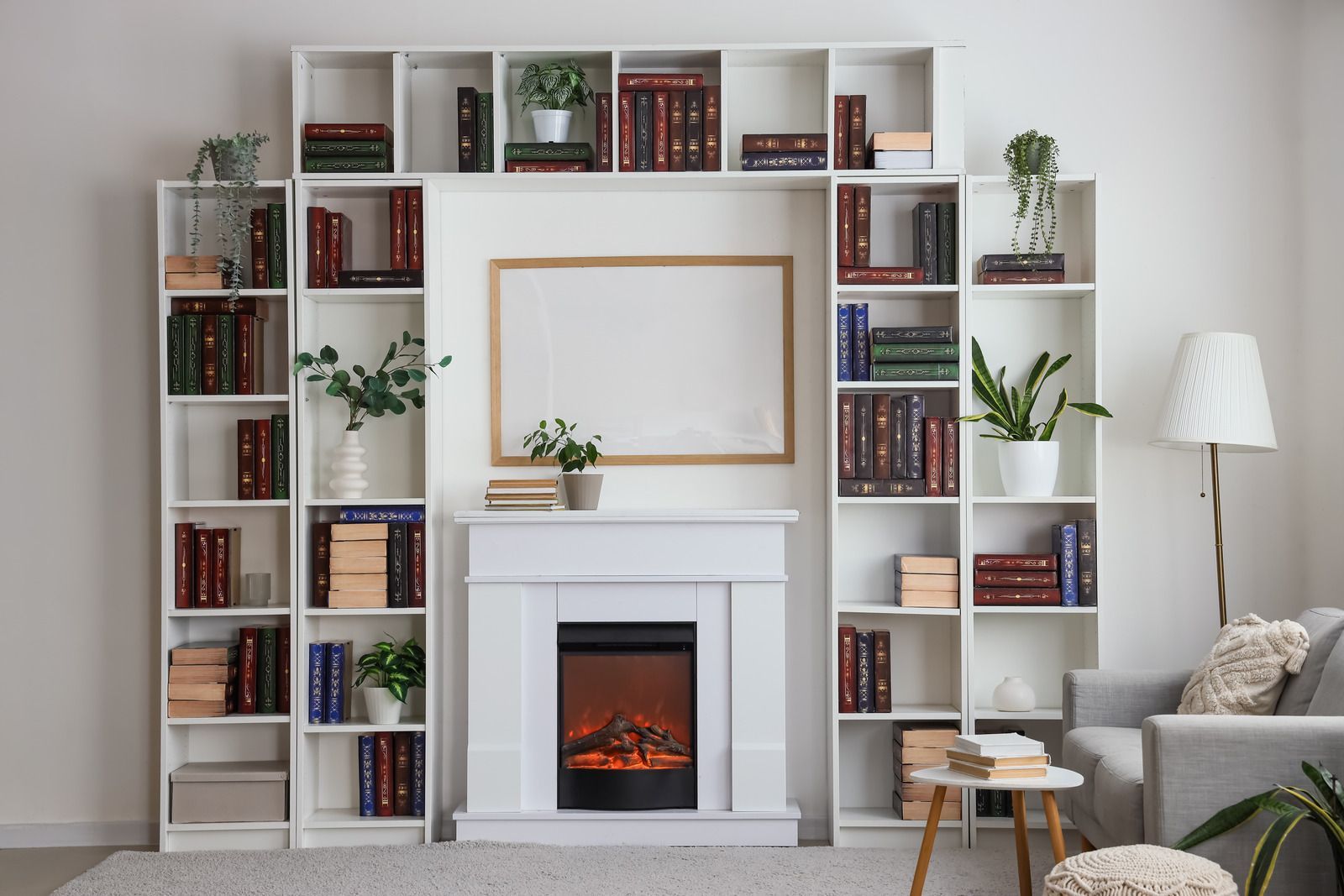
The full media wall occupies an entire wall from floor to ceiling, incorporating television placement, storage for peripherals, and often bookshelving or display areas on either side of the television. This is the most substantial approach and creates a genuine architectural focal point in the living room.
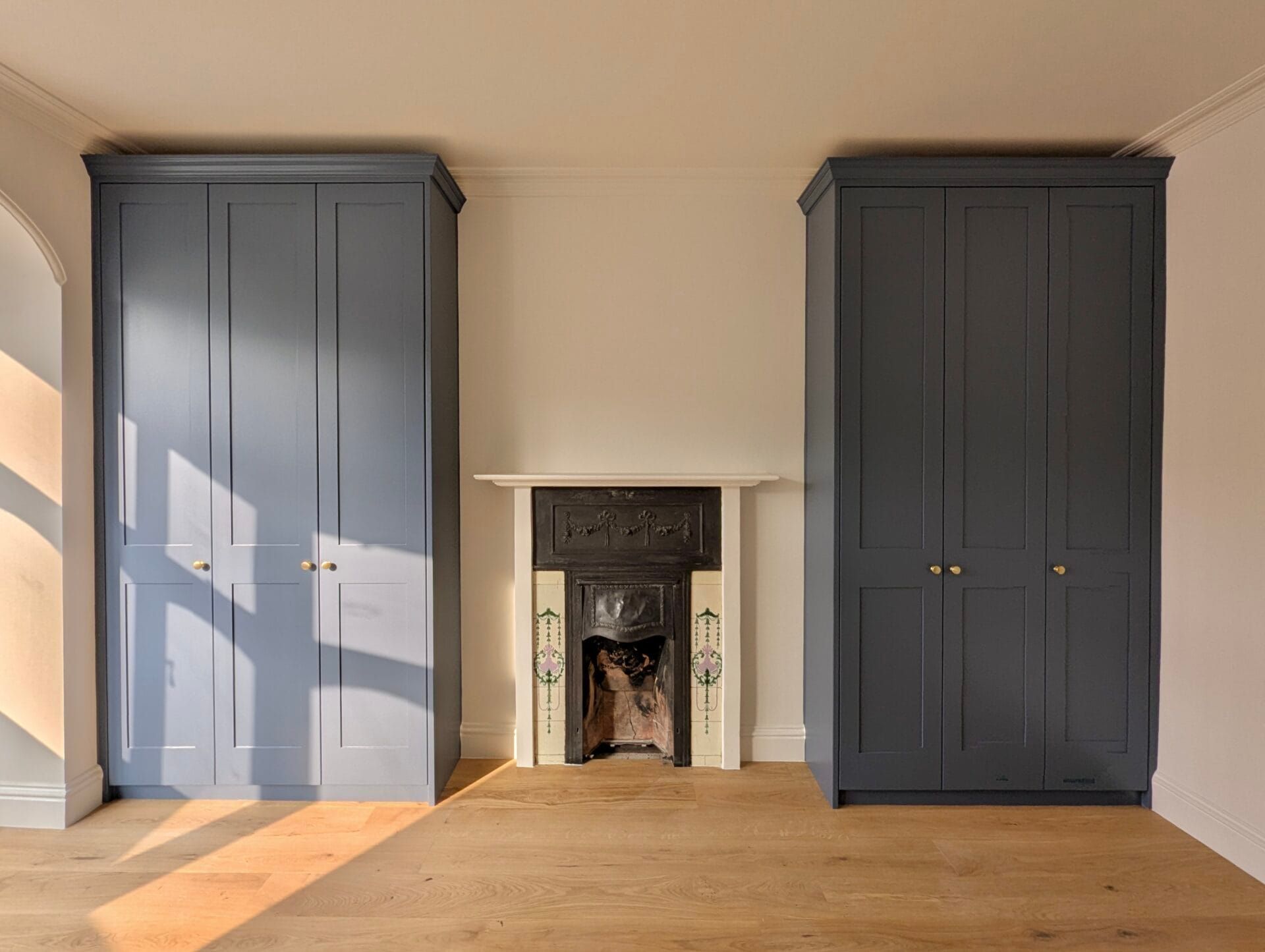
Chimney breast media walls use the chimney breast as the natural location for the television, with alcove units on either side providing storage and display. This approach suits period London properties beautifully, using the existing architecture rather than fighting against it.
Low sideboard configurations provide horizontal media storage below a wall-mounted television, with the television itself mounted directly to the wall above. This produces a cleaner, lighter visual effect than full-height installations and suits smaller rooms where a full media wall would feel overwhelming.
Bridging cabinet configurations span from wall to wall at low height, with the television mounted above and the cabinet providing storage below. These work well in rooms where the television location matches the natural room composition.
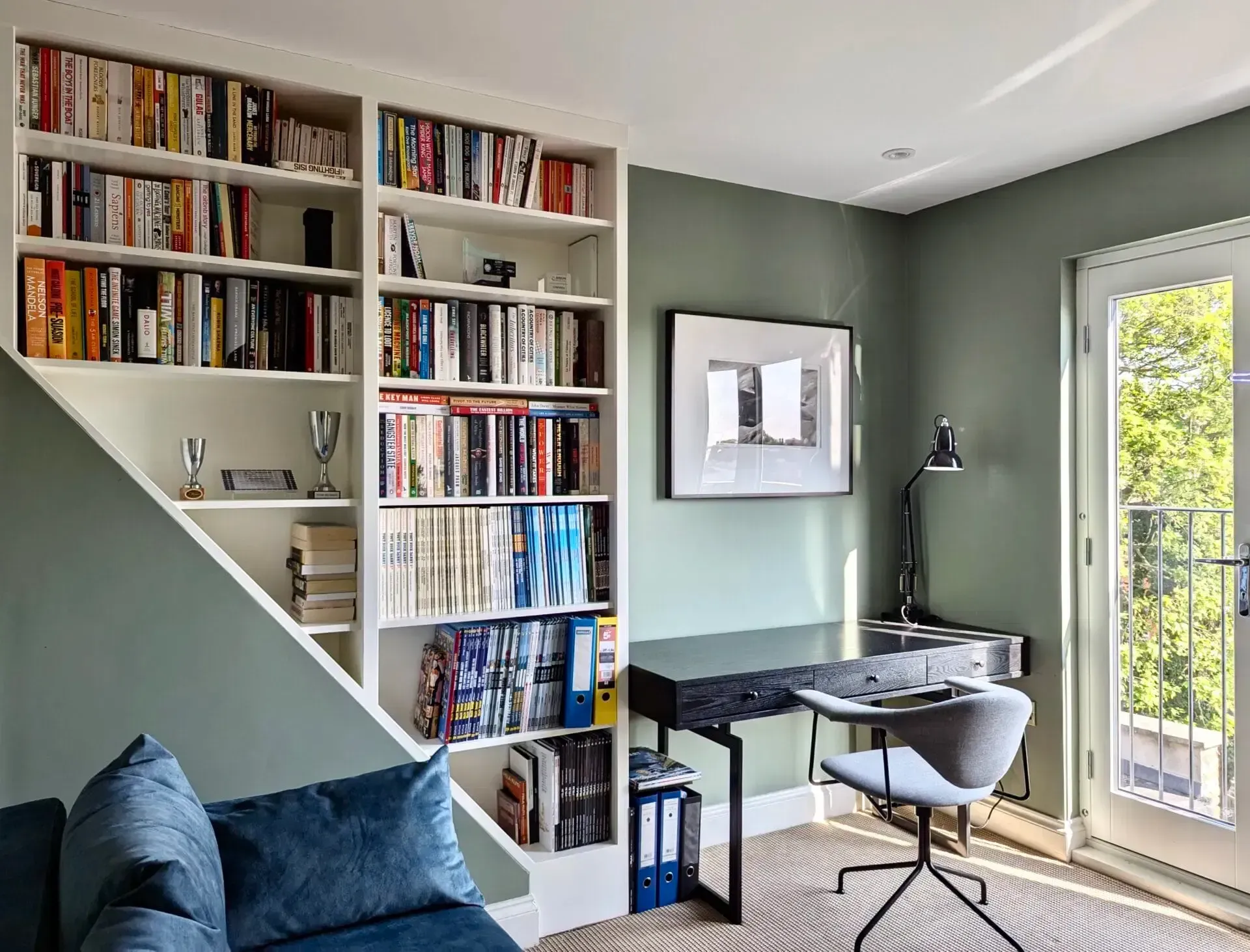
Integrated bookcase-media combinations treat the television as one element within a wider wall of storage that also accommodates books, display items, and general living room storage. This produces the most unified appearance but requires careful design to prevent the television from feeling isolated within the composition.
Hidden television installations conceal the television behind sliding doors, drop-down panels, or lifting mechanisms when not in use. These suit rooms where the homeowner wants to minimise the visual presence of technology, particularly in more formal living areas.
Design Considerations for Television Integration
Several practical considerations shape how well an entertainment unit works with modern television technology.
Screen positioning affects viewing comfort. Televisions positioned too high above the sofa cause neck strain over long viewing sessions. The general guideline is that the centre of the screen should sit at roughly eye level when seated on the sofa — typically around 100cm to 110cm from the floor for standard sofa heights. Bespoke units can position the screen precisely at the ideal height for your specific viewing setup.
Wall-mounting versus shelf-mounting produces different visual effects. Wall-mounted televisions look cleaner and integrate more architecturally. Shelf-mounted televisions are easier to install and easier to change, but produce a more furniture-like appearance.
Viewing angle matters more than screen size. A properly positioned smaller screen often produces a better viewing experience than a larger screen at the wrong height or angle. Bespoke design accounts for actual sofa position, viewer heights, and room geometry.
Reflection management affects picture quality. Screens positioned opposite windows suffer from reflections during daytime viewing. Bespoke units can position screens to minimise window reflections or incorporate features (recessed positions, sliding doors) that reduce reflection issues.
Soundbar and speaker integration should be planned as part of the initial design. Soundbars can sit on shelves, be wall-mounted below the television, or be integrated into recessed compartments. Full speaker systems need considered placement, cable routing, and sometimes acoustic considerations.
Cable Management and Technical Integration
The most common frustration with generic media furniture is inadequate cable management. Bespoke installations can address this properly.
Recessed cable routing channels through the back of the unit and into the wall carries all cables invisibly from behind the television to the equipment storage areas. This requires wall preparation as part of the installation but produces the cleanest result.
Rear ventilation panels ensure that devices don't overheat when enclosed in cabinet spaces. Games consoles, streaming boxes, and older AV receivers all generate meaningful heat that needs to escape. Proper ventilation design prevents equipment damage.
Power outlet planning integrates power provisions into the unit design. Adding sockets after installation is difficult; planning them from the start allows clean power access at every device position without visible cabling.
Remote control considerations matter for equipment stored behind closed doors. Some devices use infrared remotes that require line-of-sight to the device. Others use radio-frequency remotes that work through cabinet doors. Understanding your equipment's requirements affects whether closed cabinet storage will work practically.
Wireless charging integration can be built into the surface of the unit for phones and devices, keeping the surface clean of charging cables.
Network cabling for devices that benefit from wired connections (games consoles, streaming devices, smart TVs) can be integrated into the wall preparation, providing better connectivity than wireless alternatives.
Storage for Physical Media
Even in an era of streaming, most homes retain some physical media that needs proper storage.
Games console accessories typically require flat storage for controllers, headsets, and cables. Drawer storage works well for these items.
Physical media — Blu-rays, DVDs, vinyl records, CDs — requires shelving designed for the actual dimensions of the format. Vinyl records in particular need shelving depth of at least 35cm and structural support for the weight (a wall of loaded record storage is heavy).
Board games and family activities often live in the living room and need discreet storage that doesn't feel like part of the entertainment technology. Deeper cupboard sections work well for these.
Books and reading material that spend time in the living room can be integrated within wider entertainment unit designs.
Remote controls benefit from dedicated small drawer storage, keeping the visible surfaces free of the collection of remotes that entertainment systems tend to accumulate.
Rooms That Support Entertainment Units
Different living space configurations support different approaches.
Compact traditional living rooms in Victorian and Edwardian terraces often work best with alcove-based installations using the chimney breast. Full media walls can feel overwhelming in these rooms.
Open-plan living areas in modern apartments and converted spaces support larger installations. The wider room proportions accommodate full media walls without feeling dominant.
Snug or second sitting rooms often benefit from more integrated installations that combine media storage with general storage, given the room's dual functions.
Family living rooms with multiple daily users typically need more substantial storage than adults-only spaces. Toys, games, activity supplies, and general family accumulation all need accommodation alongside media equipment.
Home cinema rooms for households prioritising film watching benefit from purpose-designed installations that include speaker positioning, acoustic considerations, and viewing-optimised layouts.
Materials and Finishes for Entertainment Units
The material choices for entertainment units follow similar principles to other fitted furniture but with some specific considerations.
Dark finishes work well for entertainment units because dark surfaces reduce reflections that could interfere with television viewing. Deep charcoals, dark walnuts, and deep blues all work well and minimise visual distraction during viewing.
Matt finishes perform better than gloss finishes for entertainment furniture because matt surfaces don't reflect the television image back into the room.
Real wood finishes can produce warmer, more residential feeling installations that don't read as technology furniture. Oak, walnut, and other timber species suit living room installations particularly well.
Painted finishes allow the entertainment unit to integrate with defined interior colour schemes. Painting the unit in the same colour as the surrounding walls creates the effect of a built-in architectural feature rather than a piece of furniture.
Hardware choices for entertainment unit doors and drawers should complement both the unit itself and the wider room. Push-to-open mechanisms work particularly well for entertainment units because they eliminate the visual clutter of handles.
Planning for Future Equipment Changes
Entertainment technology evolves rapidly. Bespoke installations designed for today's equipment often need to accommodate tomorrow's changes without wholesale replacement.
Adjustable shelving in equipment areas allows different-sized components to be accommodated as your equipment mix changes.
Extra capacity built into the initial design accommodates future additions without requiring immediate reconfiguration.
Standard cable routing based on common current standards (HDMI, USB, standard power) provides flexibility for future equipment that uses similar connections.
Ventilation and heat management designed for current equipment typically accommodates future equipment as long as the total heat load doesn't increase substantially.
Access design that allows components to be added or removed easily makes ongoing management much easier over the years of ownership.
What Humphries Cabinets Offers
We design and install bespoke entertainment units and media storage across London, as part of our wider fitted furniture services. Our services include:
- Living Room — entertainment units, media walls, and integrated cabinetry
- Home Libraries — combined bookcase and entertainment installations
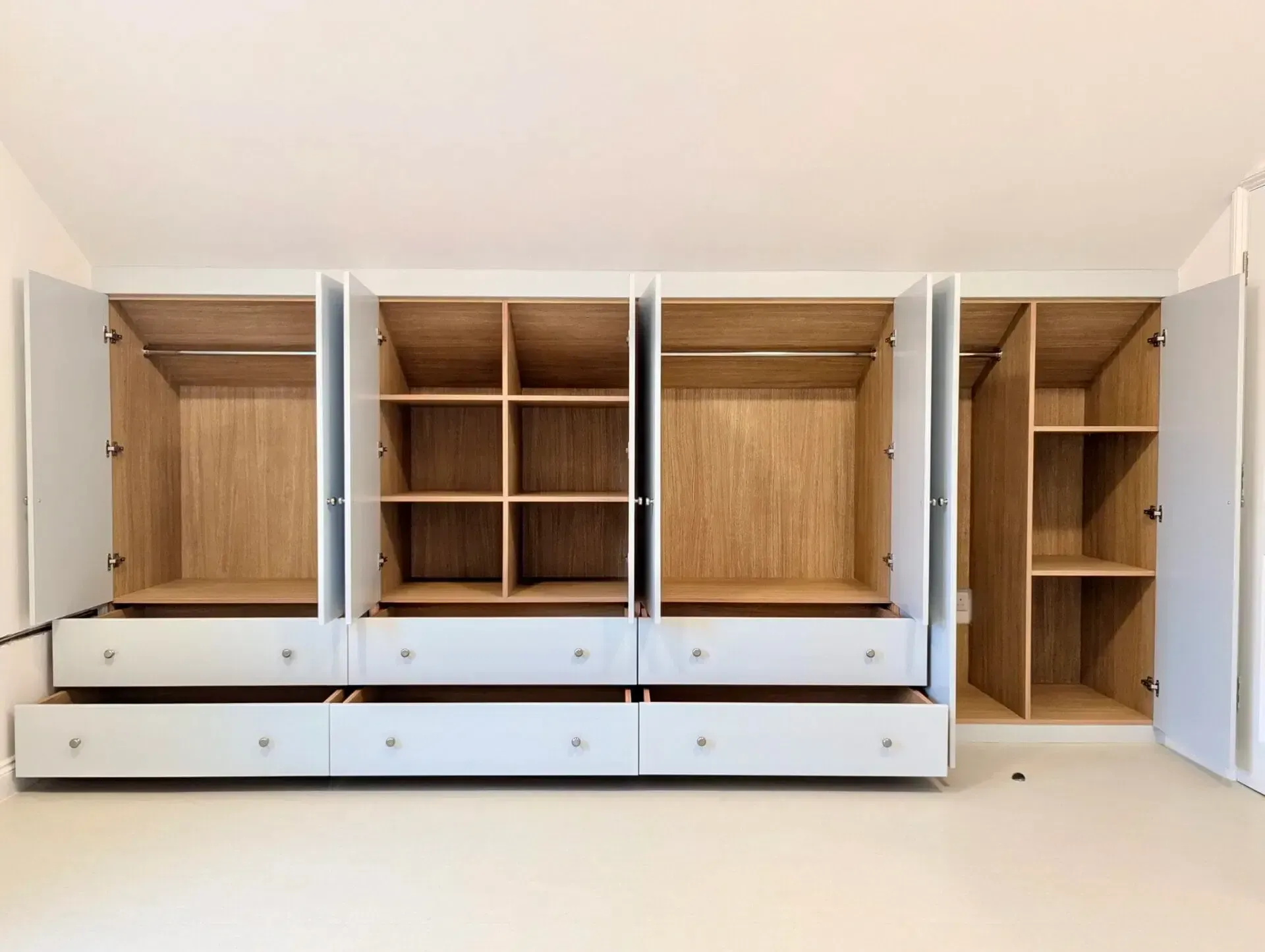
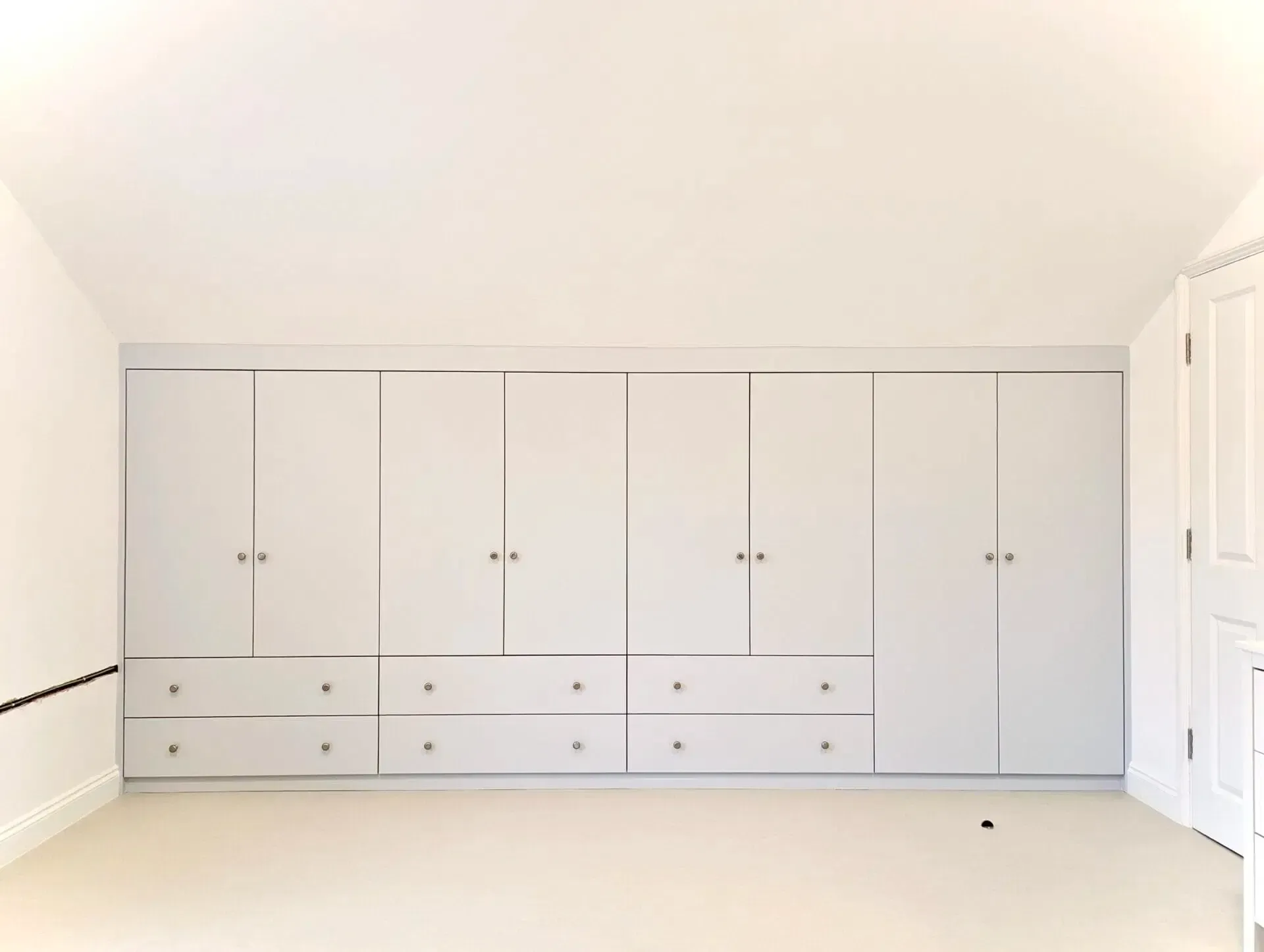
- Bedrooms — bedroom media integration within fitted wardrobe designs
- Lofts — media installations for loft snug and family rooms
- Hallways — storage for entertainment-adjacent items
- Office Desks — home office installations with integrated technology storage
Every project starts with an in-home design visit where we discuss your specific equipment, viewing preferences, and how you actually use the room. Full 3D drawings show exactly how the finished installation will look before manufacturing begins.
Why Choose Humphries Cabinets
At Humphries Cabinets, we approach bespoke bookcases with the same care we bring to fitted wardrobes. Books are heavy, collections evolve over time, and bookcases become visible features of the rooms they occupy. Our designs account for actual book collections rather than idealised ones, our construction supports realistic loads, and our finishes are chosen to complement the wider room design.
If you're considering a bespoke bookcase or home library for your London home,
contact us today to arrange your free consultation.