Fixtures or Fittings? What Happens to Fitted Furniture When You Sell
Do fitted wardrobes stay when you sell your house?
Built-in furniture is normally treated as part of the property and expected to stay, in contrast to freestanding furniture which you take with you. What is included in a sale is set out in the fixtures and fittings list agreed between buyer and seller, so anything unusual should be stated there rather than assumed. Practically, most buyers expect
fitted wardrobes to remain.
It is the quiet hesitation behind a lot of bespoke furniture decisions. People rarely say it outright at a design consultation, but they are thinking it: what if we move?
It is a fair question about a permanent addition to a house, and it deserves a straight answer rather than being talked past.
Built-in means part of the house
The practical distinction is straightforward. Furniture that stands on the floor and can be carried out is yours. Furniture built into the fabric of the house — fixed to walls, scribed to skirting, finished into the room — is normally treated as part of the property.
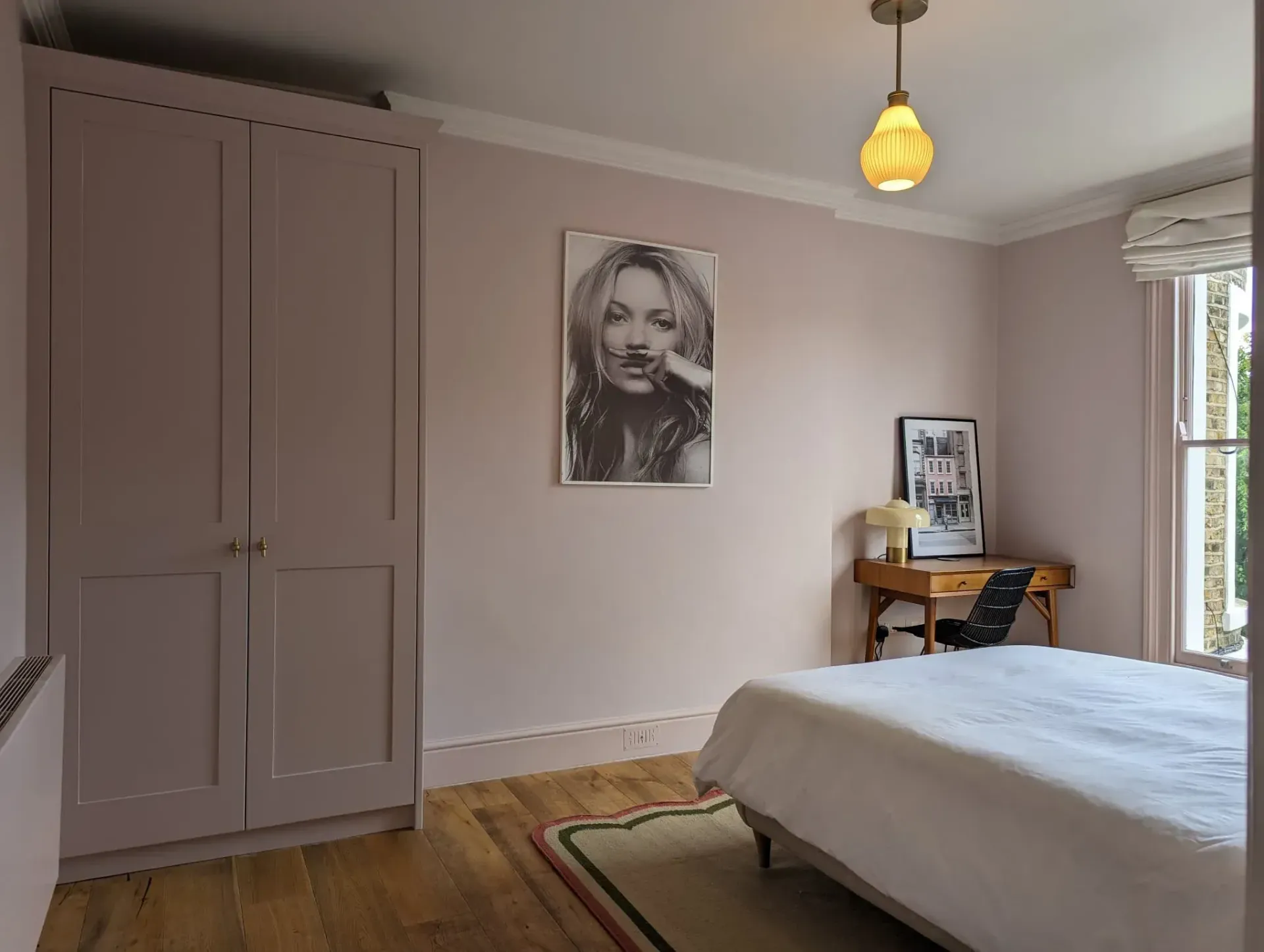
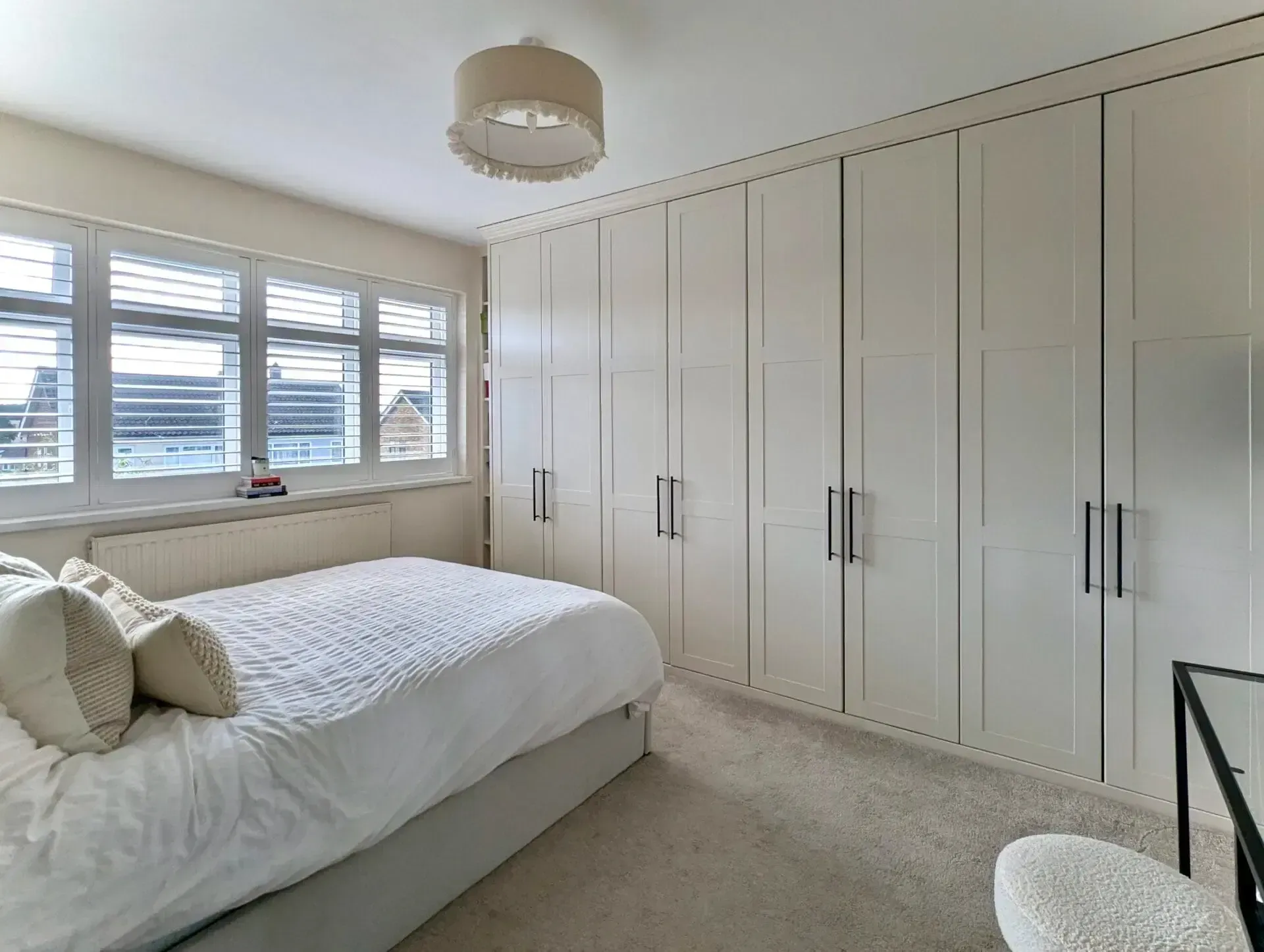
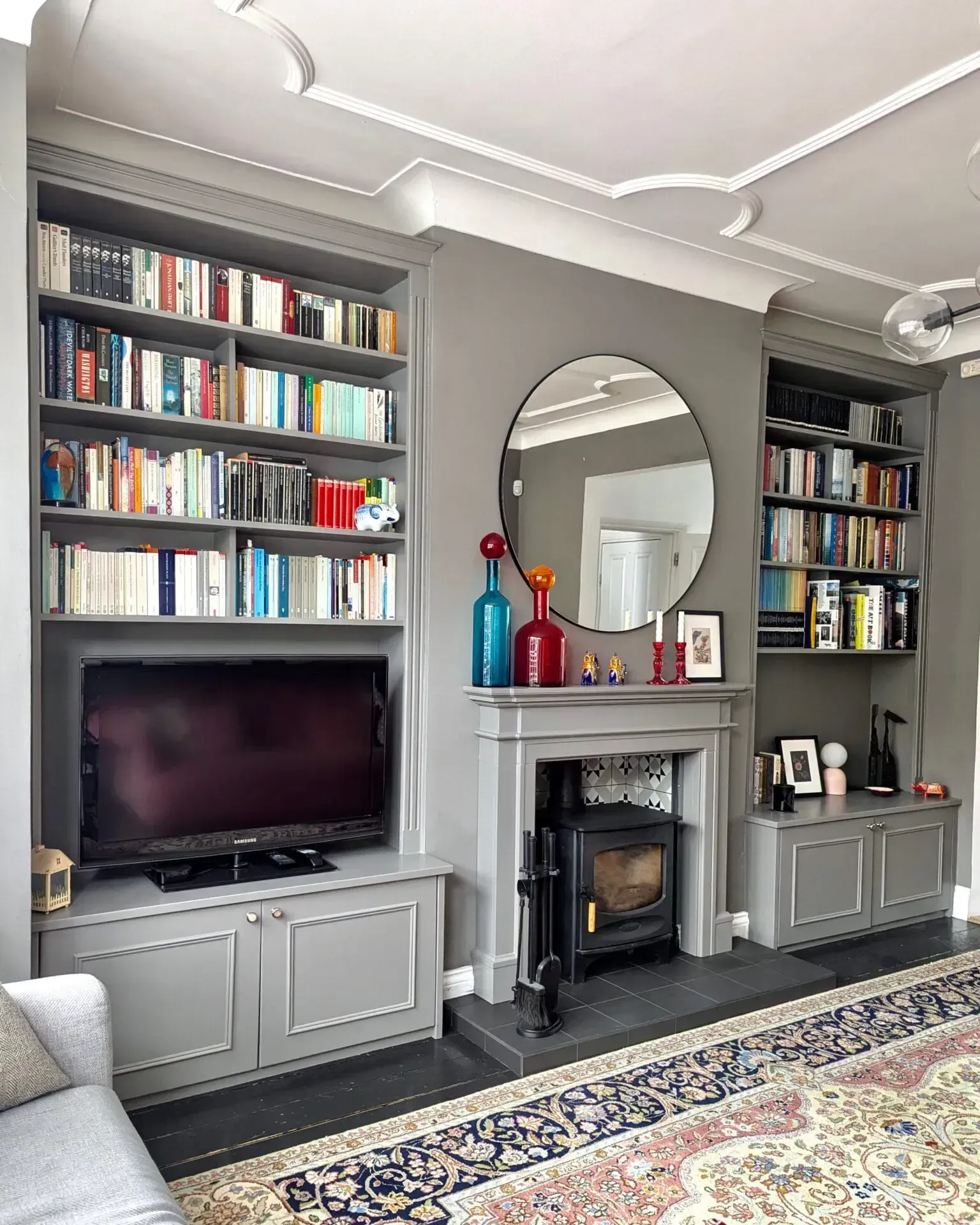
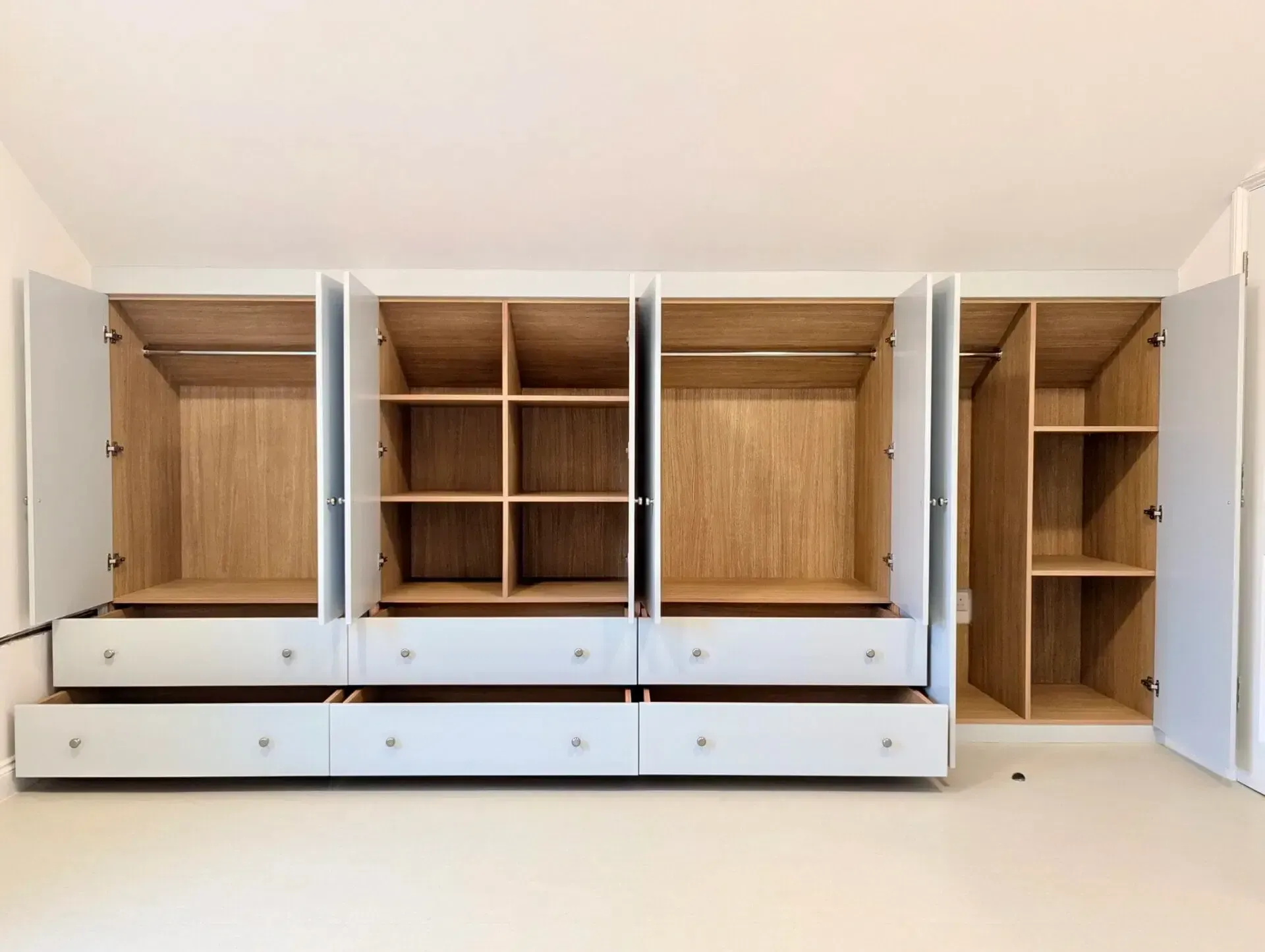
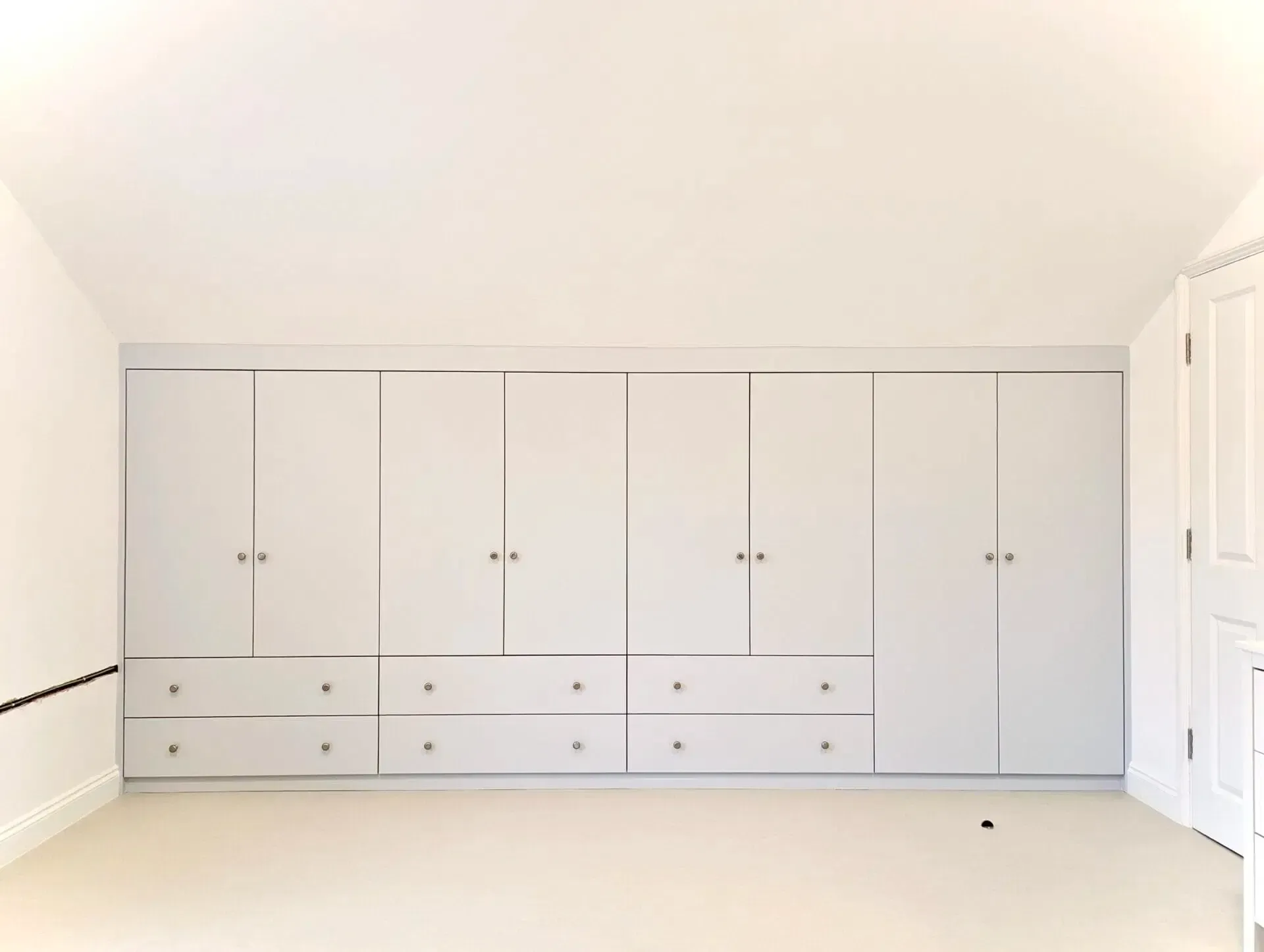
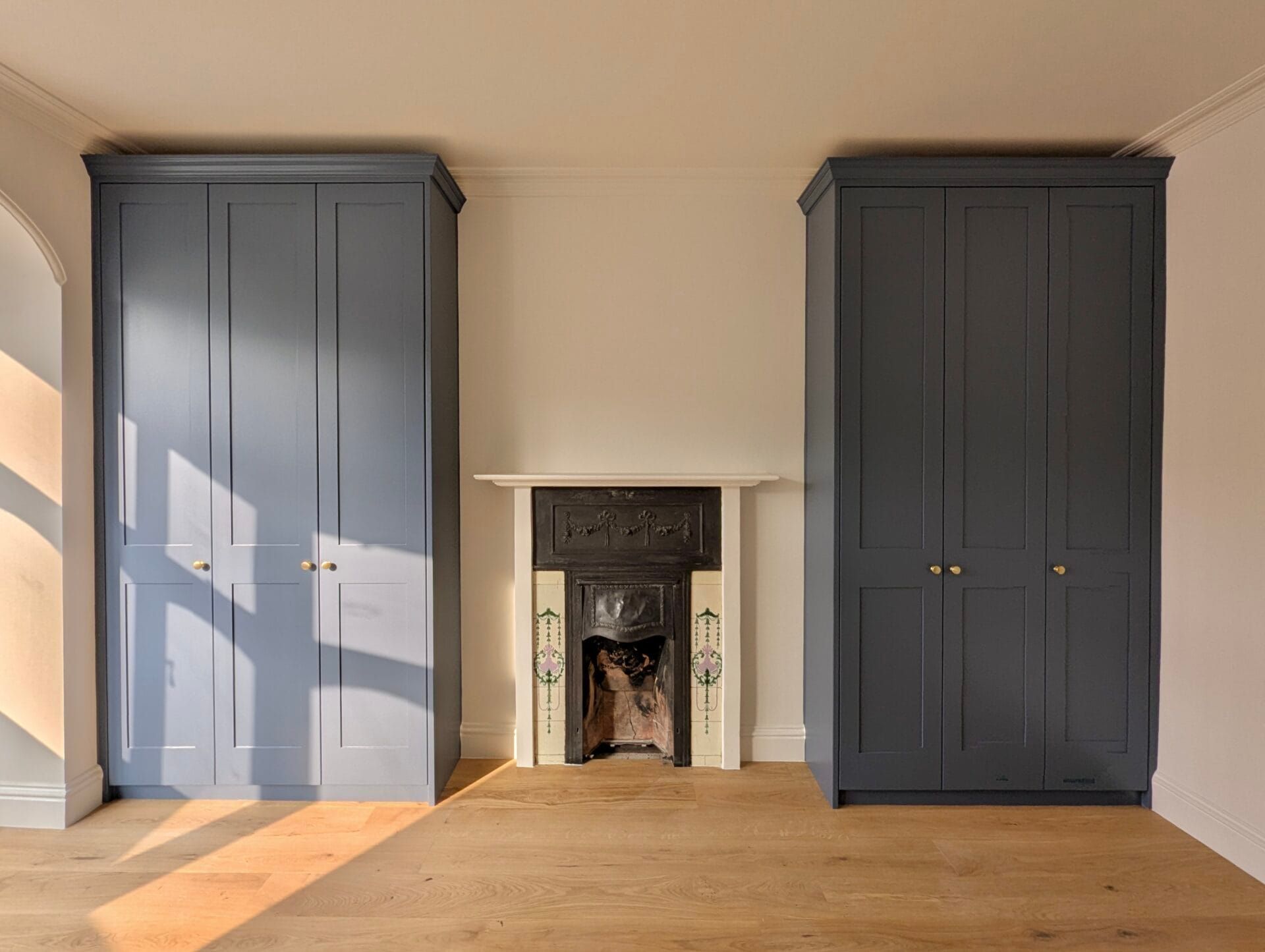
That is the default expectation, and it is also what buyers assume when they walk in. A run of wardrobes finished to the ceiling with cornice reads as architecture, not as something the sellers might remove.
In a sale in England and Wales, this is not left to instinct. Your solicitor will send you a standard fixtures and fittings form to complete, listing item by item what is included, excluded or available to buy separately. Built-in wardrobes appear on it like everything else, and what you write there is what the contract reflects.
Anything you intend to treat differently should be recorded explicitly on that list rather than left to assumption. Assumption is where disputes come from — and they surface late, usually days before completion, when nobody has time for them. Your solicitor is the authority on how any of this applies to your particular sale.
Why leaving it behind is usually the right outcome anyway
Removing fitted furniture rarely works out well, for three reasons.
It doesn't fit anywhere else. The entire point of bespoke is that it was designed for the architectural details of one specific room. In a new house, the walls are different, the ceiling height is different, and the alcoves are different.
Removal damages the room. Furniture scribed to walls, fixed properly and finished into the skirting leaves marks behind. You would be making good a room you no longer own.
It's worth more in place. A finished, considered bedroom shows better than an empty one with holes in the plaster.
That last point is the one people underestimate. Customers say it themselves — one wrote that the work "adds a lot of value to the property as you can tell it is great quality."
Flats, leases and rented property
Two situations come up often enough in London to be worth setting out.
If you own a leasehold flat, your lease governs what you can alter. Fitted storage that simply sits against existing walls is a different proposition from anything that touches the structure, services or common parts, and the sensible order is to check the lease — or ask your solicitor or managing agent — before the drawings are finalised rather than after the work is done. Most schemes raise no issue at all, but finding that out early costs nothing.
If you rent, built-in furniture is a landlord conversation rather than a tenant decision, because it becomes part of the property the moment it is fixed. Some landlords are receptive: fitted storage in a period flat improves the property permanently and answers the same objection for the next tenant that it answers for a buyer. The point is that it needs agreeing in writing first, including who pays and what happens at the end of the tenancy.
In both cases the furniture is not really the complication. The paperwork is, and it is far easier to sort out before anything is measured.
What it does for a sale
Fitted storage does three things when a house goes on the market.
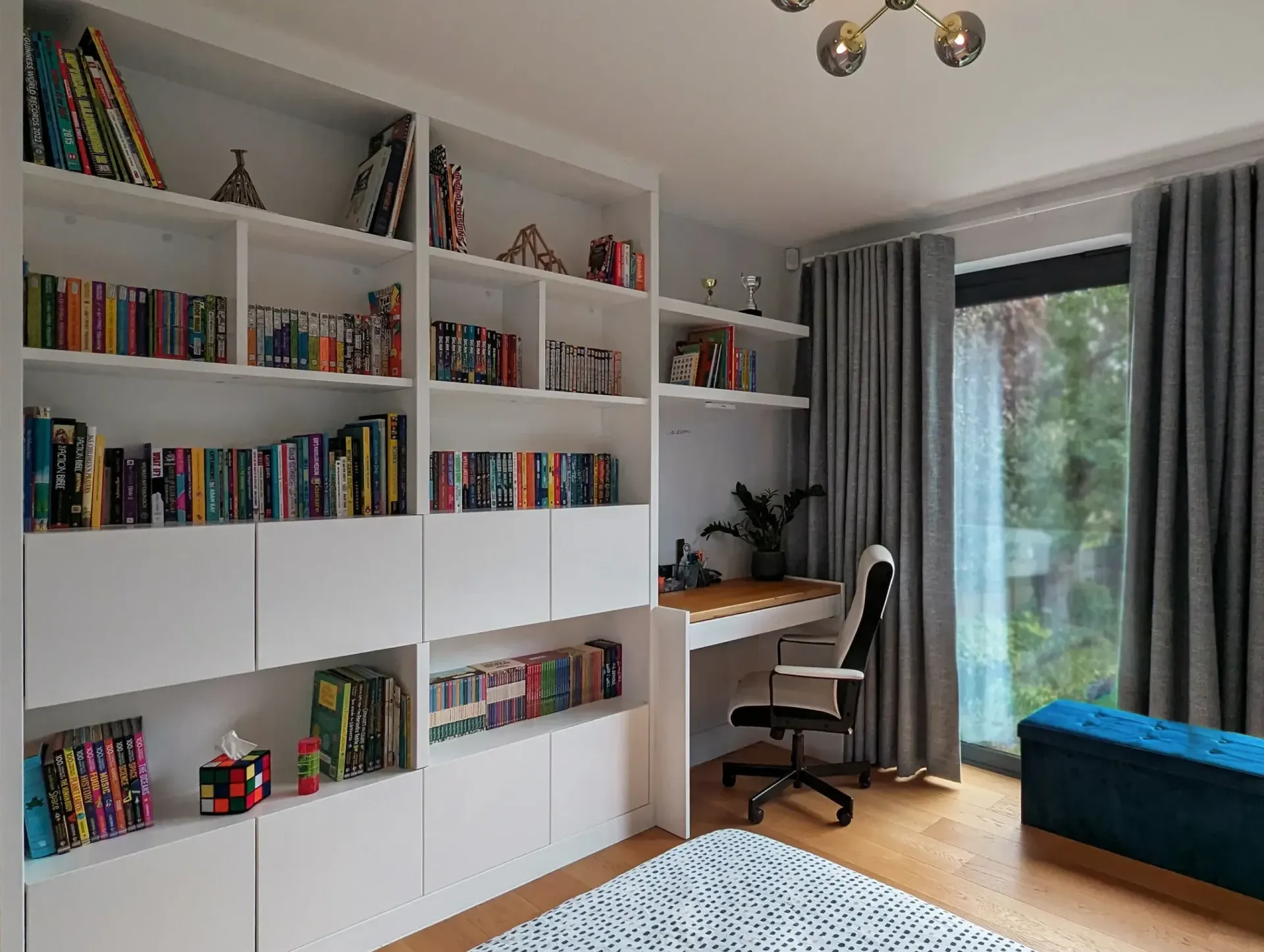
It solves an objection before it is raised. Storage is one of the first things buyers assess, particularly in London flats and period houses that were built without any. A bedroom with a wall of fitted wardrobes has answered the question. An empty bedroom leaves the buyer doing sums.
It photographs well. Listing photographs are how most buyers decide whether to view at all, and a room with well-made built-in joinery photographs considerably better than a room with a freestanding wardrobe in the corner.
It makes a room read as finished. A house that reads as finished invites fewer mental deductions — the buyer walking round is not adding up what they will have to spend after moving in. That is worth more in a period property than almost anywhere else, because those houses give buyers plenty of other things to add up.
Durability is the thing that actually matters
None of this holds if the furniture has aged badly. Fitted furniture that has dropped, chipped or discoloured is a liability in a sale, not an asset — a buyer sees something they will have to replace.
Which makes build quality the real answer to the resale question. One customer wrote that nearly five years after installation their bespoke wardrobes "still look amazing, work really well and have not deteriorated", and that the paint job was still excellent.
That is what a buyer is judging: not the concept of fitted wardrobes, but whether these particular ones look like an asset or a job to be done.
If you're planning to sell soon
Do it early enough to enjoy it. Storage installed a month before listing benefits the buyer more than you. Two or three years out and it works for both.
Keep it neutral where it counts. Hand-painted finishes can be repainted by a future owner, which is a genuine advantage over anything that cannot be changed. A strong colour you love is not a problem — it is a wall of joinery that can be repainted, which is a very different proposition from a fitted kitchen in a colour nobody else wants.
Keep your documentation. Drawings, specifications and finish details are useful to a buyer and cost nothing to keep. The paint reference alone is worth having, since the first thing a new owner will want is to touch something up.
Empty it before the photographs. Fitted storage sells the idea of space, and a wardrobe photographed with the doors closed on a tidy room does that better than any amount of styling elsewhere.
List it clearly. When the time comes, make sure the fixtures and fittings list says exactly what is included.
The short version
Fitted furniture normally stays with the house, and in almost every case that is the outcome you want. It is worth more in place than removed, it makes the house easier to sell, and it removes a storage objection before a buyer raises it.
The question worth asking is not whether you will leave it behind. It is whether it will still look worth having in ten years.
Frequently Asked Questions
Do fitted wardrobes count as fixtures?
Built-in furniture fixed to the fabric of the house is normally treated as part of the property, unlike freestanding furniture. The fixtures and fittings list agreed in the sale is what records it formally.
Can you take fitted wardrobes with you when you move?
Rarely worth it. Bespoke units are built for one specific room, removal damages the walls and skirting, and they seldom fit anywhere else.
What if I want to exclude something from the sale?
Say so explicitly on the fixtures and fittings form your solicitor provides, rather than assuming the buyer understands. Anything not recorded is likely to be expected to stay.
Can I fit built-in wardrobes in a leasehold flat?
Usually, but check the lease first. Anything affecting structure, services or common parts is worth clearing with your solicitor or managing agent before the design is finalised.
Do fitted wardrobes help sell a house?
They answer the storage question before a buyer raises it and photograph well in listings, provided they are in good condition.
What if the furniture is old and worn?
Then it becomes a job for the buyer rather than a benefit. Build quality is what determines which it is.