Fitted Wardrobes for Edwardian and Georgian London Homes
Edwardian and Georgian properties represent some of London's most architecturally distinguished housing. Where Victorian terraces dominate large swathes of inner and outer London, Edwardian houses (built roughly between 1901 and 1914) tend to occupy more established suburban locations, and Georgian properties (built between roughly 1714 and 1830) survive in significant numbers in specific historic areas — Mayfair, Bloomsbury, parts of Chelsea, Islington, and Greenwich among them.
Both property types share characteristics that distinguish them from later housing: generous room proportions, high ceilings, considered architectural detailing, and construction quality that has allowed them to remain desirable homes across centuries. Both also share design challenges specific to fitted wardrobe projects, requiring approaches that respect their architectural character while providing truly modern storage capacity.
This guide explores how to approach fitted wardrobes in Edwardian and Georgian London homes, the specific considerations for each property type, and the design decisions that produce installations worthy of these distinguished buildings.
Understanding Edwardian Properties
Edwardian properties were built during a relatively brief architectural period but produced homes with distinctive characteristics that shape how fitted wardrobes should be approached.
Room proportions tend to be more generous than in later Victorian terraces. Edwardian bedrooms typically measure larger in both width and depth, giving fitted wardrobe designers more room to work with. Master bedrooms in Edwardian houses often measure 15 square metres or more, which accommodates substantial fitted wardrobe walls without feeling cramped.
Ceiling heights vary but often reach 2.6 metres or more, sometimes higher in the main rooms of the house. This vertical capacity is a significant asset for floor-to-ceiling fitted wardrobes.
Architectural detailing is typically more restrained than high-Victorian equivalents. Where late Victorian properties can feature heavy cornicing, ornate ceiling roses, and elaborate detailing, Edwardian equivalents tend toward cleaner lines with more classical proportions. This makes Edwardian rooms slightly more forgiving of contemporary fitted furniture styles.
Chimney breasts remain a feature in most Edwardian bedrooms, creating alcoves that suit fitted wardrobe design. Edwardian chimney breasts are often less deep than Victorian equivalents, which affects the depth of alcove wardrobes.
Windows tend to be larger than in Victorian terraces, admitting more natural light and often placed in bay configurations. Fitted wardrobe designs need to accommodate these window positions and respect the light they provide to the room.
Construction quality is generally high. Edwardian houses were built during a period of established construction standards, and the walls, floors, and structural elements tend to be more consistent than Victorian equivalents. Fitted wardrobe installation is often easier because the substrate is more predictable.
Understanding Georgian Properties
Georgian properties present a different set of considerations, reflecting a much earlier period of construction and different architectural values.
Room proportions follow classical principles. Georgian rooms typically use height, width, and depth proportions based on classical architectural theory, producing rooms that feel deliberately balanced and generous. Ceiling heights in principal Georgian rooms often exceed 3 metres.
Architectural detailing is refined and restrained. Georgian interiors typically feature elegant cornicing, panelled walls, chair rails, and considered proportions in doorways and windows. This detailing was designed as part of an integrated architectural scheme and needs to be respected in any fitted furniture addition.
Window placement follows strict symmetry. Georgian windows are typically arranged symmetrically across the facade of the house, with corresponding arrangements internally. This affects where fitted wardrobes can practically be positioned within Georgian bedrooms.
Listed status is common. Many Georgian properties are Grade II or Grade II* listed, which places restrictions on internal alterations. Fitted wardrobes in listed properties may require listed building consent depending on the specific proposals, and the design work needs to respect the property's historic significance.
Original panelling in some Georgian properties presents a specific challenge. Fitted wardrobes cannot be installed against original panelling without either damaging the panelling or standing proud of it in visually awkward ways. Original panelling is a protected feature that fitted wardrobe design must accommodate.
Fireplaces are typically substantial in Georgian principal rooms, often featuring marble surrounds and elaborate mantels. These fireplaces are typically listed features and cannot be altered. Fitted wardrobe design in Georgian bedrooms with such fireplaces needs to work around rather than modify them.
Sash windows are original features that need to remain fully operable. Fitted wardrobe designs cannot obstruct sash window function or restrict access to window mechanisms.
Common Design Approaches for Edwardian Bedrooms
Several approaches work particularly well in Edwardian bedroom fitted wardrobe projects.
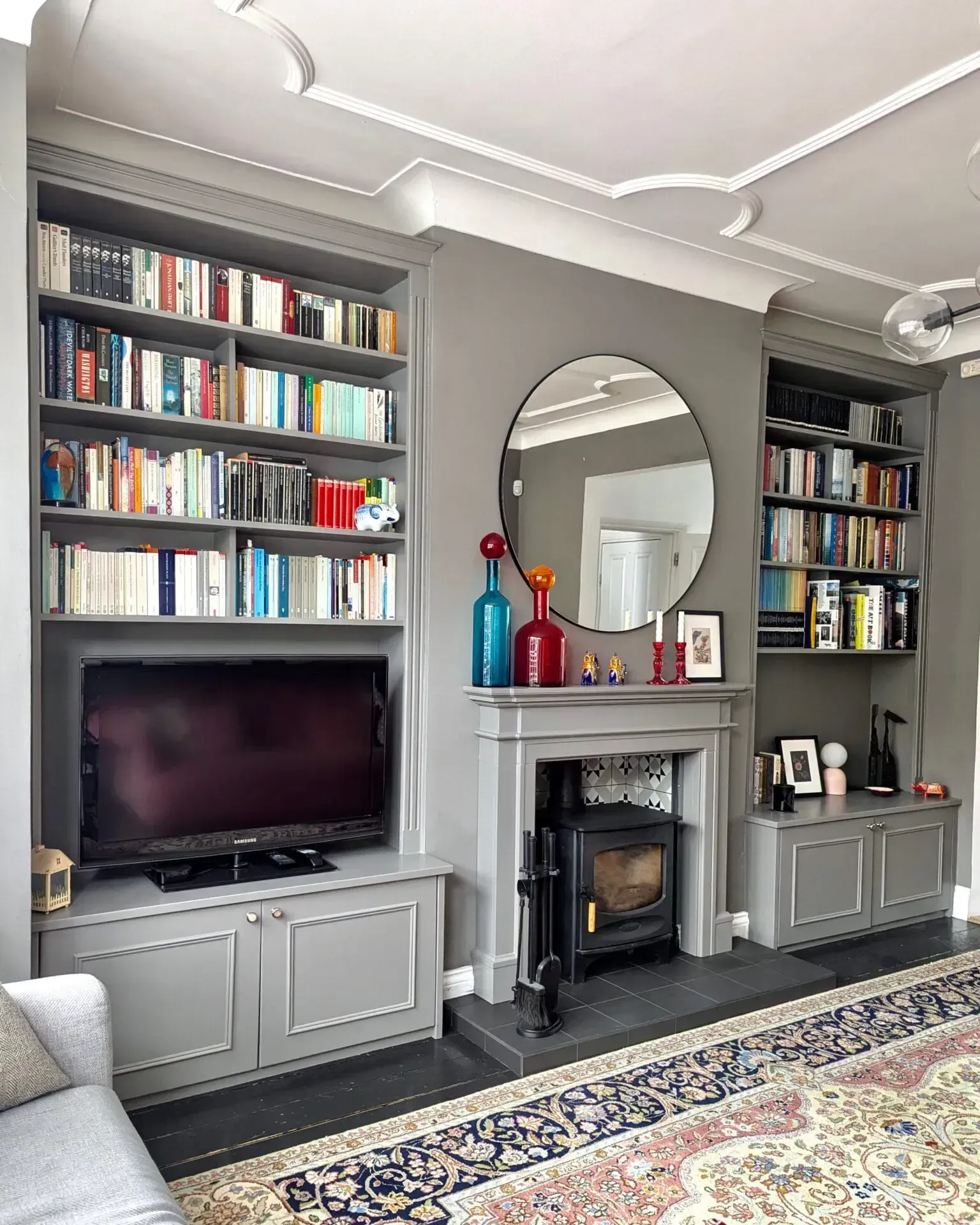
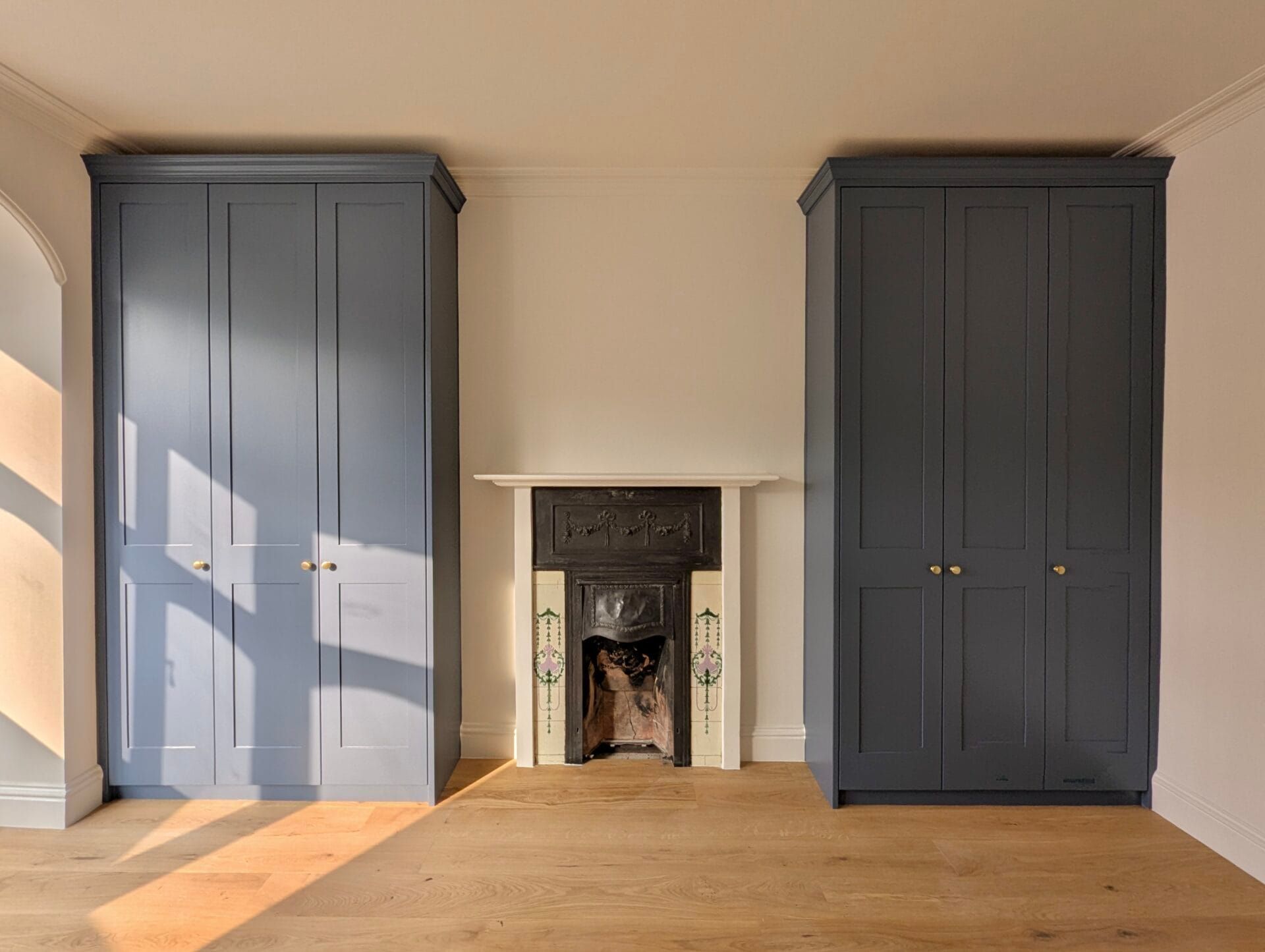
Floor-to-ceiling alcove installations on either side of the chimney breast are among the most successful Edwardian bedroom projects. The generous ceiling heights typical of Edwardian rooms provide substantial vertical capacity, and the classical proportions of Edwardian alcoves suit balanced wardrobe compositions.
Full-wall installations where the chimney breast is on a different wall than the wardrobe location produce impressive results in larger Edwardian bedrooms. The room proportions accommodate substantial fitted wardrobes without feeling dominant.
Bay window integration in Edwardian properties with bay window bedrooms can incorporate window seat storage below the bay windows themselves, adding character-appropriate storage that maximises the room's distinctive architectural feature.
Walk-in wardrobe conversions are more feasible in Edwardian properties than in Victorian equivalents, given the more generous room proportions. Converting a small spare bedroom into a walk-in dressing area works well in many Edwardian family homes.
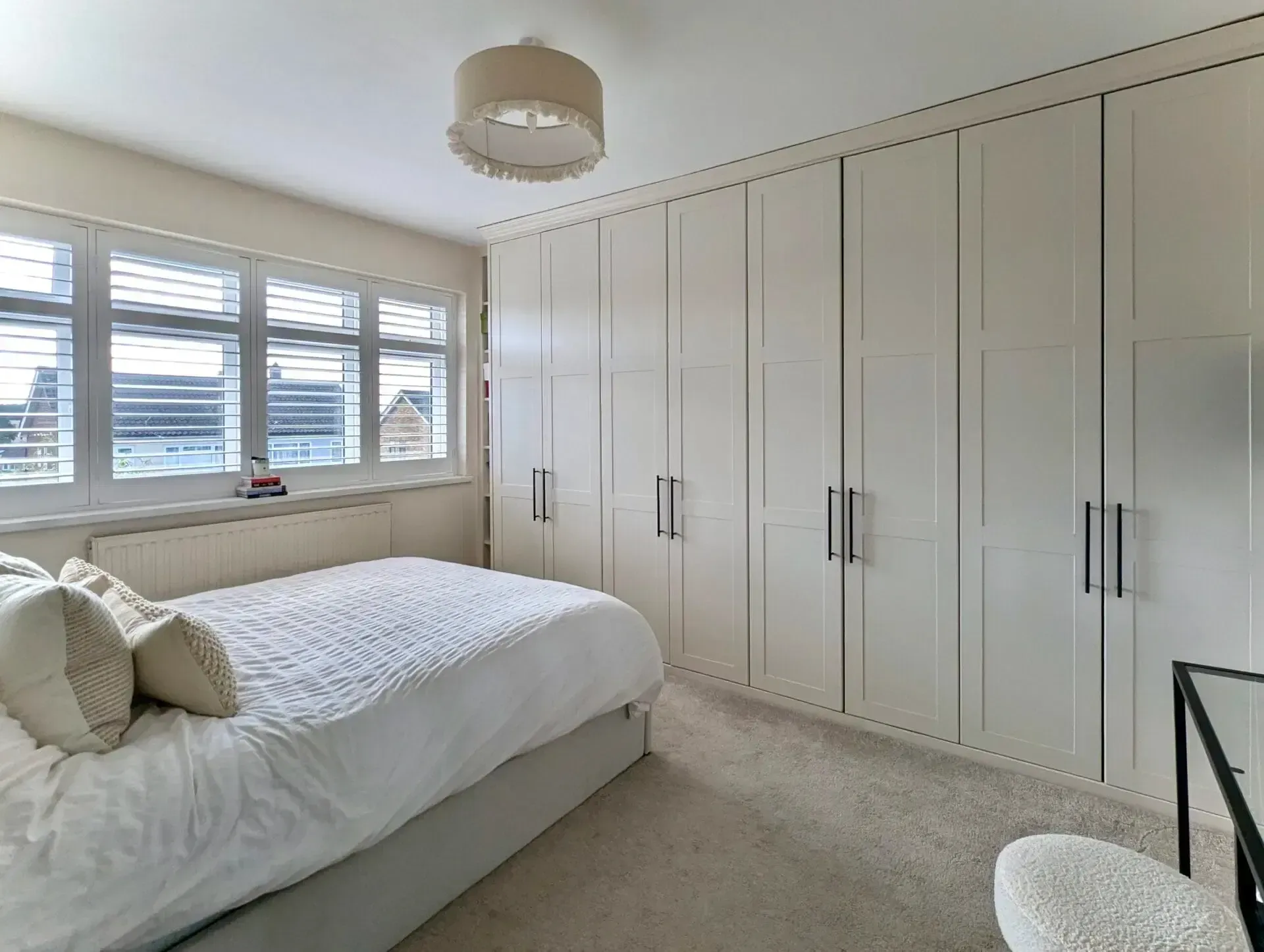
Shaker-style doors suit Edwardian properties beautifully. The clean panelled aesthetic works with Edwardian architectural detailing without appearing over-decorated.
Traditional finishes such as spray-painted soft whites, muted greens, or warm greys typically work well in Edwardian bedrooms. The relatively restrained Edwardian aesthetic accommodates a range of finish choices without conflict.
Common Design Approaches for Georgian Properties
Georgian properties require more careful design consideration because of their architectural significance and often-listed status.
Freestanding-style fitted wardrobes that could be removed without permanent damage may be preferable in some listed Georgian properties. These read as substantial furniture pieces rather than as built-in installations, but with the specification and finish quality of fully fitted alternatives.
Wall-to-wall installations that respect existing panelling need to be designed specifically around the original architectural features. Where panelling exists, fitted wardrobes typically sit at the panelling depth rather than trying to project further into the room.
Concealed installations that hide behind original architectural details can sometimes work in Georgian properties. Wardrobes hidden behind sliding panels that match existing panelling can provide storage without visually altering the room.
Traditional joinery styling using classical proportions, subtle panelling, and traditional hardware typically works better in Georgian properties than contemporary alternatives. The wardrobe should feel appropriate to the property's period even when its function is entirely modern.
Traditional paint colours researched for period appropriateness suit Georgian properties. Historic paint manufacturers offer collections specifically developed to match Georgian-period colour palettes.
Restricted installations in principal rooms often make sense for listed Georgian properties. Rather than substantial wardrobe walls in the main bedrooms, storage can be concentrated in dressing rooms, less prominent bedrooms, or secondary spaces where installations can be more substantial without affecting the property's principal rooms.
Working with Original Features
Both Edwardian and Georgian properties feature original architectural elements that fitted wardrobe design needs to respect.
Cornicing should typically be preserved. Fitted wardrobes can stop at the cornice line, with the original cornice continuing above the wardrobe. Alternatively, matching cornice can be run above the wardrobe to continue the original detailing across the wardrobe top.
Picture rails in Edwardian properties can either be respected (with wardrobes stopping at the picture rail height) or accommodated (with wardrobes running past the picture rail with appropriate detailing). Both approaches work; the choice depends on the specific room and the wider design intent.
Ceiling roses should always be preserved and should typically remain visible. Wardrobe positioning may need to be adjusted to prevent ceiling roses from being blocked or partially obscured.
Skirting boards in period properties are typically deep and often ornate. Fitted wardrobes should either accommodate existing skirting (with the wardrobe base scribed around the skirting) or match new skirting to the existing profile.
Original doors and door frames should be preserved. Wardrobe positioning needs to accommodate existing door swings and door frame projections.
Fireplaces — whether working or blocked — should be preserved in most period properties. Fitted wardrobe design needs to work around fireplaces rather than covering or modifying them.
Sash windows need to remain fully operable. Wardrobes must not obstruct window function or prevent access to window mechanisms for maintenance.
Colour and Finish Choices for Period Properties
Colour and finish choices for fitted wardrobes in Edwardian and Georgian properties benefit from historical awareness while remaining flexible enough to suit individual preferences.
Historical paint manufacturers offer colour ranges specifically developed for period properties. Farrow & Ball, Little Greene, Papers and Paints, and similar suppliers produce colours researched to match historical periods, which can help ensure that fitted wardrobe colours feel appropriate to the property.
Warm off-whites work universally in period properties. Various pale colours with warm undertones — soft creams, gentle stones, warm ivories — complement almost any period interior scheme.
Muted period colours such as soft sages, dusty blues, muted terracottas, and warm greys typically work well in Edwardian and Georgian bedrooms. These colours have historical precedent and photograph well.
Bold historical colours — deep greens, rich burgundies, dark blues — can produce striking results in larger period rooms with good natural light. These colour choices need confidence but can create memorable interiors.
Real oak finishes with traditional wax or oil treatments echo period furniture aesthetics beautifully. Oak is particularly appropriate in Georgian properties where original furniture was often oak.
Painted finishes with hand-painted appearance rather than obvious spray-finished perfection can suit some period properties, particularly Georgian homes where visible brushwork feels more historically authentic than modern factory finishes.
Working with Listed Building Requirements
For fitted wardrobe projects in listed properties, several practical considerations apply.
Listed building consent may be required for internal alterations even where planning permission is not needed. The scope of what requires consent varies with the listing grade and the specific proposals. Professional advice from a listed buildings specialist or conservation officer is typically essential.
Reversible installations that could be removed without permanent damage to original fabric are typically preferred in listed properties. Fitted wardrobes fixed to modern stud walls rather than to original panelling or original masonry, and installed with removable fixings rather than permanent alterations, meet this requirement.
Documentation of existing conditions before installation protects both the homeowner and the specialist. Photographic records of original features before any work begins provide reference points for any future removal or alteration.
Sympathetic materials and finishes should be specified for listed properties. Modern materials that would look inappropriate against original fabric should generally be avoided.
Specialist installers with experience in listed buildings understand the constraints and requirements. Standard fitted furniture installers without listed building experience can create problems even with good intentions.
What Humphries Cabinets Offers
We design and install bespoke fitted furniture across London, with experience in Edwardian, Georgian, and other period properties. Our services include:
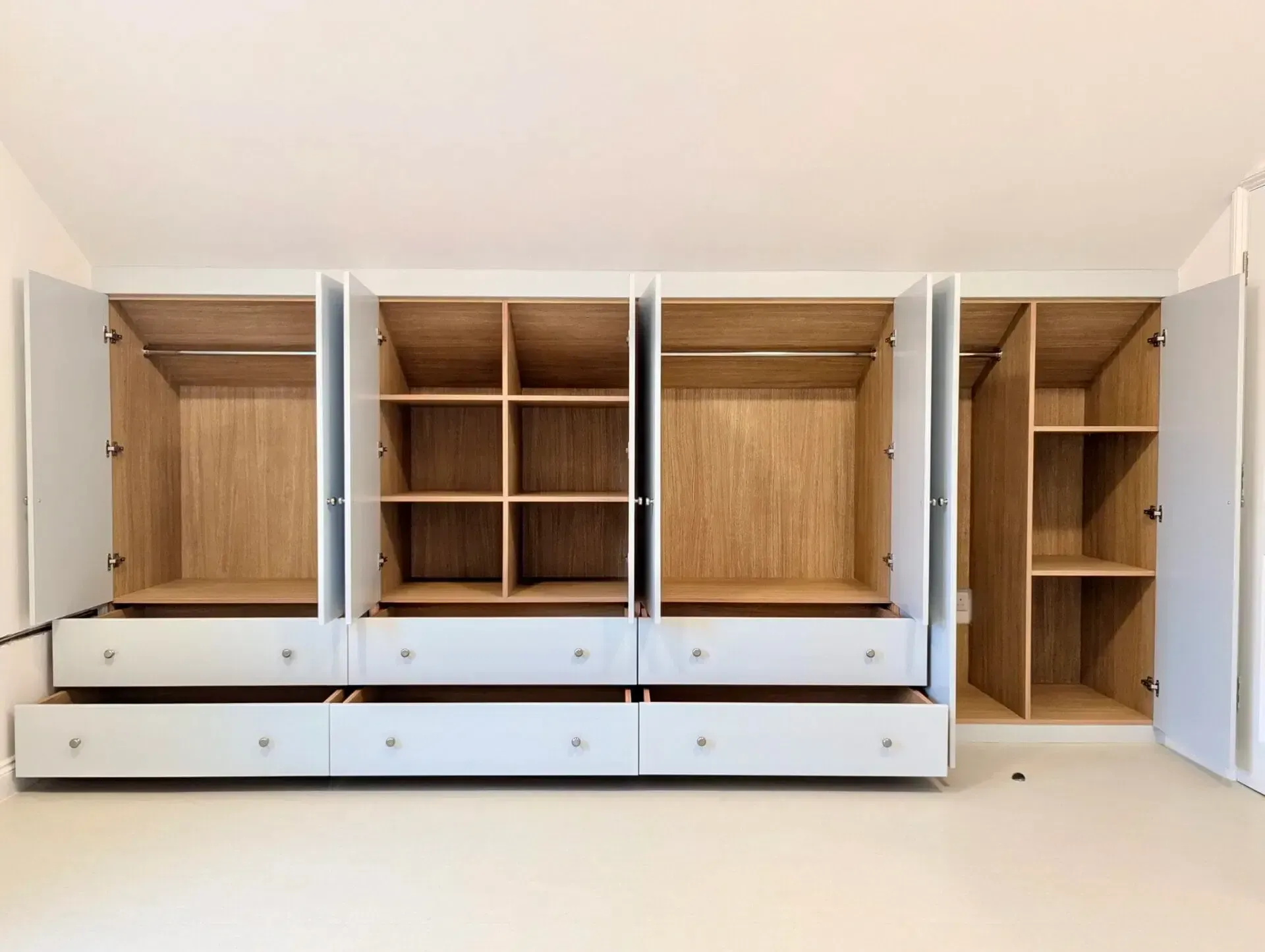
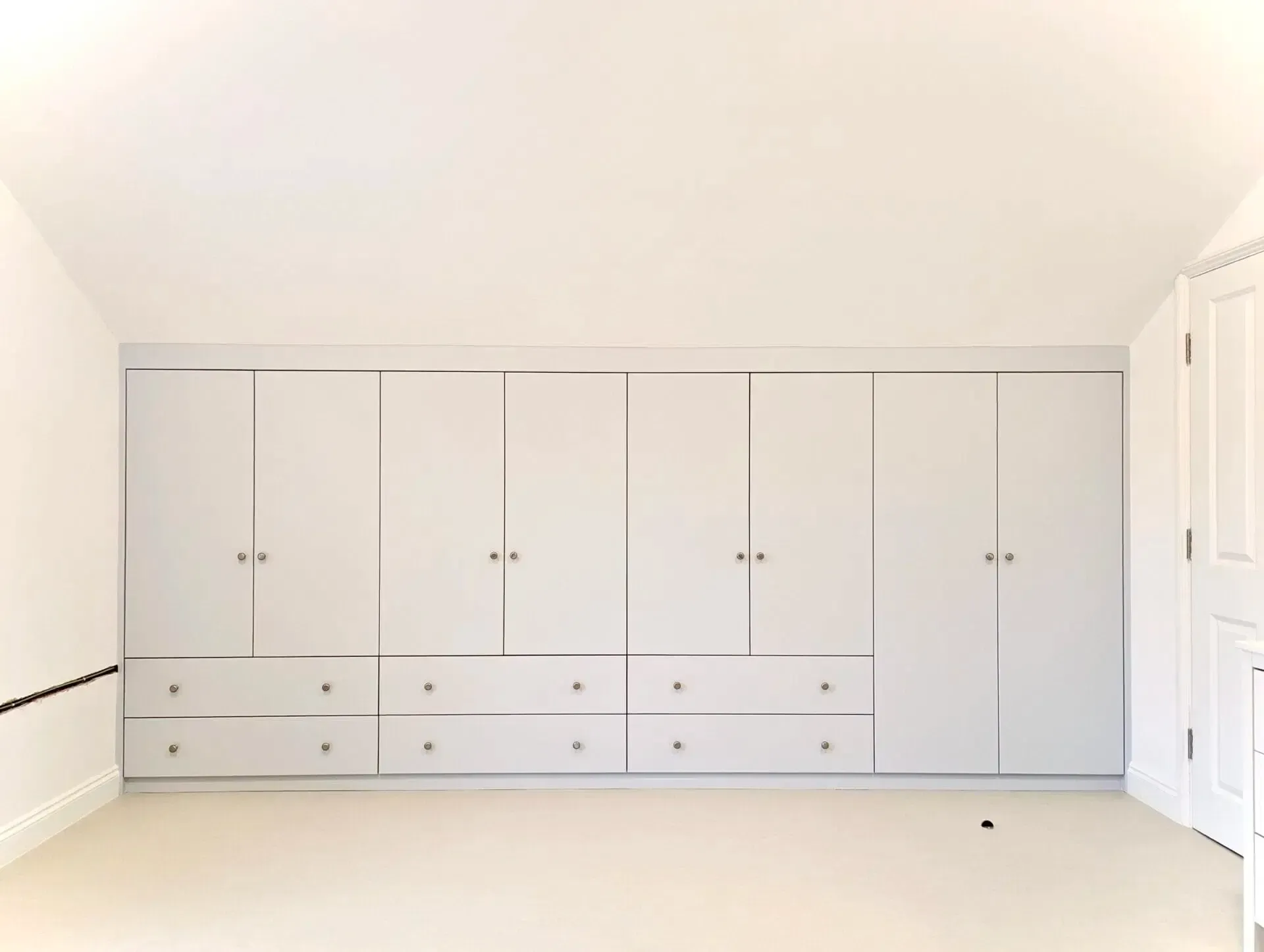
- Bedrooms — fitted wardrobes designed for period property proportions and architectural features
- Living Room — alcove units, entertainment storage, and integrated cabinetry appropriate to period interiors
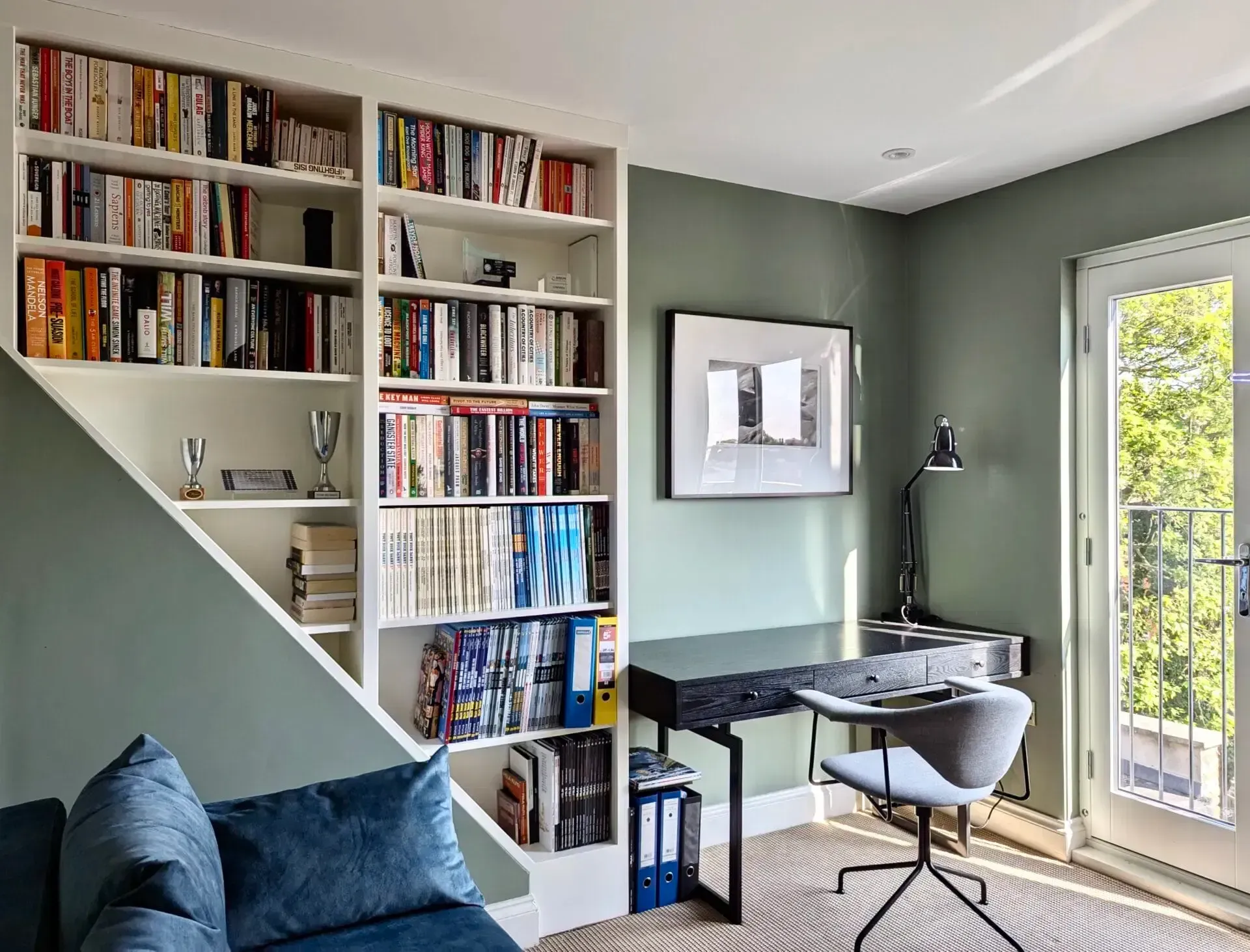
- Home Libraries — bookcases and libraries that suit period property aesthetics
- Lofts — loft installations for period property conversions
- Hallways — hallway storage appropriate to period property proportions
- Office Desks — built-in workspaces designed for period property character
Every project starts with an in-home design visit that assesses the property's architectural character, original features, and specific design opportunities. Full 3D drawings show exactly how the finished installation will integrate with your specific period home.
Why Choose Humphries Cabinets
At Humphries Cabinets, we approach Edwardian and Georgian property projects with the understanding that these homes deserve fitted furniture designed to respect and complement their architectural character. Our designs preserve original features, use period-appropriate detailing where required, and produce installations that feel as if they belong in the building rather than being added later.
If you own an Edwardian or Georgian property in London and are considering fitted wardrobes or other fitted furniture,
contact us today to arrange your free consultation.