How to Organise Your Wardrobe Efficiently: Layout Tips That Work
An organised wardrobe does more than just store clothing—it simplifies daily routines, reduces stress, and enhances the overall functionality of your living space. In busy London lifestyles, where time and space are both limited, having an efficient wardrobe can make a significant difference.
However, many wardrobes—especially freestanding ones—lack structure. Items become difficult to find, storage space is underutilised, and clutter builds up over time.
Bespoke wardrobes provide the ideal foundation for organisation. By designing storage around your specific needs, they allow for a logical layout that maximises space and improves accessibility.
This guide explores practical tips and layout strategies to help you organise your wardrobe efficiently and maintain it over time.
Understanding the Importance of Organisation
A well-organised wardrobe supports both functionality and wellbeing.
Benefits include:
- Faster and easier daily routines.
- Better visibility of clothing and accessories.
- Reduced clutter and stress.
- Improved care and maintenance of garments.
Without a clear system, even the largest wardrobe can feel overcrowded and inefficient.
Start with Decluttering
Before organising your wardrobe, it is essential to assess what you own.
This involves:
- Removing items you no longer wear.
- Sorting clothing by category.
- Identifying duplicates or unnecessary pieces.
Decluttering creates space and makes it easier to design an effective storage layout.
Zoning Your Wardrobe
One of the most effective organisation strategies is zoning.
Divide your wardrobe into dedicated sections for:
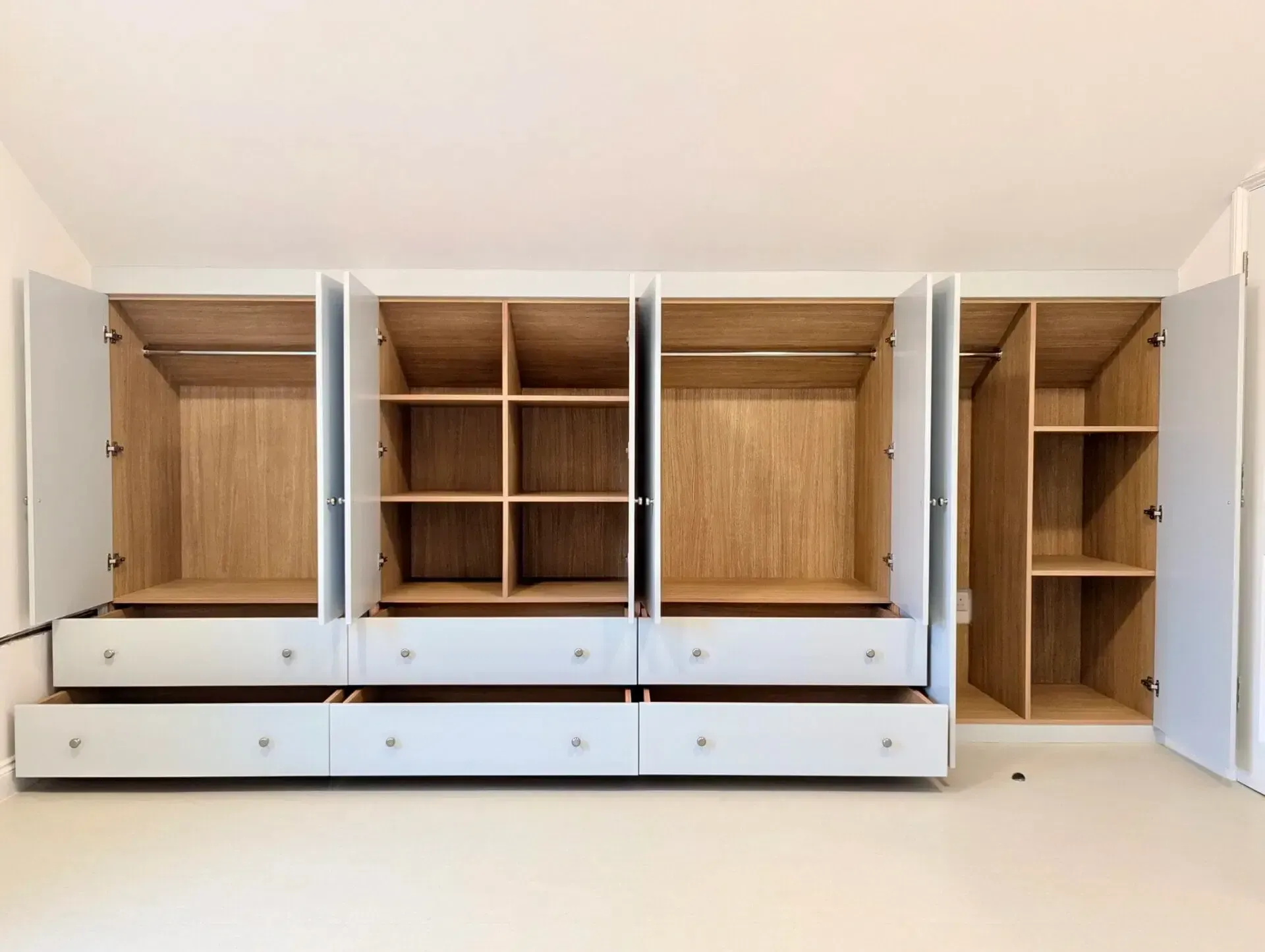
- Hanging clothes.
- Folded items.
- Accessories.
- Shoes.
This structured approach ensures everything has a designated place, making it easier to maintain order.
Optimising Hanging Space
Hanging space is a key component of any wardrobe.
To maximise efficiency:
- Use double hanging rails for shorter items.
- Allocate full-length sections for dresses and coats.
- Group similar items together.
This helps you utilise vertical space effectively while keeping clothing accessible.
Incorporating Drawers for Smaller Items
Drawers are essential for storing smaller items neatly.
They are ideal for:
- Underwear and socks.
- Accessories such as belts and ties.
- Lightweight clothing.
Using drawer dividers further improves organisation, ensuring items remain separated and easy to find.
Folding Techniques for Better Visibility
Proper folding techniques can significantly improve wardrobe organisation.
Instead of stacking items, consider:
- Folding clothes vertically.
- Arranging items so they are fully visible.
This method prevents items from being hidden or forgotten and makes it easier to maintain order.
Using Adjustable Shelving
Flexibility is key to long-term organisation.
Adjustable shelving allows you to:
- Adapt storage for different clothing types.
- Reconfigure space as your needs change.
- Avoid wasted space.
This ensures your wardrobe remains functional over time.
Dedicated Storage for Shoes
Shoes can quickly create clutter if not stored properly.
Bespoke wardrobes can include:
- Pull-out shoe racks.
- Adjustable shelving.
- Dedicated compartments.
Keeping shoes organised not only improves accessibility but also helps maintain their condition.
Accessory Organisation
Accessories require careful organisation to avoid tangling or damage.
Consider:
- Jewellery trays or inserts.
- Hooks for belts and scarves.
- Compartments for watches and smaller items.
By allocating specific storage for accessories, you can keep them organised and easily accessible.
Maximising Vertical Space
In many London homes, space is limited—but vertical storage offers untapped potential.
Use higher sections for:
- Seasonal items.
- Less frequently used clothing.
- Storage boxes.
This approach ensures everyday items remain within easy reach while maximising overall capacity.
Lighting for Improved Visibility
Good lighting plays an important role in wardrobe organisation.
Integrated lighting solutions can:
- Illuminate darker areas.
- Make it easier to find items.
- Enhance the overall appearance.
LED strip lighting or motion-sensor lights are particularly effective in wardrobes.
Maintaining a Logical Layout
An efficient wardrobe layout should reflect your daily habits.
For example:
- Place frequently used items at eye level.
- Store occasional items in higher or lower sections.
- Group clothing by category or season.
This logical arrangement reduces time spent searching for items.
Seasonal Rotation
Rotating your wardrobe seasonally helps maintain organisation.
This involves:
- Storing out-of-season clothing in less accessible areas.
- Bringing current-season items to the front.
Seasonal rotation keeps your wardrobe relevant and prevents overcrowding.
Keeping Surfaces Clear
Clutter often accumulates on flat surfaces within wardrobes.
To avoid this:
- Use designated storage compartments.
- Avoid leaving loose items on shelves.
Maintaining clear surfaces contributes to a more organised and visually appealing space.
Creating a Daily Routine
Organisation is not just about design—it is about habit.
Simple practices can help maintain order:
- Returning items to their designated place.
- Regularly reviewing and decluttering.
- Keeping similar items grouped together.
Consistency ensures your wardrobe remains organised over time.
The Role of Bespoke Design in Organisation
While organisation techniques are important, the design of the wardrobe itself plays a crucial role.
Bespoke wardrobes allow you to:
- Tailor storage to your specific needs.
- Incorporate features that support organisation.
- Maximise space efficiency.
This creates a system that works naturally with your lifestyle.
Enhancing Efficiency Through Thoughtful Design
An organised wardrobe improves more than just storage—it enhances daily life.
It allows you to:
- Get ready more quickly.
- Reduce decision fatigue.
- Maintain a tidy and calm environment.
These benefits contribute to a more efficient and enjoyable home.
Conclusion
Organising your wardrobe efficiently requires a combination of thoughtful design and consistent habits. By zoning storage, maximising space, and incorporating practical features, you can create a system that simplifies daily routines and keeps your home clutter-free.
Bespoke wardrobes provide the ideal foundation for organisation, allowing every element to be tailored to your needs. From adjustable shelving and dedicated compartments to integrated lighting and flexible layouts, custom solutions ensure long-term efficiency.
At Humphries Cabinets, we design bespoke wardrobes that prioritise organisation, functionality, and style. Tailored to suit London homes, our solutions help you create a space that works seamlessly with your lifestyle.
Recent Posts