
Spray-Painted vs Hand-Painted Fitted Wardrobes: What's the Real Difference?

August 30, 2026

Share this article

The question of spray-painted versus hand-painted finishes rarely gets attention in fitted wardrobe conversations, yet it's one of the most consequential decisions in the entire project. The difference between a properly sprayed finish and a hand-painted alternative is visible from across the room, affects long-term durability, and often distinguishes serious fitted furniture makers from budget alternatives.


Most homeowners don't realise there's a difference until they see the two finishes side by side. Marketing language from fitted wardrobe suppliers rarely clarifies which method they use, and quotes rarely specify the application technique. Yet the choice affects everything from the smoothness of the finished surface to how the wardrobes age over decades of use.


This guide explains the actual differences between spray-painted and hand-painted fitted wardrobes, why the distinction matters, and how to identify which method a supplier is offering when the marketing language obscures the reality.

How Spray-Painted Finishes Are Actually Made

Spray-painted fitted wardrobe finishes are produced in dedicated workshop environments using specialist equipment.


Components are prepared before finishing. Doors, panels, and visible surfaces are sanded to remove any imperfections. Any joints, edges, or surface variations are addressed at this stage because they cannot be corrected once paint has been applied.


Primer is applied as a base coat that seals the substrate and provides a uniform surface for subsequent finish coats. Multiple primer coats may be applied with sanding between each to achieve maximum smoothness.


The finish colour is applied in multiple coats through professional spray equipment. Each coat is thin enough to prevent runs or sags but thick enough to build up proper colour depth. Between coats, the surface is lightly sanded to remove any dust particles or minor imperfections.


Final coats are applied with particular attention to consistency and smoothness. The final surface should show no brush marks, no roller texture, no visible imperfections at close inspection.


Drying happens in controlled workshop conditions with regulated temperature, humidity, and dust control. This environmental control is essential to producing high-quality finishes and is impossible to replicate on a home installation site.


Curing time allows the finish to fully harden before handling or transport. Modern water-based finishes cure more quickly than traditional oil-based paints but still require dedicated time in controlled conditions.


The entire process typically takes several days per project because of the multiple coats, sanding between coats, and curing time required.

How Hand-Painted Finishes Are Actually Made

Hand-painted fitted wardrobe finishes use brushes or rollers applied by hand, either in a workshop or occasionally on-site after installation.


Surface preparation is similar to spray-painted equivalents in principle, but is typically less thorough in practice. Hand-painting can hide minor surface imperfections that spray-painting would emphasise, so surface preparation standards are often lower.


Primer application is done by brush or roller. This typically produces less consistent coverage than spray application, and produces visible brush texture or roller stippling even in the primer layer.


Finish coats are applied by brush or roller. This is where the visible differences from spray-painted alternatives are most obvious. Brush application produces visible brush marks, particularly at edges and corners. Roller application produces a slightly stippled texture that never quite matches the smoothness of sprayed surfaces.


Between coats, surfaces are sometimes sanded but often not, particularly in budget applications. The result is that texture from earlier coats can be preserved in the final surface.


Drying and curing happen in whatever environment is convenient — workshop, on-site, or in temporary storage. The environmental control that supports high-quality finishing is often absent.


Hand-painted finishes can be excellent when applied by skilled painters using quality paints and proper preparation. But the process is by nature less consistent than spray application, and the results reflect this variability.

Visible Differences Between the Two Methods

Several specific visual differences distinguish spray-painted from hand-painted finishes.


Surface smoothness is the most obvious difference. Spray-painted surfaces feel smooth to the touch and reflect light evenly. Hand-painted surfaces show subtle texture from brush strokes or roller marks, visible in raking light even when the painter is skilled.


Colour consistency across surfaces varies. Spray-painted finishes maintain colour depth consistently across large surface areas. Hand-painted finishes can show slight colour variations, particularly where multiple coats overlap.


Edge treatment differs substantially. Spray-painted edges are crisp and consistent throughout. Hand-painted edges often show either brush build-up (where paint accumulated during application) or thin coverage (where the brush couldn't reach into corners properly).


Sheen consistency varies. Spray-painted finishes maintain consistent sheen across the entire surface. Hand-painted finishes can show variations in sheen, particularly at edges and corners.


Dust and debris show differently. Spray-painting in controlled workshop conditions rarely traps dust in the finish. Hand-painting, particularly on-site, often shows small dust particles trapped in the finish surface.


Long-term appearance differs as the finishes age. Spray-painted surfaces typically age more evenly, with any wear appearing consistently across the surface. Hand-painted finishes can develop uneven wear patterns, with heavily used areas showing brush marks more prominently over time.

Long-Term Durability Differences

Beyond immediate appearance, spray-painted and hand-painted finishes age differently over the decades of fitted wardrobe use.


Impact resistance is similar between the two methods when both use quality paints and proper preparation. The application method matters less than the paint quality and coat thickness.


Scratch resistance varies more with paint type than application method. Both methods can produce scratch-resistant surfaces when appropriate paint types are specified.


Fade resistance depends primarily on the paint pigments used rather than the application method. Quality paints from established manufacturers maintain colour for decades in normal residential environments.


Cleaning behaviour differs slightly. Spray-painted surfaces typically clean more easily because their smooth surface doesn't trap dust or grime in the way that textured hand-painted surfaces can.


Repair and touch-up is where spray-painted finishes have a real advantage. A properly sprayed finish can often be spot-repaired invisibly by a skilled finisher. Hand-painted finishes are harder to repair invisibly because matching brush marks and texture to the surrounding area is difficult.


Refinishing after decades favours neither method particularly. Both types of finish can be sanded and repainted, and both benefit from professional application when refinishing becomes necessary.

When Hand-Painted Finishes Can Work

Despite the general superiority of spray-painted finishes, certain situations favour hand-painted alternatives.


Very small projects where the workshop time and setup for spray finishing isn't justified by the project scope. A single small cabinet may be more cost-effectively hand-finished than sprayed.


On-site adjustments and repairs to existing installations are typically hand-painted. Spray equipment is impractical for site work in occupied homes.


Specific traditional aesthetics that specifically want visible brushwork as part of the design intent. Some historical restoration projects deliberately use hand-painting to match original historical finishes.


Certain paint types including specialist chalk paints, milk paints, and traditional oil paints are designed for brush application and don't work well with spray equipment.


Budget constraints where the cost difference between hand-painted and spray-painted finishes is decisive for the project going ahead. Hand-painted budget alternatives can produce acceptable results even if they don't match spray-painted quality.


Multi-tonal or effect finishes including distressed looks, aged patinas, and mixed colour effects are typically hand-applied because they require the visible variation that hand-application naturally produces.

Identifying Which Method a Supplier Uses

Since marketing language often obscures the reality, several questions help identify what a supplier is actually offering.


Ask directly whether the finish is sprayed or hand-painted. Suppliers who spray typically volunteer this because it's a quality differentiator. Suppliers who hand-paint may not volunteer this because they know it's a lower specification.


Ask about the workshop facilities. Suppliers who spray typically have dedicated finish rooms with controlled environments. Suppliers without such facilities are unlikely to be producing genuine sprayed finishes.


Ask to see completed installations or workshop samples. A properly sprayed finish is visible in person — the smoothness and consistency of the surface is obvious once you know what to look for.


Ask about drying time between coats. Sprayed finishes typically dry more quickly between coats than brushed finishes because thinner coats are applied. Suppliers describing multi-week finishing periods for standard projects may be hand-painting rather than spraying.


Look for spray equipment in workshop tours where these are offered. Spray booths, professional spray guns, and dust extraction systems are visible indicators of spray finishing capability.


Consider the pricing. Very low prices for fitted wardrobes are often associated with hand-painted finishes rather than sprayed alternatives. This isn't a reliable indicator on its own but reinforces other signals.

The Question of On-Site Application

Some fitted wardrobe suppliers finish their work on-site after installation rather than in workshop conditions. This is worth understanding as a specific practice.


On-site painting is almost always hand-painted rather than sprayed. Setting up spray equipment in an occupied home is impractical, and the environmental control required for quality spray finishing is impossible on-site.


On-site finishing risks damage to surrounding areas. Paint splatter, dust, and fumes affect surrounding rooms and can damage carpets, furniture, and decoration.


On-site finishing extends the installation timeline. What might be a two-day installation of pre-finished components becomes a week-long process when finishing has to happen after installation.


On-site finishing produces less controlled results. The environmental variables — temperature, humidity, dust, ventilation — that support quality workshop finishing are impossible to reproduce in a home installation environment.


Suppliers who finish on-site sometimes market this as a benefit ("perfect colour matching with your walls" or "no risk of installation damage to the finish"). In practice, on-site finishing typically produces lower-quality results than pre-finished workshop alternatives.

Making the Decision for Your Project

For most fitted wardrobe projects, several considerations point strongly toward spray-painted rather than hand-painted finishes.


If the project is substantial, workshop-sprayed finishes almost always produce better results than hand-painted alternatives. The cost difference is usually justified by the quality difference.


If the wardrobes will be highly visible, spray-painted finishes are more likely to look considered and professional. Hand-painted finishes work better when they can be viewed from a distance or when the aesthetic specifically wants visible brushwork.


If long-term durability matters, spray-painted finishes typically hold up better over decades of use. The consistency of the initial application supports better long-term appearance.


If your budget is tight, hand-painted finishes may be the practical choice. A smaller project with a hand-painted finish may deliver better value than a compromised spray-painted alternative.


If the design specifically wants a textural or historical finish, hand-painting may be the right choice. This is a specific aesthetic decision rather than a compromise.

What Humphries Cabinets Offers

We finish all our fitted furniture using workshop-sprayed application, producing smooth, consistent, durable finishes throughout every project. Our services include:


  • Bedrooms — fitted wardrobes with spray-painted finishes in any colour choice
  • Living Room — alcove units and entertainment cabinetry with matching or complementary finishes
  • Home Libraries — bookcases and library storage with quality workshop finishes
  • Lofts — loft wardrobes with professional finish application
  • Hallways — hallway storage with the same finish quality as other rooms
  • Office Desks — built-in workspaces with professional workshop finishing


All finish work happens in our workshop under controlled conditions before delivery to your home. Final on-site adjustments are limited to installation itself, with the finish already complete and cured before it enters your property.

Why Choose Humphries Cabinets

At Humphries Cabinets, we invest in proper workshop finishing capability because we believe the finish quality substantially affects both immediate satisfaction and long-term durability. Our sprayed finishes are smooth, consistent, and designed to age gracefully across the decades of ownership. The result is fitted wardrobes that look professionally finished on the day of installation and continue to look professionally finished for many years afterward.


If you're planning a fitted wardrobe project and want proper attention to finish quality, contact us today to arrange your free consultation.

Recent Posts

Bright home office with white bookshelves, desk, chair, window, curtains, and blue bench
August 30, 2026
Discover fitted home office storage for hybrid workers in London, with bespoke solutions that maximize space, organize essentials, and support productive work.
Light wood wardrobe with mirrored doors, reflecting a small desk in a bright room.
August 30, 2026
Explore the complete guide to fitted wardrobe handles and hardware, covering styles, finishes, functionality, durability, and tips for choosing the right options.
Bright bedroom with a bed, wardrobe, portrait on the wall, and a desk by the window.
August 30, 2026
Discover fitted wardrobes for Edwardian and Georgian London homes, combining period character with practical storage and bespoke designs that suit your space.
Bright bedroom with built-in wardrobes, white bed, and large window with blinds
August 30, 2026
Discover fitted wardrobes for small London bedrooms, with space-saving designs that maximize storage, improve organization, and make compact rooms feel larger.
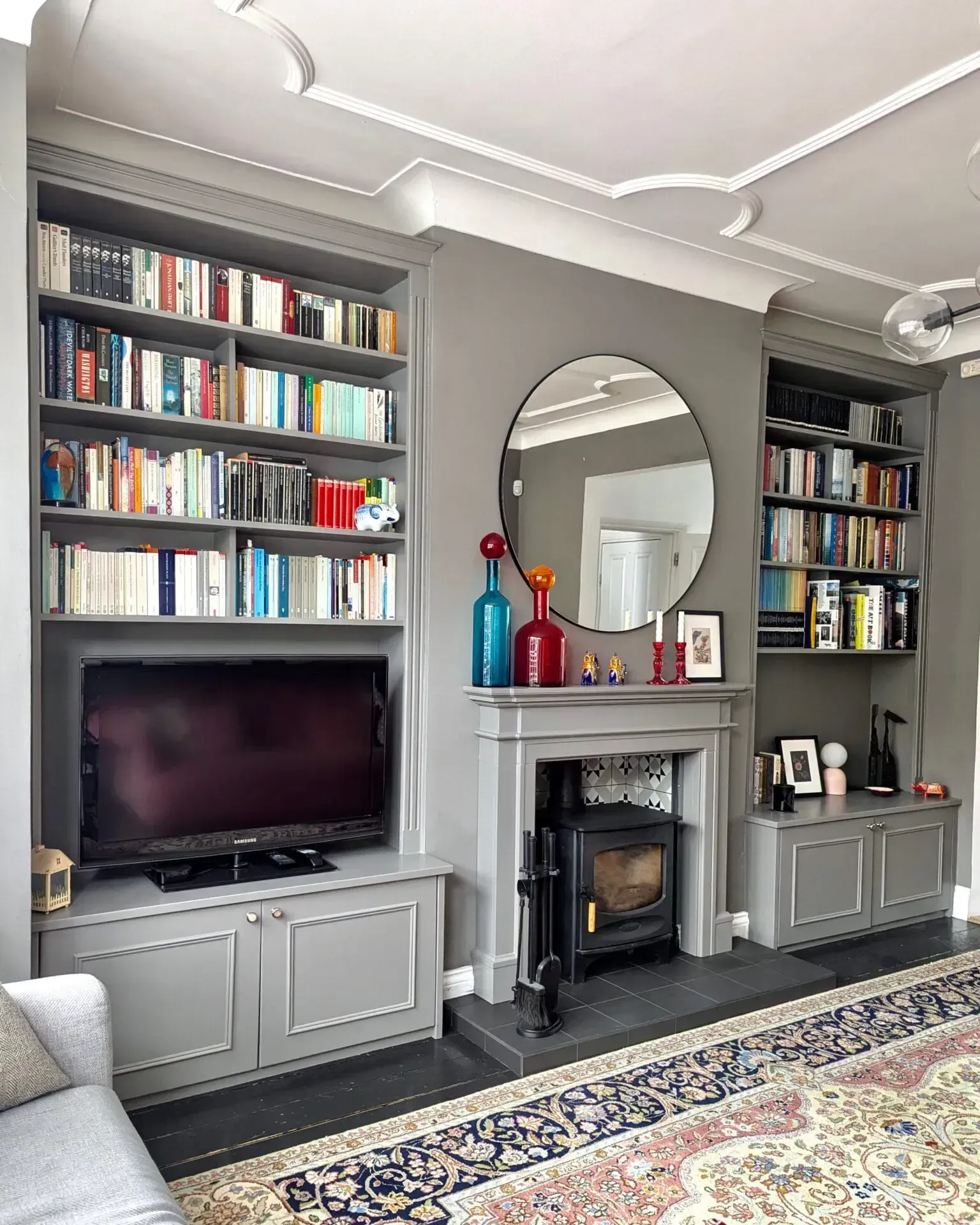
Gray living room with built-in bookshelves, fireplace, TV, mirror, and patterned rug
August 30, 2026
Explore entertainment units and media storage for London homes, with bespoke designs that organize devices, conceal cables, and complement your interior.
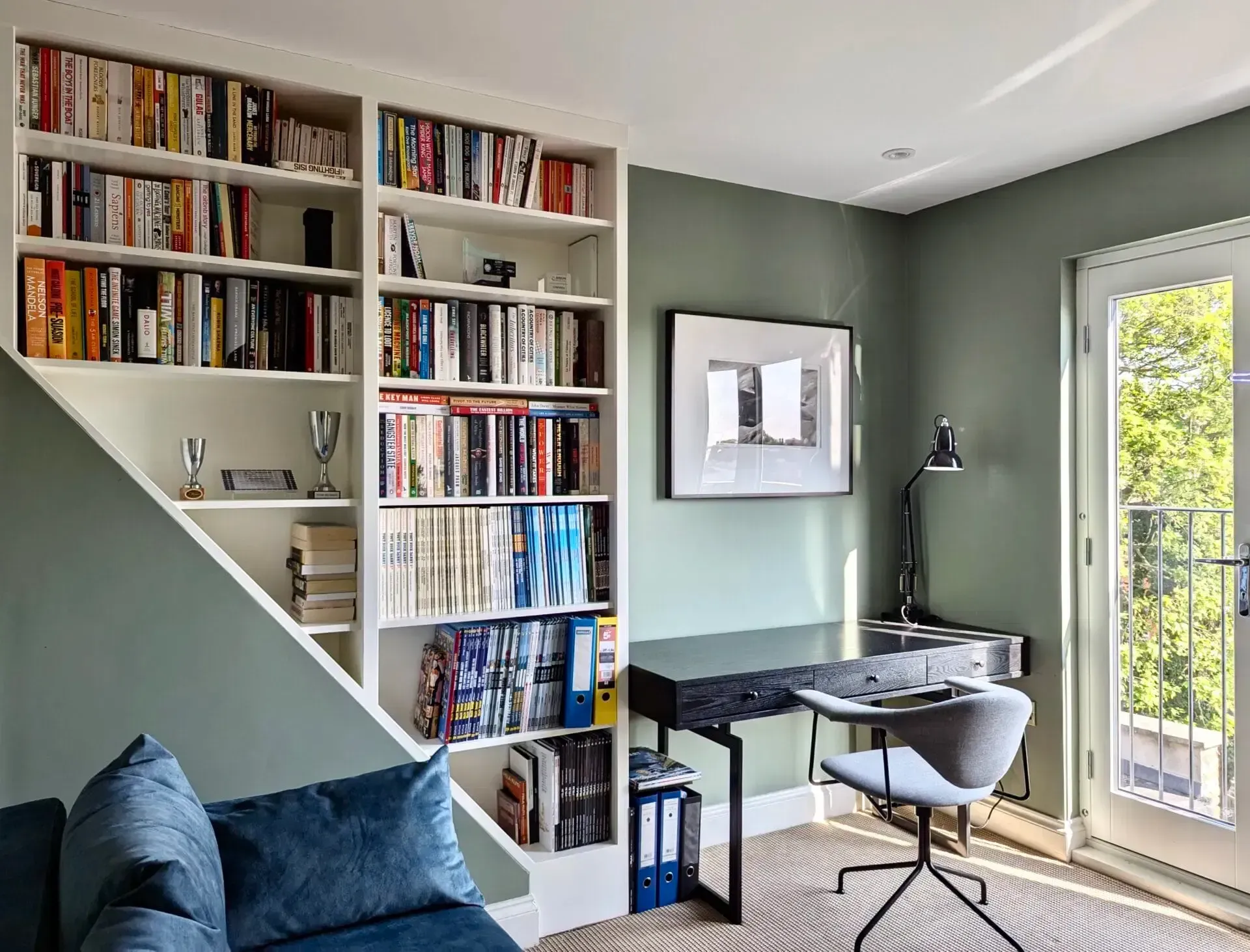
Modern home office with built-in bookshelf, desk, chair, and large window overlooking greenery
August 30, 2026
Explore bespoke bookcases and home libraries for London homes, with custom designs that maximize storage, complement your décor, and create a stylish space.
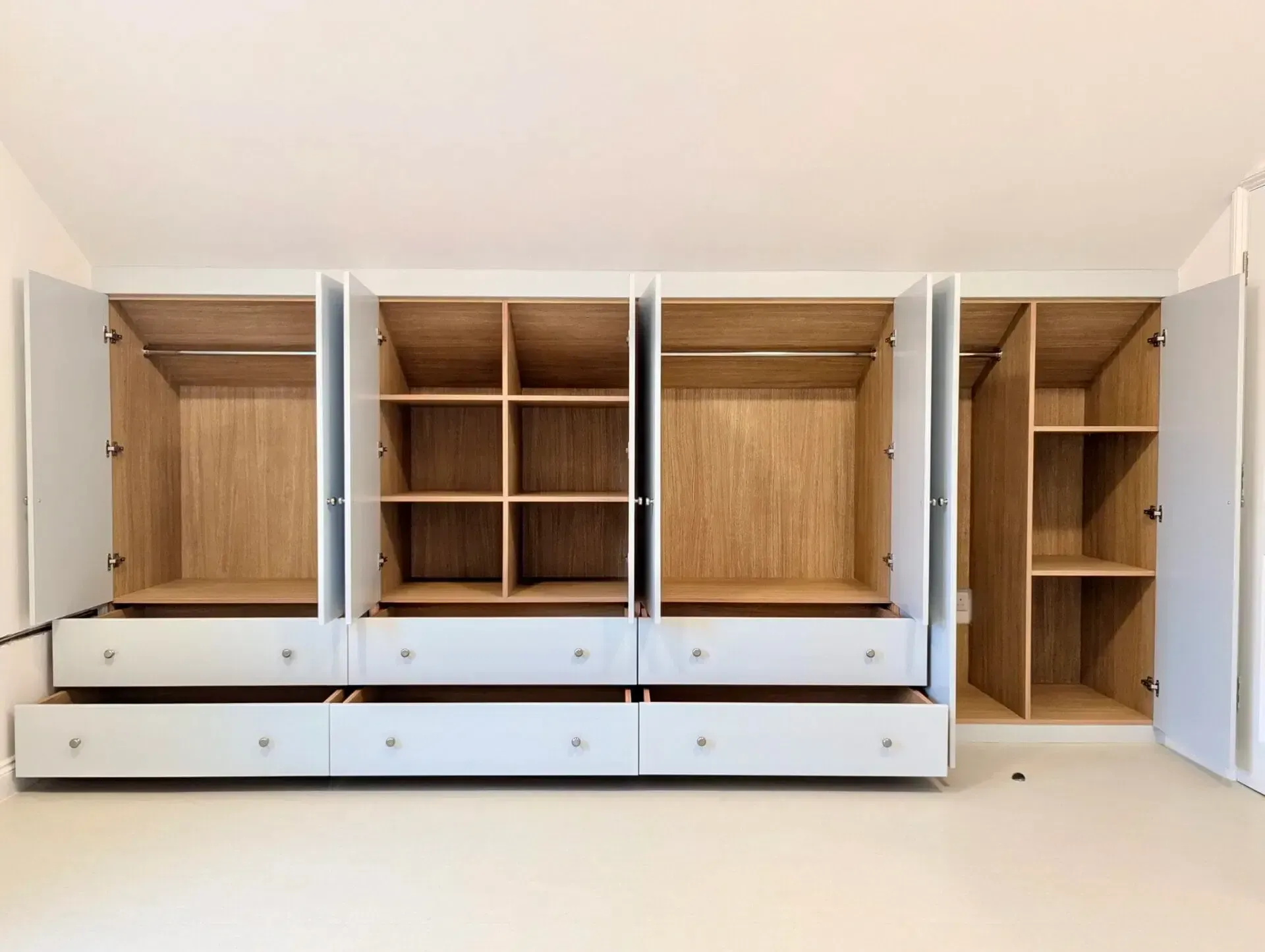
Open white wardrobe with empty wooden cabinets and drawers in a bright room
August 30, 2026
Learn how fitted wardrobe internal layouts should work, with smart storage, practical compartments, easy access, and designs tailored to your needs.
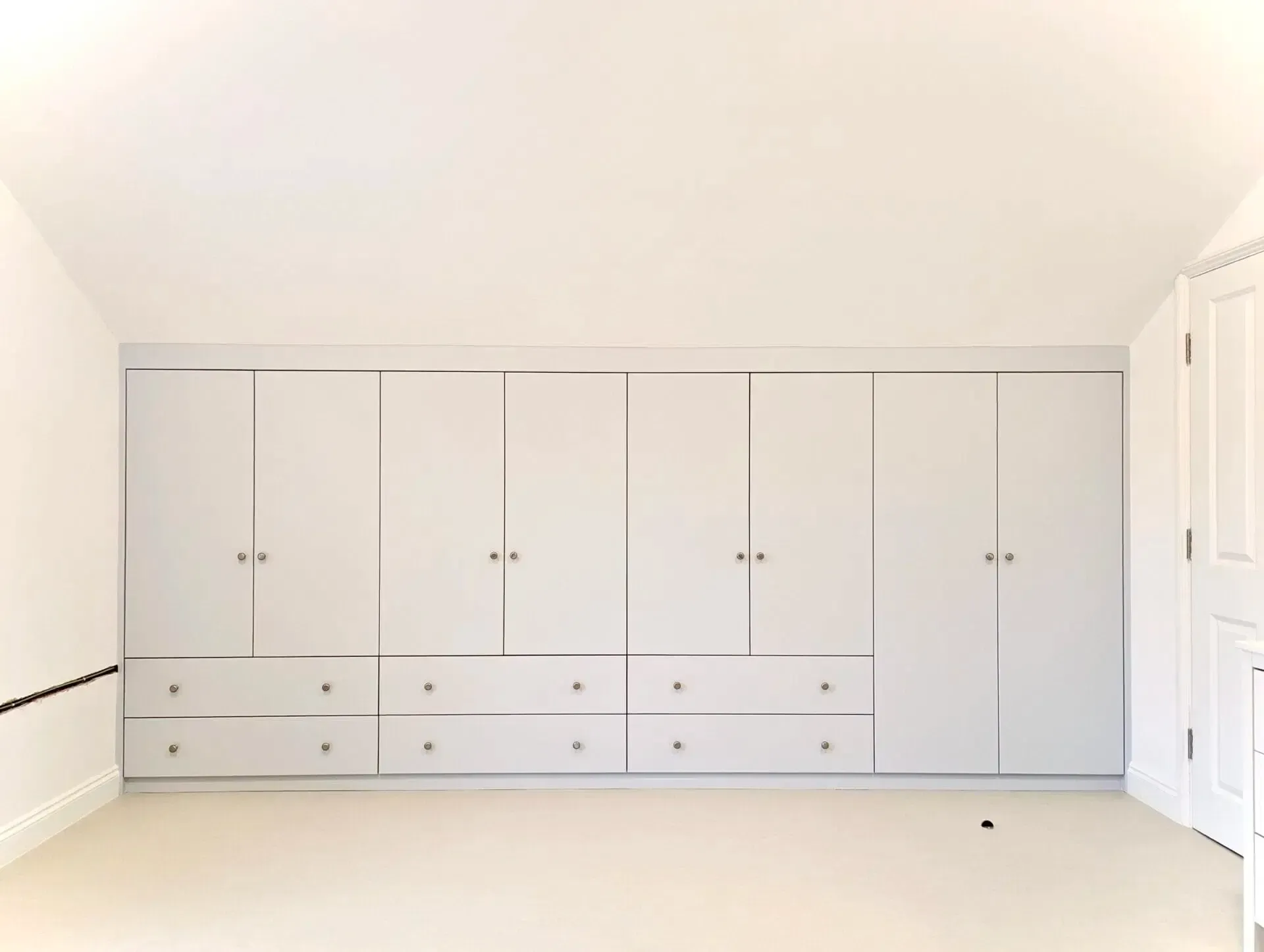
Built-in white bedroom wardrobe with drawers and cabinets against a sloped ceiling
August 30, 2026
Learn how to compare fitted wardrobe quotes in London by reviewing materials, design, installation, storage, warranties, and overall value.
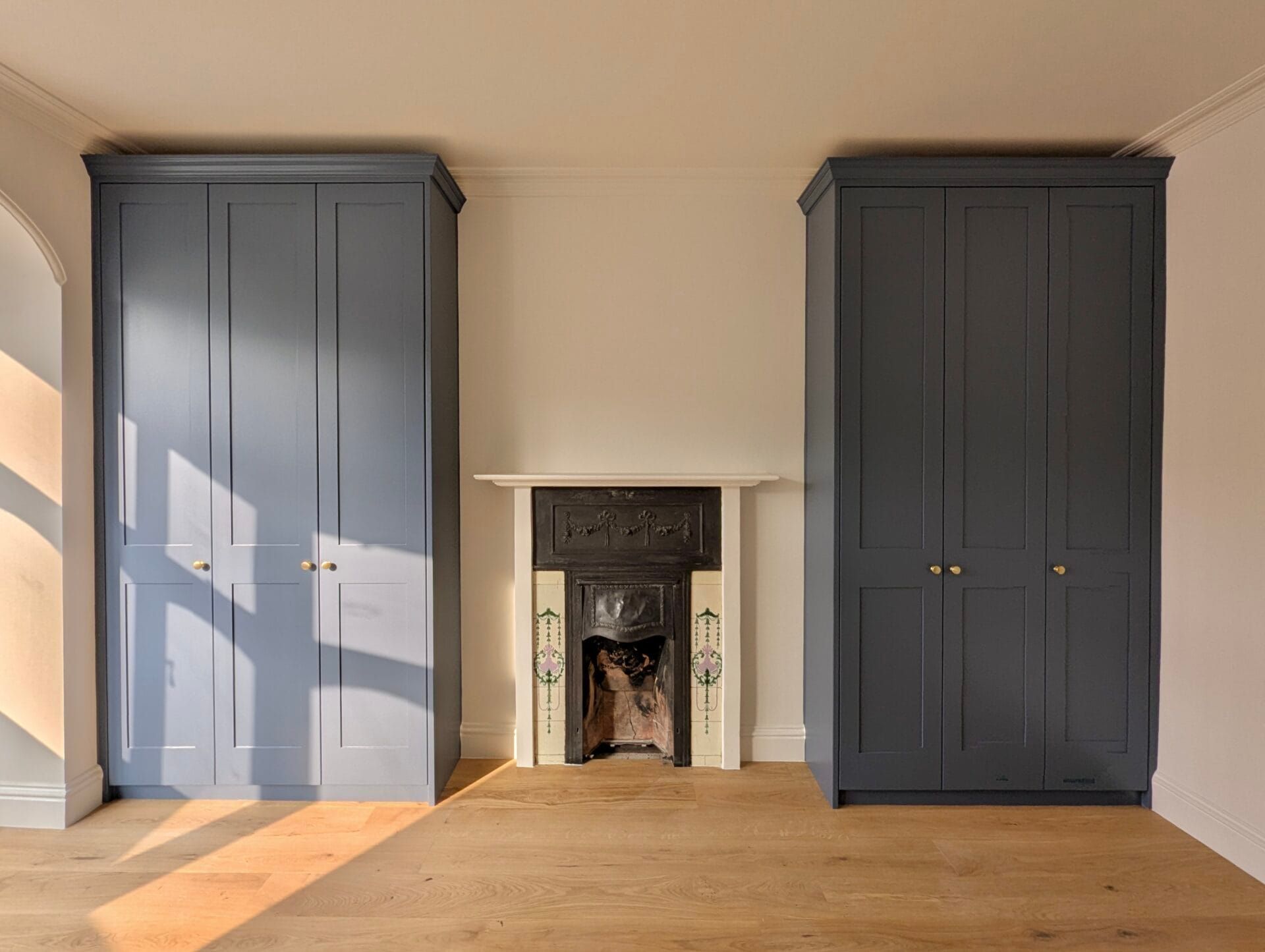
Room with two dark built-in wardrobes and a small fireplace in the center, lit by sunlight on the wooden floor
August 30, 2026
Compare oak and painted fitted wardrobes for your London home, including style, durability, maintenance, and cost to choose the right option for you.

Living room with white built-in bookshelves, a fireplace, framed art, and a lamp beside a sofa.
August 4, 2026
Fulham and Hammersmith homes have specific storage problems — narrow terraces, chimney breast alcoves, conversion flats and loft rooms. Here's how fitted furniture solves each.
Show More