
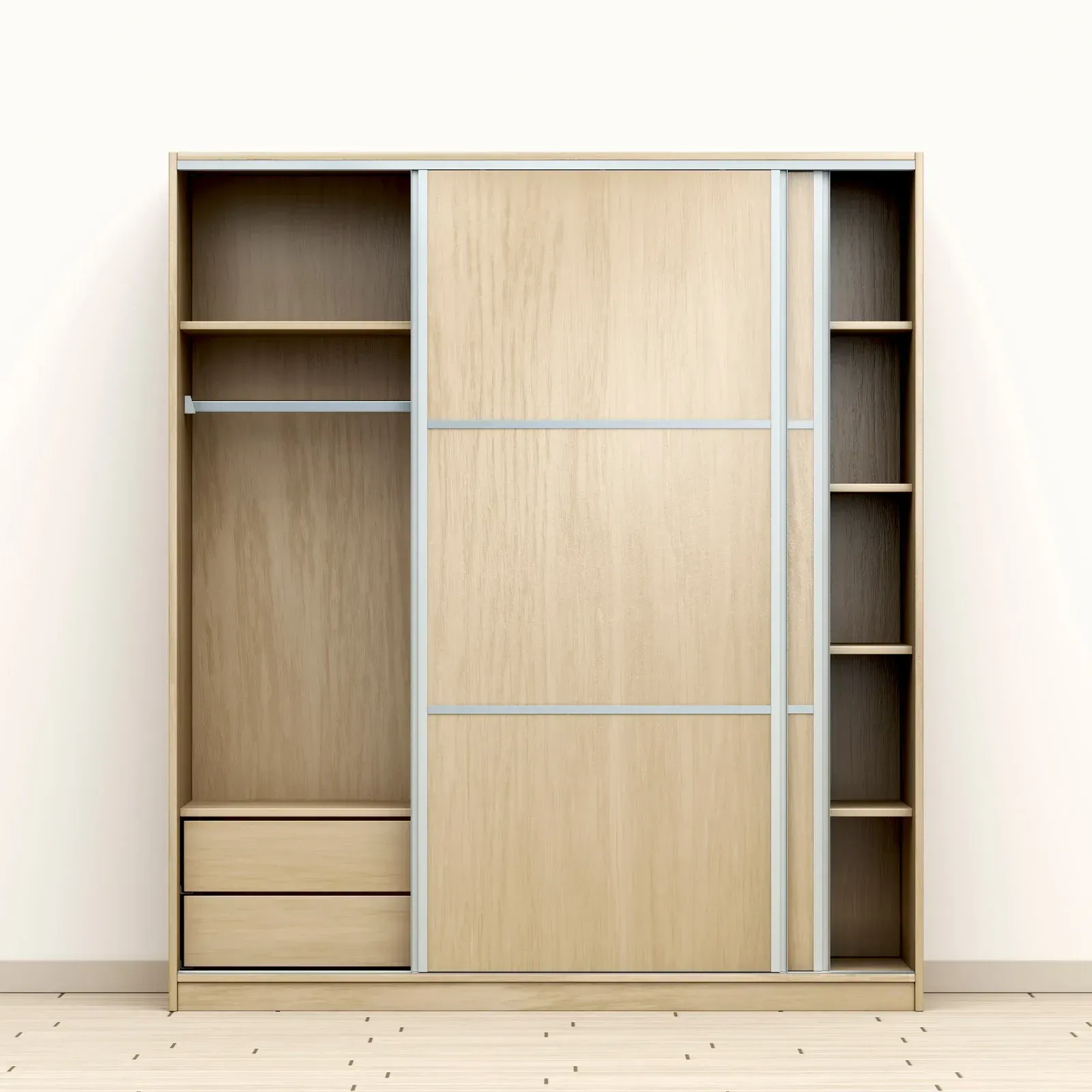
Statement Wardrobe Features: Curved Doors, Fluted Panels and Textured Fronts

September 30, 2026

Share this article

Quick Answer

Statement wardrobe features include curved doors, fluted panels, textured fronts, reeded glass, and integrated display niches that transform storage into an architectural feature. These work best in rooms with generous proportions and restrained surrounding decor. Feature design requires discipline: multiple statement features on the same wardrobe rarely produce coherent results.

Most fitted wardrobes read as background. They store clothes, occupy a wall, and let the rest of the room do the design work. This is often the right approach. A wardrobe that competes with the bed, the artwork, and the architecture for attention rarely produces a calm bedroom.


But recess is not the only option. Some rooms benefit from wardrobes that become architectural features. A large well proportioned wall in a period London home can carry a wardrobe designed to be looked at rather than looked past. The design vocabulary for feature wardrobes has expanded significantly: curved doors that soften angular walls, fluted panels that catch light across vertical grooves, textured fronts that add depth and shadow without changing color. This guide covers each of these approaches, when they suit London homes, and how they change the character of the rooms they occupy.

The Design Question: Feature or Background

Before considering specific features, the fundamental question is whether the wardrobe should be a feature at all.


Wardrobes as background serve rooms where other design elements carry the visual weight. The bed, the artwork, the fireplace, the view, or the architectural details of the room itself provide the interest. The wardrobe supports these elements by receding. Flat doors in colors that match or complement the walls achieve this recession.


Wardrobes as features serve rooms where the wardrobe should carry design weight rather than dissolve into the wall. This might be because the room has few other design elements, because the wardrobe occupies such a large proportion of the visible wall area that recession is not possible, or because the homeowner wants the storage to be a design element.


The question does not have a universal answer. It depends on the specific room, the specific homeowner, and the specific relationship between the wardrobe and other design elements. But the question needs to be answered before feature decisions are made, because feature wardrobes and background wardrobes lead to very different design decisions.

Curved Doors

Curved doors treat the wardrobe front as a surface that flexes rather than a plane that meets at right angles.


The effect is architectural. A wardrobe with curved end sections that flow into flat central sections reads as furniture rather than joinery. A wardrobe with curved doors across its entire face reads as an object rather than storage. This shifts how the room reads: the wardrobe becomes a piece of design rather than a functional wall.

Concave curves where the surface curves inward create shadow at the outer edges and depth at the center. This works well when the wardrobe sits between two return walls that provide reference for the curve to work against.


Convex curves where the surface curves outward push the wardrobe into the room. This can work when the room has generous proportions and the wardrobe is meant to be a presence rather than a boundary. In small rooms, convex curves usually feel oppressive.


Curved doors have practical implications. They cost more than flat doors because manufacturing is significantly more complex. Handle placement requires care because the curve affects both aesthetics and ergonomics. Alignment between curved doors and adjacent flat elements requires precision.

Fluted Panels

Fluted panels apply the classical detail of vertical grooves to wardrobe fronts.


The design language of fluting comes from classical architecture, where columns and pilasters used flutes to catch light across their vertical grooves. In furniture, fluting brings this same play of light and shadow to what would otherwise be flat surfaces. The wardrobe front stops being a plane and becomes a series of vertical rhythms.

Deep flutes with pronounced grooves create strong shadow lines that emphasize verticality. In rooms with lower ceilings, deep flutes can help the wardrobe read as taller than it actually is. In rooms with taller ceilings, they emphasize existing verticality.


Shallow flutes with subtle grooves create texture without pronounced shadow. This works well when the fluting is meant to add interest without dominating the design.


Wide flutes with generous spacing between grooves read as more architectural. These reference classical column proportions.


Narrow flutes with tight spacing read as more contemporary. The rhythm becomes closer to a pattern than an architectural detail.


Reeded rather than fluted designs use convex ridges rather than concave grooves. The effect is similar but the light behaves differently. Reeded surfaces catch highlights on the ridges.


Fluted surfaces create shadows in the grooves.


Fluting works particularly well on wardrobe end panels and feature center sections. Applied across an entire wardrobe front, the pattern can become overwhelming. Applied strategically, it can transform the character of a wardrobe without changing anything else.

Textured Fronts

Textured door fronts add depth to what would otherwise be flat surfaces without the pattern of fluting.


Cross grain textured wood where the grain runs horizontally rather than vertically creates a horizontal emphasis that suits wide rooms. The texture is subtle but reads clearly under most lighting conditions.


Textured paint finishes where the paint is applied in a manner that leaves visible texture rather than a smooth surface. This works with modern paint techniques that produce controlled texture rather than accidental brush marks.

Rough sawn timber where the wood is deliberately left with the mill saw marks visible rather than planed smooth. This produces a strong texture that reads as intentional rather than incomplete.


Wire brushed finish where the softer parts of the wood grain are brushed away, leaving the harder grain proud of the surface. This creates a strong tactile and visual texture.


Cerused or limed finishes where the grain is filled with contrasting pigment. This emphasizes the wood grain against the base color.


Textured fronts work best when they can be seen closely as well as from across the room. Textures that only read from close range fail from across the room. Textures that only read from across the room feel disappointing when approached.

Panel Detailing

Panel treatment on the door faces themselves affects how the wardrobe reads.


Flat panel doors with no panel detail present as pure planes. This is the most contemporary approach and produces wardrobes that read as architectural rather than furniture.


Shaker panel doors with a single flat central panel surrounded by a frame. This is the most versatile approach, suiting traditional and contemporary rooms equally.

Raised panel doors where the central panel is proud of the frame. This reads as more traditional and suits period homes.


Recessed panel doors where the central panel sits below the frame. This creates strong shadow lines around each panel.


Multi panel doors with two or three panels per door face. These read as more traditional and often more formal.


Beaded panel doors where a small bead of moulding surrounds each panel. This adds a fine detail that reads well at close range.


Panel choice interacts with other design decisions. A curved door with panel detail becomes complex quickly. Fluted panels with additional panel detail rarely work. Textured fronts with panel detail need careful consideration of how the two elements interact.

Feature Design Beyond the Doors

Statement wardrobes can carry design weight through elements other than the doors.


Open display niches integrated into the wardrobe design provide areas for display rather than storage. These can hold books, art, or objects that the household wants to see. The negative space of a display niche reads as intentional design.


Integrated lighting that highlights specific areas of the wardrobe creates focal points. A backlit central niche, uplighting from the base of the wardrobe, or interior lighting visible through frosted glass all work.


Frame projections where the wardrobe frame extends beyond the door plane creates strong shadow lines. This produces an architectural effect that reads as thoughtful design.


Base and cornice detailing that gives the wardrobe a defined base and head reads as furniture rather than joinery. The cornice in particular affects how the wardrobe relates to the ceiling.


End panel treatment where the visible end of the wardrobe receives special design attention. This matters more than most homeowners realize because the end panel is often the most visible face when entering the room.

When Statement Features Succeed

Statement wardrobe features work best when several conditions align.


The room supports the feature. Small rooms with limited visual space struggle to accommodate feature wardrobes without feeling cluttered. Rooms with generous proportions provide the visual space that features need.


Other design elements coordinate. Feature wardrobes work best in rooms where the other design decisions support rather than compete with the wardrobe. Neutral bedding, restrained artwork, and considered lighting let the wardrobe read as intended.


The homeowner wants the feature. Feature wardrobes that were commissioned reluctantly or under a designer's insistence rather than genuine homeowner enthusiasm rarely satisfy over time. The daily experience of a feature wardrobe should feel positive, not tolerated.


The proportions are correct. Statement features rely on classical proportions to succeed. Wardrobes designed with unusual proportions rarely read as intentional regardless of how well the individual features are executed.


Execution quality supports the intent. A statement wardrobe with visible manufacturing shortcuts undermines its own intent. Feature wardrobes require higher execution quality than background wardrobes because closer visual attention reveals more.

When Statement Features Fail

The failure modes for feature wardrobes are worth understanding.


Feature fatigue develops when statement wardrobes appear in every room. A feature wardrobe in the master bedroom might work well. Feature wardrobes throughout the home usually feel exhausting.


Trend commitment creates wardrobes that date quickly. A feature designed around a specific current trend commits the room to that trend for the life of the wardrobe. Classical features age better than trend features.


Mismatched scale produces wardrobes that feel wrong even when the individual features are well executed. Small rooms with large feature elements feel oppressive. Large rooms with small feature elements feel underdesigned.


Feature stacking where multiple statement features appear on the same wardrobe usually results in visual confusion. Curved doors with fluted panels with textured finishes and integrated lighting rarely resolve into coherent design. Restraint matters more in feature design than in background design.

Frequently Asked Questions

  • What is the difference between fluted and reeded wardrobe doors?

    Fluted doors have concave grooves that create shadow lines in the recesses. Reeded doors have convex ridges that catch highlights on the raised portions. Both reference classical joinery but produce different visual results under the same lighting conditions.

  • Do curved door wardrobes cost significantly more than flat door wardrobes?

    Yes. Curved doors involve substantially more complex manufacturing than flat doors. The premium is typically thirty to sixty percent above equivalent flat door specifications. This makes curved doors most appropriate for feature installations where the visual impact justifies the investment.

  • Can statement wardrobe features work in smaller bedrooms?

    Statement features generally work less well in smaller bedrooms. The visual space required to appreciate feature design elements is limited in small rooms, and features can feel oppressive rather than considered. Small bedrooms usually benefit from restrained background design instead.

  • Do statement wardrobes date quickly?

    Features based on classical proportions and enduring design vocabularies age well across decades. Features based on current trends can date within a few years. Fluted panels have appeared in high quality joinery for centuries and remain relevant. Trend specific features carry greater risk.

What Humphries Cabinets Offers

We design and install fitted wardrobes across London ranging from restrained background pieces to statement feature installations. Our services include:

•         Fitted Wardrobes in traditional and contemporary designs including feature panel treatments

•         Modern Fitted Wardrobes with fluted panels, textured fronts, and curved elements

•         Shaker Style Wardrobes with traditional panel detailing and refined proportions

•         Floor to Ceiling Wardrobes that anchor rooms as architectural features

•         Alcove Units with integrated display niches and feature detailing

•         Wardrobe Interiors coordinated with feature exterior design

Every project starts with an in-home design visit that assesses your specific requirements before design begins.

Why Choose Humphries Cabinets

At Humphries Cabinets, we approach feature design with as much discipline as we approach background design. Feature wardrobes require restraint to succeed.


If you are planning a fitted wardrobe installation for your London property and considering statement features, contact us today to arrange your free consultation.

Recent Posts

September 30, 2026
Fitted wardrobes for downsizing help London homeowners maximise smaller bedrooms with tailored storage, organised interiors, and space-efficient designs for simpler living.
Blue built-in cabinets flank a small white fireplace in a bright room.
September 30, 2026
Two-tone and contrasting wardrobes add visual depth to London homes, combining complementary colours, finishes, and materials for a distinctive bespoke storage design.
White built-in wardrobe with drawers in a bright, empty room with a sloped ceiling
September 30, 2026
The guest bedroom is one of the most common misused rooms in London homes. It exists to accommodate guests but in most households it does that job only a small percentage of the time.
Bright minimalist room with white closet doors, a potted plant on a small table, and a blue rug
September 30, 2026
The IKEA PAX system has become the default reference point in London wardrobe decisions. Homeowners considering fitted wardrobes almost invariably encounter PAX during their research
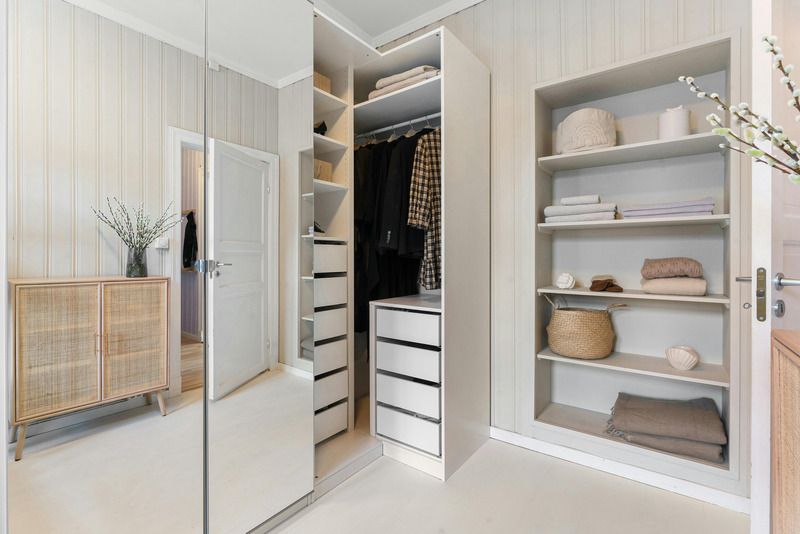
Bright walk-in closet with mirrored doors, white shelves, drawers, and hanging clothes
September 30, 2026
Bespoke wardrobes in London homes can support accessible, aging-in-place living with practical storage, easy access, and tailored designs.
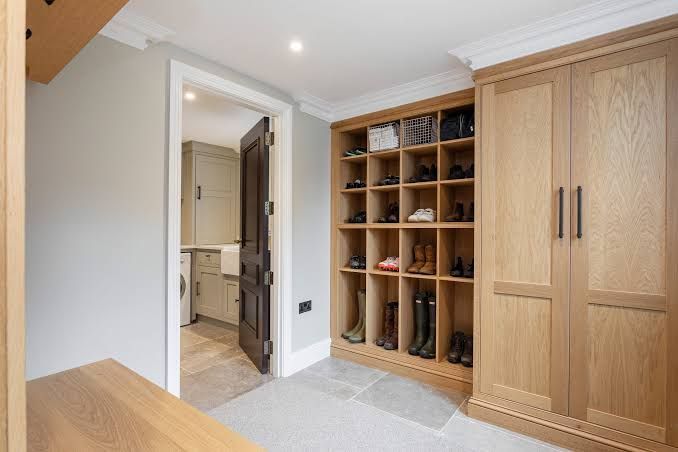
Bright bedroom with built-in wooden wardrobes and open shelving beside a doorway to a bathroom
September 30, 2026
The entryway is the first space anyone enters when they come home. It is also the space that most consistently defeats attempts at organization.
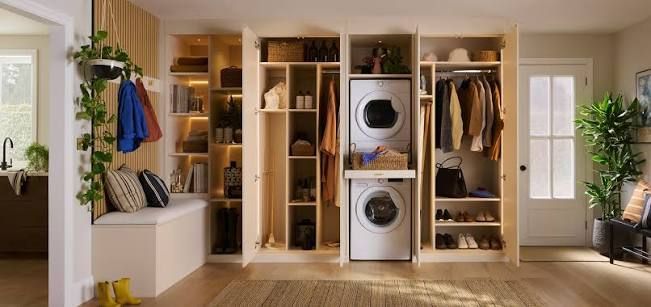
Bright walk-in closet with shelves, hanging clothes, a washer and dryer, and a plant by the window
September 30, 2026
Utility rooms in London homes range from generous purpose built spaces to squeezed under stairs cupboards.
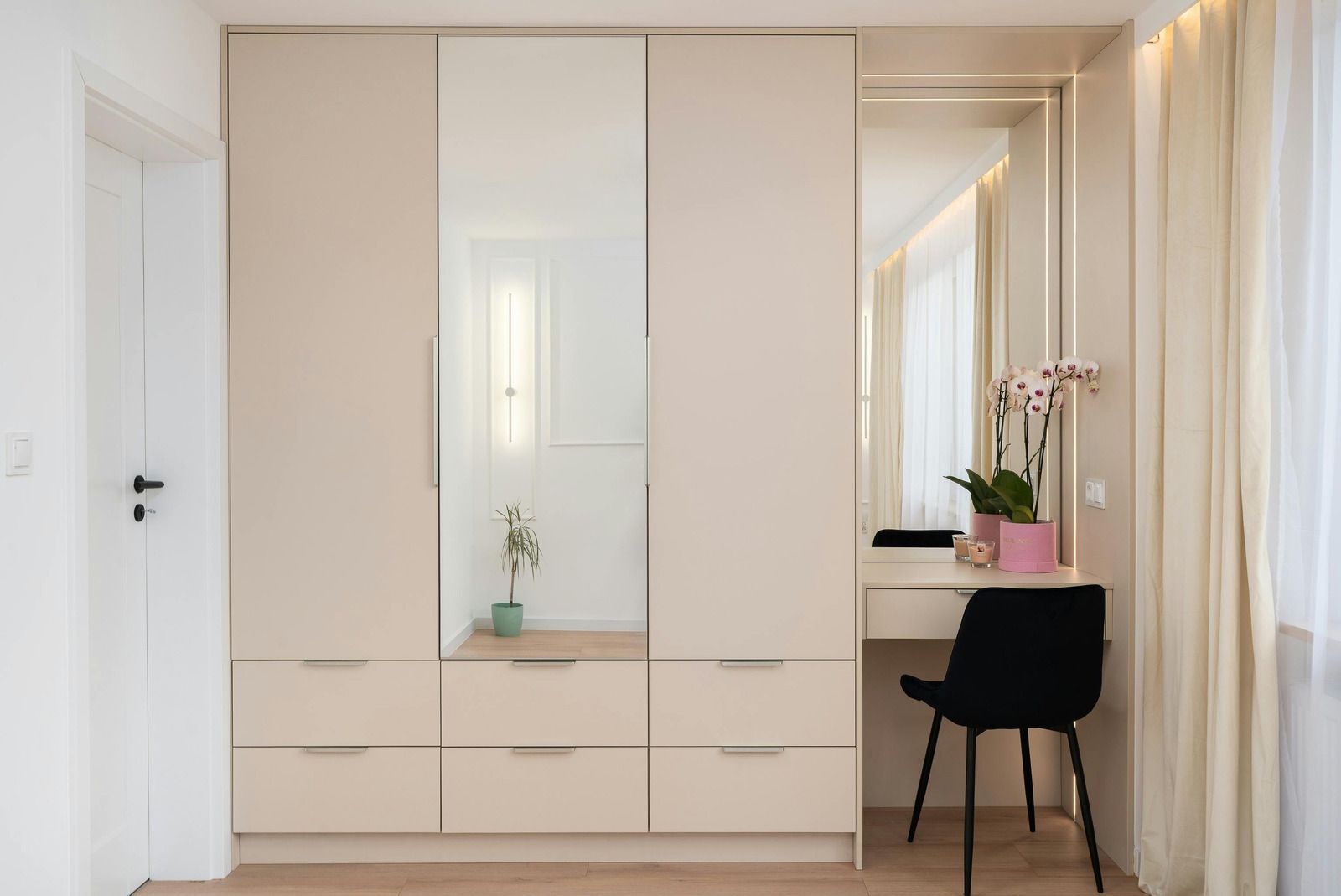
September 30, 2026
Most fitted wardrobe conversations in London focus on period properties. Victorian terraces, Edwardian townhouses, Georgian conversions, and mansion blocks account for a substantial portion of London housing stock and present distinctive design challenges.
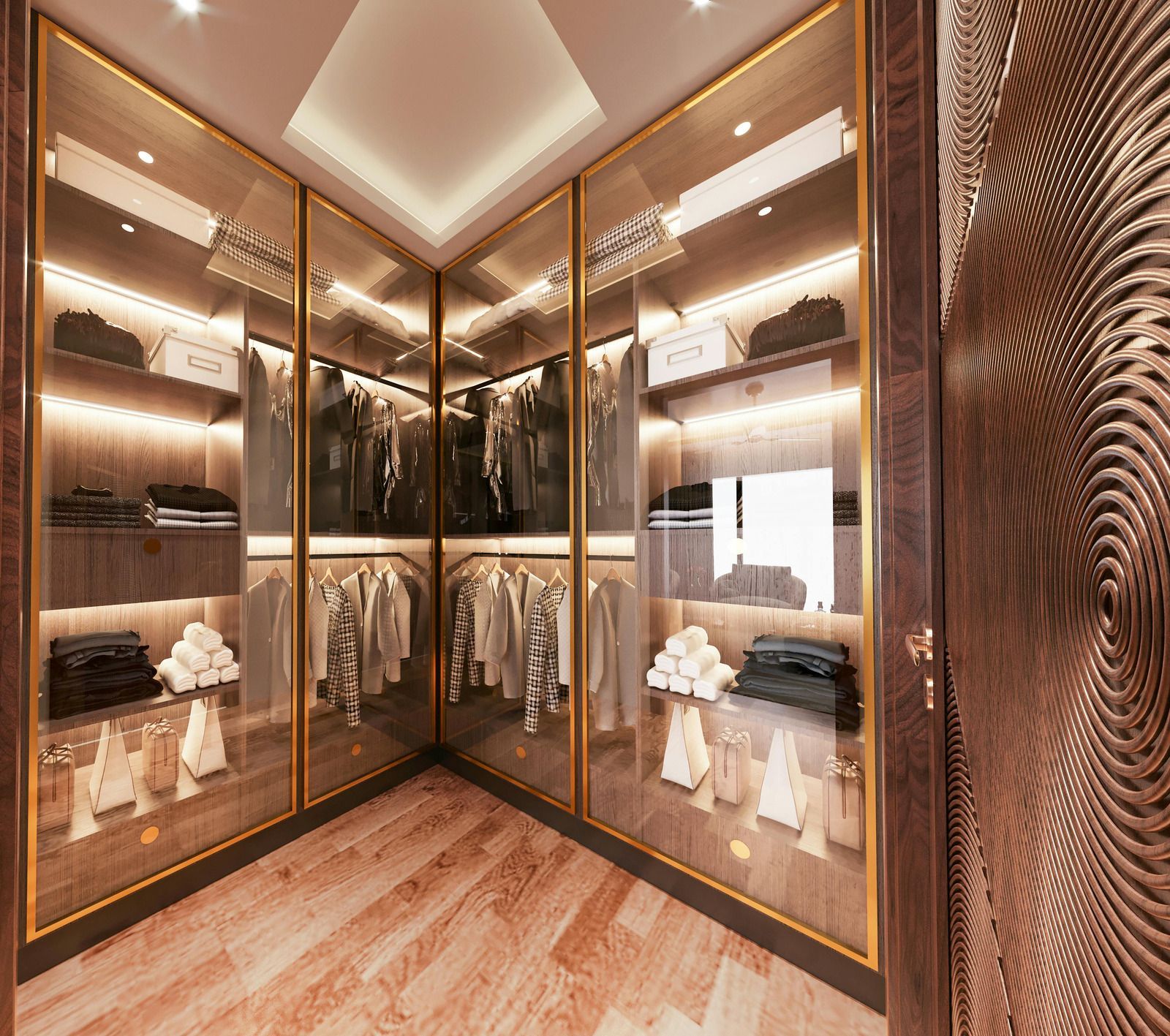
Luxurious walk-in closet with mirrored glass doors, wood floors, and clothing shelves
October 2, 2026
Most wardrobe design focuses on everyday clothing. Shirts, trousers, jumpers, and casual wear that get regular rotation.
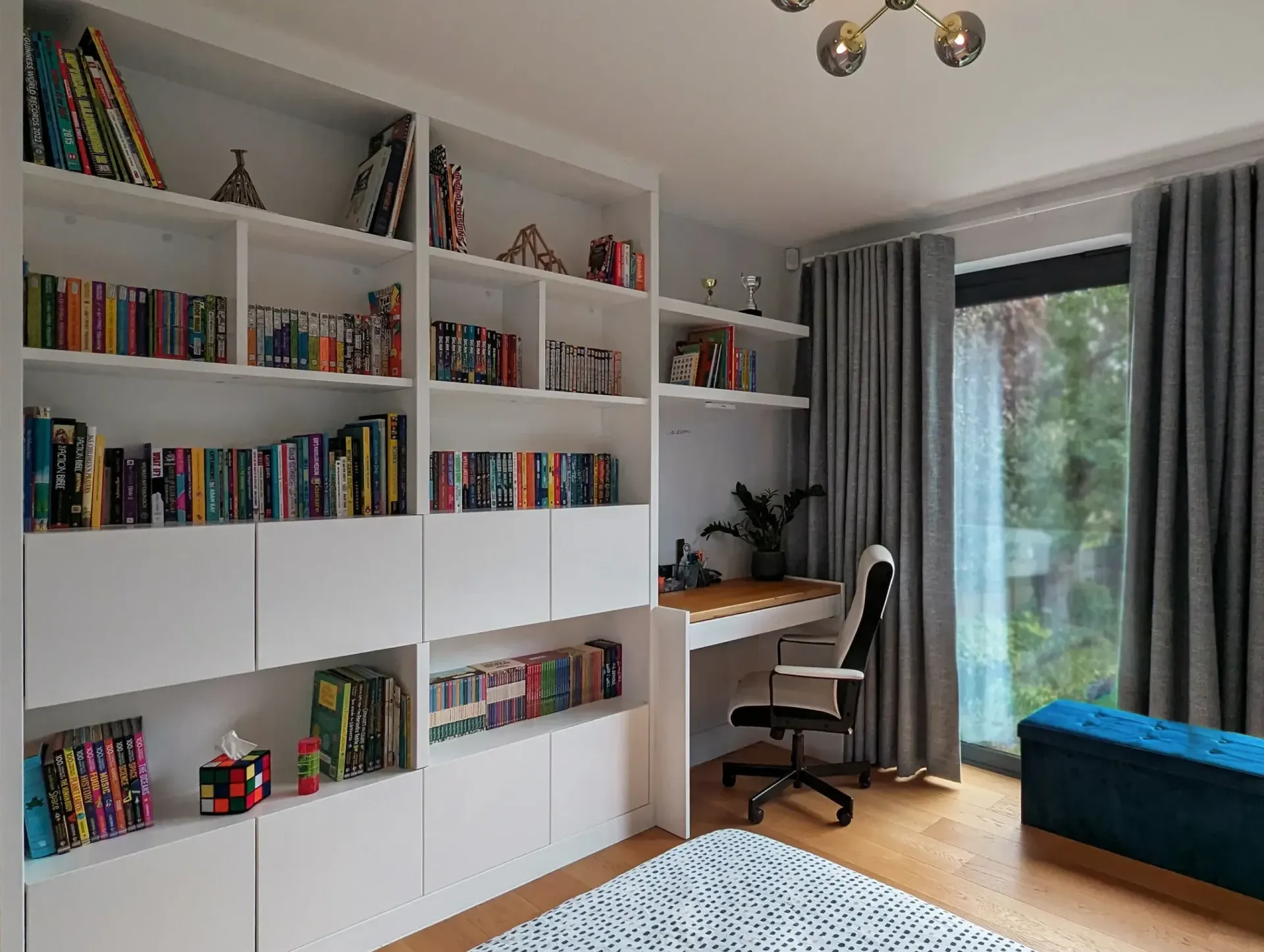
Bright home office with white bookshelves, desk, chair, window, curtains, and blue bench
August 30, 2026
Discover fitted home office storage for hybrid workers in London, with bespoke solutions that maximize space, organize essentials, and support productive work.
Show More